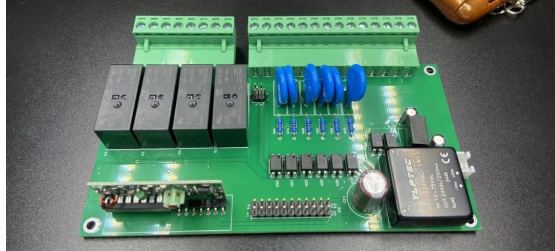
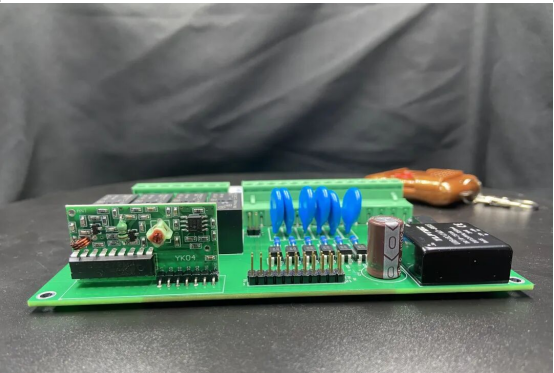
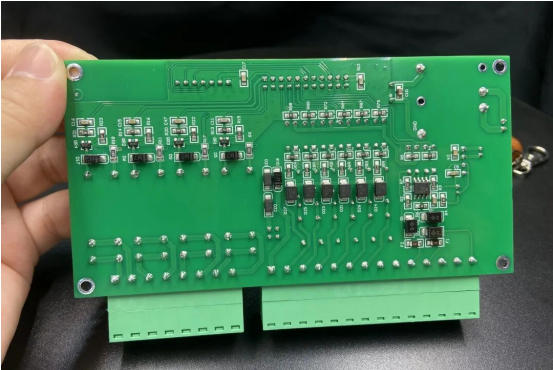
Distribution Switch Controller PCBA Industry Analysis: Technology, Capabilities, and Development Prospects
1. Industry Landscape and Market Drivers
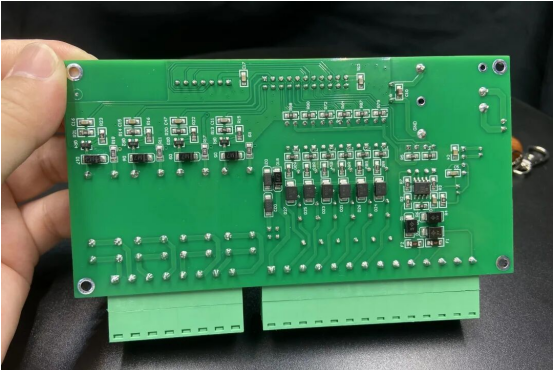
Distribution switch controllers are core components of intelligent distribution networks, widely applied in circuit breakers, load switches, disconnectors, automatic transfer switches (ATS), and intelligent low-voltage distribution boxes to achieve circuit connection, disconnection, protection, monitoring, and intelligent management. Their core brain is the PCBA (Printed Circuit Board Assembly).
Globally, smart grid construction, new energy (photovoltaic, wind power) grid integration, expansion of electric vehicle charging infrastructure, industrial automation upgrades, and modernization of aging power grids are the main factors driving the growth of this market.According to a report by Markets and Markets, the global smart grid market is projected to grow from USD 43.1 billion in 2021 to USD 103.4 billion in 2026, at a compound annual growth rate (CAGR) of 19.1%. As the world's largest electricity consumer and producer, China's "14th Five-Year Plan" for a modern energy system and "dual carbon" goals have provided strong policy impetus for the distribution switch controller market.
As the carrier for controllers, the demand for PCBA boards has consequently surged. Its market is not only dependent on quantity but also imposes extremely high requirements on reliability, precision, intelligentization, and customization.
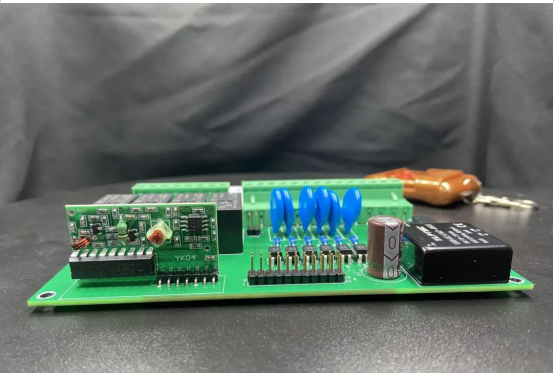
2. Development Trends
Intelligentization and Internet of Things (IoT) Integration: Modern distribution switch controllers are no longer simple on/off devices but are intelligent nodes integrating data acquisition, communication, and edge computing functionalities.PCBA boards must reserve or integrate communication modules such as 5G, LoRa, and Wi-Fi to support cloud data transmission and remote control.
High Precision and High Reliability: The monitoring accuracy requirements for parameters such as current and voltage are becoming increasingly stringent (typically reaching class 0.5 or even class 0.2) to ensure the accuracy and rapidity of protection. Correspondingly, the design requirements for PCBA components (such as high-precision sampling resistors, current transformers) and signal processing circuits are extremely stringent.
Miniaturization and Integration: To adapt to the design trend of equipment compactness, PCBA boards must adopt advanced technologies such as High-Density Interconnect (HDI), multi-stage blind and buried vias, and Chip-Scale Package (CSP) to achieve more complex functions within a smaller space.Safety and Reliability: Given its application in critical high-voltage, high-current scenarios, the PCBA must possess extremely high electrical safety and anti-interference capability (verified through EMC/EMI testing) and maintain long-term stable operation in harsh environments (e.g., high temperature, high humidity, vibration).
Predictive Maintenance Functionality: By integrating sensors and algorithms onto the PCBA, the controller can monitor its own health status (e.g., contact wear, temperature rise) to achieve predictive Maintenance and reduce unexpected downtime.
3. Technical Barriers
The manufacturing of power distribution switch controller PCBAs is not a simple assembly process and presents significant technical barriers:
Design and Simulation Barriers: involving mixed design of power and signal circuits, high-voltage isolation creepage/clearance distance control, high-frequency signal integrity (SI)/power integrity (PI) simulation, thermal simulation, as well as strict safety regulation (e.g., IEC/UL standards) considerations.Design errors may lead to entire unit failure or even safety incidents.
High-reliability soldering: Addressing the soldering of complex packages, such as multi-pin ICs, QFNs, and BGAs, is required, along with managing process challenges resulting from variations in board thickness and component height.
Conformal coating application: Precise and uniform application of conformal coating is required to protect PCBAs from moisture, dust, and chemical corrosion. Coating thickness and consistency are critical.
Through-Hole Technology (THT) process: Many high-current paths still require the use of through-hole components (e.g., relays, large connectors). Process control for wave soldering is crucial.
Programming and testing: Programming of complex MCUs/FPGAs is required, along with the construction of professional test fixtures (FCTs) to simulate real operating conditions and perform full functional inspection for each PCBA.
Supply Chain and Quality Barriers: A reliable component Supply Chain must be established, prioritizing automotive-grade or industrial-grade components, and incorporating strict Incoming Quality Control (IQC) processes. Early failure of any component can lead to severe consequences.
Certification Barriers: The Final Product must pass a series of international and domestic certifications (e.g., UL, CE, CQC). Its core PCBA's production system (e.g., ISO9001, IATF16949) and manufacturing processes must also comply with certification requirements.
4. Conclusion
The power distribution switch controller PCBA board is a technology-intensive product. Its development directly benefits from the global energy transition and smart grid construction, leading to broad market prospects.However, this field presents high technical, process, and certification barriers.
Future successful manufacturers will no longer be simple processing plants but must possess:
Strong engineering capabilities: capable of participating in early-stage customer design, providing DFM (Design for Manufacturability) analysis, and solving challenges related to hybrid design, thermal management, and signal integrity.
Advanced manufacturing processes: achieving industrial-grade or even automotive-grade standards in SMT, selective soldering, conformal coating application, and comprehensive inspection.
End-to-end quality control: establishing a consistent, data-driven quality traceability system from component procurement to final testing.
Rapid response and flexibility: capable of adapting to customized demands for multi-variety, small-batch production, and providing customers with one-stop service from prototype to mass production.For manufacturers of distribution equipment, selecting a PCBA partner with robust technical capabilities, a comprehensive Quality System, and the capacity for large-scale mass production and stringent testing, is a critical strategy to ensure their core products maintain a leading position in the market.
5. Why Partner with Us?
KingshengPCBA has long specialized in PCBA manufacturing, delivering high-performance and highly reliable hardware solutions for power distribution switch controller PCBA through high-precision mounting technology, advanced soldering processes, and comprehensive process reliability control and testing.
As technology evolves, industrial control SMT processing is set to play an increasingly pivotal role in smart manufacturing.
Is your company looking for a reliable PCBA supplier? Contact us today for a customized solution!
Please send Email to kspcba@c-alley.com or call us through +86 13828766801 Or submit your inquiry by online form. Please fill out below form and attach your manufacturing files( PCB Gerber files and BOM List) if need quotation. We will contact you shortly.
 +86 13828766801
 kspcba@c-alley.com
 https://www.kingshengpcba.com/
 2/F, Building 6, Tangtou 3rd Industrial Zone, Tangtou Community, Shiyan Town, Baoan District, Shenzhen, China, 518108
We would also like to thank our customers for their trust and support. The company's outstanding achievements are mainly due to the loyalty of our customers, which also encourages and spurs our company to forge ahead.