* On your first PCB Assembly order!
* Up to $300 discount
 C - A L L E Y
 Home | Events | PCB | About Us | News | Contact Us
In the PCBA (Printed Circuit Board Assembly) manufacturing process, the cleaning step is critical for removing flux, solder paste residues, and surface contaminants. The selection and application of washing solvents directly determine board surface cleanliness. However, many factories frequently encounter white powdery or hazy residues on board surfaces after soldering and assembly in mass production. These white residues not only impair visual appearance but also reduce insulation resistance, potentially causing leakage currents or electrochemical migration, leading to product reliability failures. As electronic products evolve toward higher density and higher voltage, controlling white residues has become a key quality challenge for PCBA contract manufacturers. Based on actual production data and failure analysis case studies, this article systematically categorizes the root causes of white residues and provides actionable preventive measures.
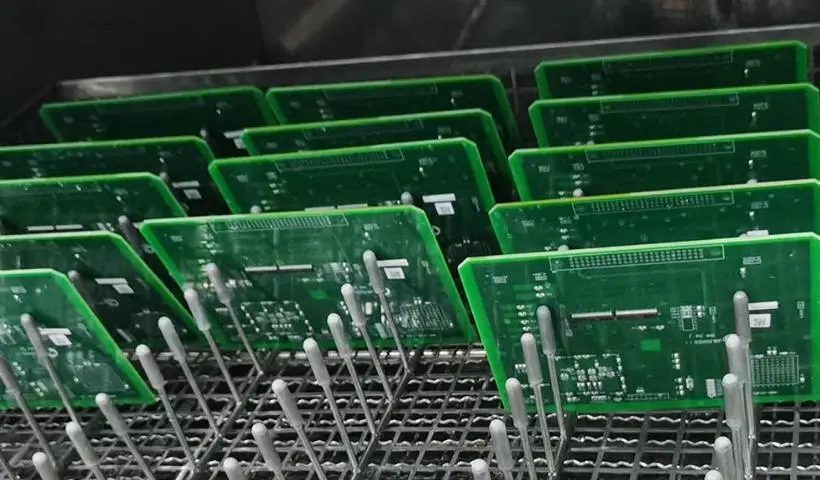
I. Main Types of White Residues and Hazad Classification
1.1 Physical Residues (Rosin Crystallization and Filler Precipitation)
Rosin acid in rosin-based fluxes forms transparent glassy substances after high-temperature soldering. If the washing solvent has insufficient dissolving power or the cleaning time is too short, the rosin cannot dissolve completely and precipitates as white powdery crystals upon drying, particularly beneath components or in pin gaps. These residues typically appear as loose granular deposits and can be wiped off with a cotton swab dipped in isopropyl alcohol, but rework costs are extremely high if they enter the bottom of BGAs (Ball Grid Arrays).
1.2 Chemical Reaction Residues (Metallic Soaps and Halides)
Active solvents in washing solutions react with halide ions (e.g., chlorine, bromine) from flux residues under humid conditions, undergoing hydrolysis to form white metallic salts such as tin chloride or tin bromide. These residues are hygroscopic and significantly reduce Surface Insulation Resistance (SIR) under high-temperature, high-humidity testing, and in severe cases, trigger dendritic growth that causes short-circuit failures.
1.3 Hazard Classification Standards
Level 1 (Cosmetic Defect): Visible only under visual inspection, does not affect electrical performance; acceptance limits are defined per IPC-A-610 Class 2/3.
Level 2 (Performance Degradation): Residues cause impedance reduction exceeding 15% of nominal value, or flashover occurs during withstand voltage testing.
Level 3 (Critical Failure): Causes leakage current exceeding specifications or functional anomalies, requiring complete batch scrapping.
II. Core Root Cause Analysis of White Residue Formation
2.1 Mismatch Between Washing Solvent and Flux Compatibility
Water-based, semi-aqueous, and solvent-based cleaning agents have significantly different solubility thresholds for various flux types (R, RMA, RA). When the KB value (Kauri-Butanol value) of the washing solvent falls below the dissolution requirement of the flux resin, the resin cannot disperse thoroughly and re-aggregates into white flocculent matter upon drying. In an actual case, using a low-KB hydrocarbon cleaner for a high-solid-content no-clean flux resulted in white residue occurrence exceeding 32%.
2.2 Deviation from Optimal Cleaning Process Window
Insufficient Temperature: The activity of washing solvent decreases exponentially with dropping temperature. When the cleaning solution temperature is below the recommended lower limit (typically 45°C), dissolution efficiency declines by 40%–60%, and total residue increases significantly.
Inadequate Time: In inline spray cleaning, if dwell time is less than 2 minutes, the fluid cannot penetrate beneath fine-pitch devices such as QFPs (Quad Flat Packages), creating "shadow zone" residues.
Insufficient Rinsing: If the conductivity of the final deionized water rinse exceeds 5 μS/cm, ionic contaminants remaining on the board precipitate as white salt spots during the drying phase as moisture evaporates.
2.3 Improper Drying Methods
Excessively high hot-air drying temperatures (>110°C) or rapid temperature ramping cause low-boiling-point components of the residual solvent to evaporate quickly, while high-boiling-point additives (e.g., anti-rust agents, surfactants) remain on the board surface, forming a sticky white film. In vacuum drying, insufficient vacuum levels lead to dissolved solutes depositing as white dots when bubbles burst.
2.4 Environmental and Incoming Material Contamination
Exuded substances from glass fibers in PCB substrates, amine compounds released from incompletely cured solder mask inks, and dissolved contaminants accumulated in recycled washing solvent (e.g., tin oxide particles from solder paste) all serve as "nucleation centers" that accelerate residue precipitation.
III. Systematic Preventive Measures and Process Control Solutions
3.1 Selection Phase: Establish a Washing Solvent-Flux Compatibility Test Protocol
Conduct a "bare board test": use the same batch of bare copper boards, apply the target flux, reflow-solder, clean with the candidate washing solvent under actual process conditions, and inspect residue particle count under a 50X microscope. Acceptance criterion: fewer than 5 particles per square centimeter.
Verify ionic contamination level: per IPC-TM-650 2.3.25, use dynamic extraction to measure ionic residue equivalent (in NaCl μg/cm²) on the cleaned board surface; target value should be below 1.5 μg/cm².
Prioritize formulations containing both polar and non-polar co-solvents to ensure dissolving capability for both rosins and metal oxides.
3.2 Process Parameter Fixing and Real-Time Monitoring
Temperature Control: Set washing section temperature at 50±3°C, rinsing section at 40±2°C; record actual tank temperature every 4 hours.
Time and Flow Rate: Calibrate spray pressure using flow meters to ensure nozzle flow velocity ≥2 m/s; fix total cleaning time at 3.5 minutes (including rinsing).
Concentration Management: For water-based cleaners, use a refractometer to check working solution concentration per shift; add concentrate to maintain 8%–12% concentration range. For solvent-based cleaners, monitor replacement cycles via specific gravity meter; replace entirely when specific gravity exceeds initial value by +0.02.
3.3 Drying Section Optimization and Post-Treatment
3.4 Environmental and Equipment Maintenance Regimen
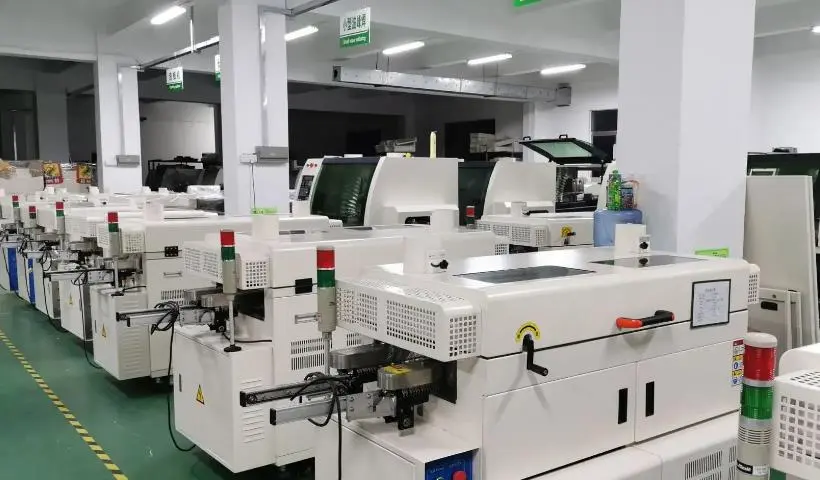
IV. Rapid Troubleshooting and Corrective Actions When Anomalies Occur
When batch white residues are detected on the production line, implement containment in the following sequence:
Emergency Isolation: Suspend shipment of the affected batch; perform secondary manual cleaning using isopropyl alcohol + ultrasonication (40 kHz, 3 minutes) to confirm removability.
Ishikawa Diagram Analysis: Investigate systematically across five dimensions – Man (operator change), Machine (nozzle clogging or heater aging), Material (flux batch change), Method (parameter deviation), and Environment (workshop humidity >65%).
Retain Comparative Samples: Place both failed boards and good boards into a temperature-humidity chamber (85°C/85% RH, 96 hours) and observe whether white areas expand or change color – this determines if residues are hygroscopic salts. If expansion occurs, classify as chemical residues and switch to a different washing solvent formulation; if unchanged, they are mostly physical rosin residues, resolvable by extending cleaning time.
Maintain a Historical Database: Establish a correlation log linking each batch's washing solvent usage count, flux model, and post-cleaning ionic contamination values. Set early-warning upper and lower control limits using SPC (Statistical Process Control) charts to enable proactive prevention.
Conclusion
White residues are not caused by a single factor but result from the combined interaction of washing solvent properties, flux composition, process parameters, and equipment status.
Please send Email to kspcba@c-alley.com or call us through +86 13828766801 Or submit your inquiry by online form. Please fill out below form and attach your manufacturing files( PCB Gerber files and BOM List) if need quotation. We will contact you shortly.
 +86 13828766801
 kspcba@c-alley.com
 https://www.kingshengpcba.com/
 2/F, Building 6, Tangtou 3rd Industrial Zone, Tangtou Community, Shiyan Town, Baoan District, Shenzhen, China, 518108
We would also like to thank our customers for their trust and support. The company's outstanding achievements are mainly due to the loyalty of our customers, which also encourages and spurs our company to forge ahead.