* On your first PCB Assembly order!
* Up to $300 discount
 C - A L L E Y
 Home | Events | PCB | About Us | News | Contact Us
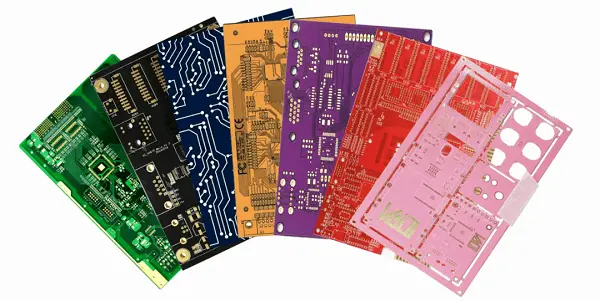
In the PCBA (Printed Circuit Board Assembly) manufacturing process, AOI (Automated Optical Inspection) is a critical step for ensuring soldering quality and assembly reliability. AOI systems identify component placement, solder joint morphology, and circuit defects through optical imaging and image-based algorithmic comparison. As an insulating protective layer on the PCB surface, solder mask directly determines the signal quality received by the imaging system and the difficulty of algorithmic processing. Different solder mask colors exhibit varying light reflection and absorption characteristics, which in turn affect the accuracy and efficiency of AOI inspection. This article analyzes the impact of common solder mask colors based on AOI inspection principles, providing reference for color selection in PCBA manufacturing.
I. Optical Requirements of AOI Inspection for Solder Mask Color
AOI inspection relies on light sources illuminating the PCB surface, with cameras capturing reflected light to generate images. Inspection accuracy depends on the grayscale contrast between the target features to be inspected (such as solder paste deposits and copper pads) and the background. The ideal solder mask color should create clear boundaries between inspection targets and the background, reducing algorithmic false-call rates.
Solder mask color affects two aspects: reflectivity and light absorption characteristics. Light-colored masks have higher reflectivity, while dark-colored masks absorb most incident light. AOI systems are typically equipped with multi-angle RGB light sources; however, backgrounds of different colors respond differently to the same light source, requiring adjustments to exposure parameters and algorithmic thresholds for each specific color. Green has become the industry standard primarily because its spectral response best matches the light sources used in common AOI systems, while also providing significant grayscale contrast with gold-plated pads and silver-colored solder joints.
II. Performance Differences of Common Solder Mask Colors in Inspection
1. Green Solder Mask: Best Overall Inspection Compatibility
Green solder mask is the overwhelming industry standard, accounting for over 80% of the market. Its inspection advantages are threefold: the grayscale response of green is stable under default AOI parameters, providing outstanding contrast between pads and background; the matte surface of green mask effectively reduces glare interference, facilitating solder joint contour extraction by image algorithms; and long-term process optimization has made color uniformity control most mature for green mask, with minimal batch-to-batch color variation. For high-density boards or fine-pitch components, green solder mask effectively reduces AOI false-call rates.
2. Dark-Colored Solder Masks (Black, Dark Blue): Significantly Increased Inspection Difficulty
Black solder mask has extremely high light absorption, causing most incident light to be absorbed and resulting in insufficient reflected signals captured by the camera. This directly reduces the grayscale difference between pads, solder joints, and the background, making target edges blurry in AOI images and making it difficult for algorithms to accurately locate inspection regions. In actual production, black PCBs show notably higher miss rates compared to green boards, requiring either higher-power light sources or prolonged exposure times, which reduces inspection throughput.
Dark blue solder mask presents inspection difficulty between green and black. Although blue absorbs less light than black, its grayscale value still does not differ as significantly from solder paste joints as green does. Some AOI systems can compensate for insufficient contrast by adjusting lighting angles, but the time cost for parameter tuning is considerable.
3. White Solder Mask: Significant Glare Interference Issues
White solder mask has extremely high reflectivity, making global overexposure a common problem. In AOI inspection, the intense reflected light from a white background can obscure fine details of solder joint contours, particularly interfering with the inspection of small components or ball grid array (BGA) solder balls. Additionally, white mask tends to yellow after high-temperature reflow, leading to poor batch-to-batch color consistency and destabilizing AOI algorithms.
III. Process Countermeasures and Selection Recommendations
To address the impact of different solder mask colors on AOI inspection, the following process measures are recommended:
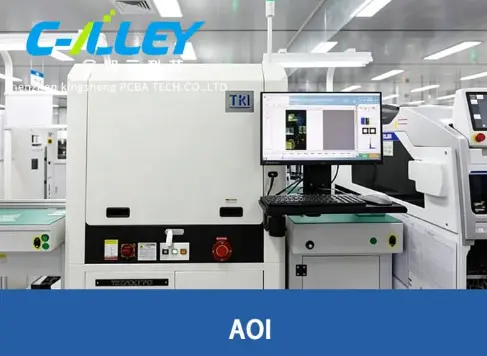
Equipment Parameter Adaptation: For non-green PCBs, it is advisable to recalibrate AOI light source intensity, exposure time, and grayscale thresholds using standard test coupons prior to production. Black boards require increased light source power and reduced inspection speed, while white boards should use polarized lighting to suppress reflections.
Differentiated Inspection Programs: For products that involve multiple solder mask colors, independent inspection programs should be established for each color, avoiding the use of generic parameters that may lead to false calls. For dark-colored boards, additional side-angle lighting can enhance the three-dimensional appearance of solder joints.
Color Selection Principles: From the perspective of inspection accuracy and production efficiency, green solder mask remains the optimal choice for most PCBA projects. Non-green masks should only be considered when brand-specific appearance requirements exist, and the AOI adaptation costs should be assessed early in the project phase. White mask is suitable for specific scenarios such as LED lighting boards, but with an acceptance of reduced inspection efficiency.
Solder mask color is not merely an aesthetic consideration—it directly affects the imaging quality and judgment accuracy of AOI inspection systems. Proper selection can maintain inspection precision while reducing process tuning costs, ultimately improving overall yield and delivery efficiency in PCBA manufacturing.
Please send Email to kspcba@c-alley.com or call us through +86 13828766801 Or submit your inquiry by online form. Please fill out below form and attach your manufacturing files( PCB Gerber files and BOM List) if need quotation. We will contact you shortly.
 +86 13828766801
 kspcba@c-alley.com
 https://www.kingshengpcba.com/
 2/F, Building 6, Tangtou 3rd Industrial Zone, Tangtou Community, Shiyan Town, Baoan District, Shenzhen, China, 518108
We would also like to thank our customers for their trust and support. The company's outstanding achievements are mainly due to the loyalty of our customers, which also encourages and spurs our company to forge ahead.