* On your first PCB Assembly order!
* Up to $300 discount
 C - A L L E Y
 Home | Events | PCB | About Us | News | Contact Us
In PCBA (Printed Circuit Board Assembly) processing, conformal coating serves as a critical defense line to protect circuit boards from moisture, salt spray and dust erosion. Many customers know they need to apply conformal coating, but are unclear about what thickness counts as qualified, whether a too-thin coating works, or if a too-thick one brings side effects. Today, C-alley will explain in detail the thickness standards, testing methods and key points of the spraying process for conformal coating.
I. Function and Principle of Conformal Coating
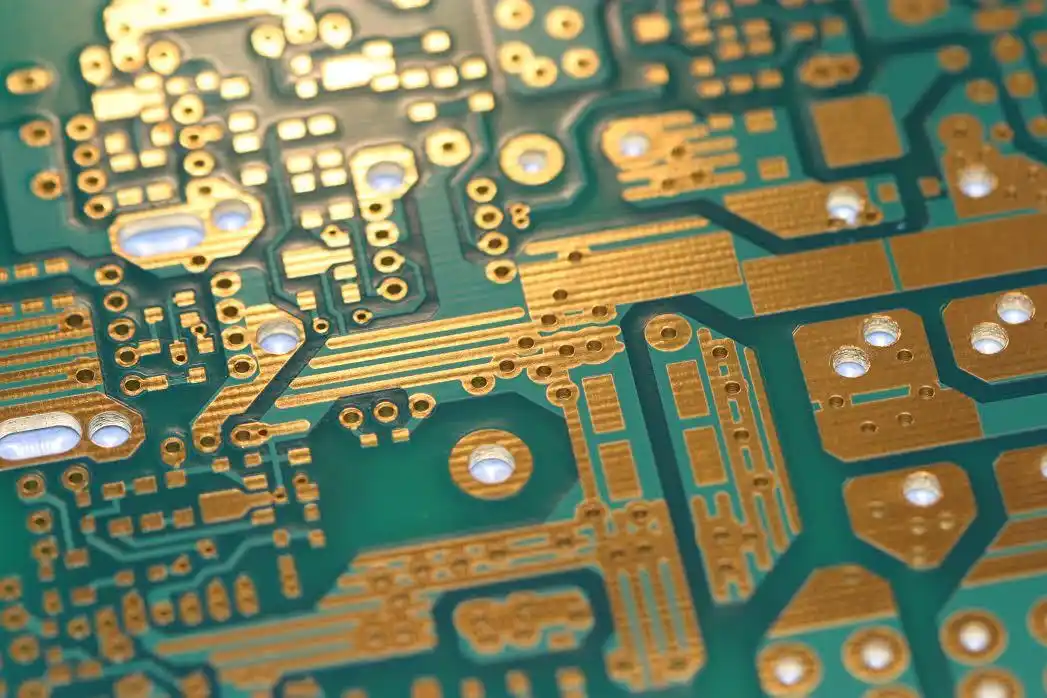
Conformal coating is a transparent protective layer that covers the surface of PCBA, forming an insulating protective film. It can resist moisture (blocking water erosion), salt spray (preventing metal corrosion), mold (inhibiting mold growth) and dust (avoiding short circuits caused by conductive dust). The protective effect of conformal coating is directly related to its thickness: a too-thin coating provides insufficient protection, while a too-thick one may affect heat dissipation and component connections.
II. What is the Thickness Standard of Conformal Coating?
According to the IPC-CC-830 standard, the dry film thickness of conformal coating is typically required to be 25-75 microns, with a typical value of 50 microns. Different application scenarios have specific requirements:
① Consumer Electronics (home appliances, digital products): 25-50 microns is sufficient, as indoor environments have low corrosion risks.
② Industrial Control (PLC, frequency converters, industrial control motherboards): 40-60 microns, since factory environments may contain dust and moisture.
③ Automotive Electronics (ECU, sensors, headlight drivers): 50-75 microns, as the temperature inside vehicles varies greatly and vibration exists.
④ Outdoor Electronics (LED displays, base station equipment, solar inverters): 60-80 microns, as they are exposed to rain, snow and sunlight for long periods.
⑤ Marine/Ship Electronics (marine equipment, coastal base stations): 75-100 microns, for environments with high salt spray and humidity.
III. Testing Methods for Conformal Coating Thickness
① Wet Film Thickness Measurement (Most Commonly Used): After spraying and before curing, use a wet film thickness gauge to measure the wet film thickness at different positions on the board. Multiply the wet film thickness by the solid content percentage to estimate the dry film thickness. This method is fast, non-destructive and suitable for online sampling inspection.
② Dry Film Thickness Measurement (Most Accurate): After curing, use an eddy current or magnetic thickness gauge to measure the dry film thickness. Shenzhen Jiechuang Electronics inspects at least 3-5 pieces per batch, measuring 5 points (four corners and the center) on each piece to ensure the thickness is within the specified range.
③ Section Analysis Method (Most Precise, Destructive): Prepare a metallographic section and directly measure the cross-sectional thickness of the coating under a microscope. It is only used for first-piece verification or dispute arbitration.
IV. Factors Affecting Conformal Coating Thickness
① Spraying Parameters: Higher spraying pressure leads to a thicker coating; faster movement speed of the spray gun results in a thinner coating. Shenzhen Jiechuang Electronics uses automated spraying equipment to precisely control parameters such as spraying pressure, movement speed and spraying distance.
② Coating Viscosity: Higher viscosity leads to a thicker coating. Temperature changes affect viscosity, so parameters need to be adjusted appropriately in winter and summer.
③ Spraying Times: The thickness of a single spray is usually 20-40 microns. For a thicker coating, the "wet-on-wet" method or a second spray after curing can be adopted.
④ PCBA Surface Condition: The coating will be thinner in areas with dense components and thicker in open areas. Try to add thickness measurement points in open areas during design.
V. Key Points of the Spraying Process
① Pre-spray Preparation: PCBA must be thoroughly cleaned to remove flux residues, dust and oil stains. Shenzhen Jiechuang Electronics uses ion cleaners or ultrasonic cleaning, followed by baking to remove moisture.
② Masking Protection: Cover areas that do not need spraying with tape or special masking fixtures: connectors, switches, heat sinks, battery holders, test points, etc. Poor masking will cause poor contact.
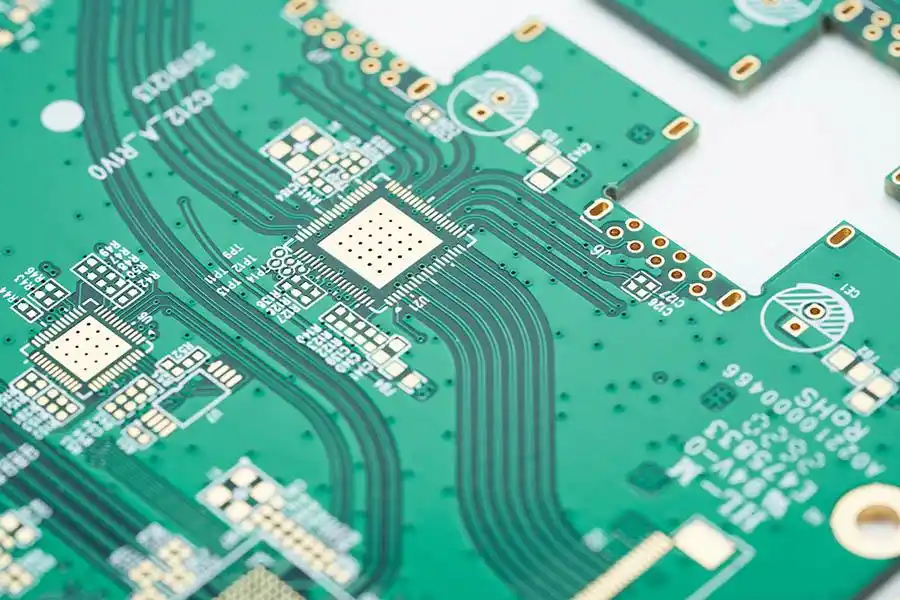
③ Spraying Construction: Shenzhen Jiechuang Electronics uses automated spraying equipment with a spraying pressure of 0.2-0.4MPa, movement speed of 0.5-1m/min and spraying distance of 15-25cm, ensuring uniform coating thickness, no bubbles and no sagging.
④ Curing: Different types of conformal coatings have different curing conditions. Acrylic coatings are surface-dry in 10-20 minutes at room temperature and fully cured in 24 hours, or can be baked at 60℃ for 30 minutes; polyurethane coatings need baking at 80℃ for 1 hour; silicone coatings require baking at 100-120℃ for 30 minutes.
VI. Common Problems with Conformal Coating Thickness
① Problem 1: Uneven Thickness: Large thickness differences in different areas of the board. This is caused by uneven movement speed of the spray gun or spraying dead angles due to complex board shapes. Shenzhen Jiechuang Electronics uses multi-axis automatic spraying machines to ensure uniform coverage of every area of the board.
② Problem 2: Too Thin Coating (<25μm): Insufficient protective effect, which may fail in humid environments. The solution is to reduce the movement speed of the spray gun or increase the number of sprays.
③ Problem 3: Too Thick Coating (>100μm): May affect heat dissipation, cause difficulty in connector plugging and unplugging, and may crack during curing. The solution is to increase the movement speed of the spray gun or reduce the spraying pressure.
④ Problem 4: Sagging: Local over-thick coating that hangs down like water droplets. This is caused by excessive spraying or low coating viscosity. The solution is to reduce the spraying amount and check if the coating viscosity is normal.
VIII. Summary
The standard dry film thickness of conformal coating ranges from 25 to 75 microns, with a typical value of 50 microns. Testing is conducted via wet film thickness measurement or dry film thickness measurement to ensure the coating is uniform and meets the required thickness specifications.
Key points of the spraying process include pre-spray cleaning, masking protection, parameter control and proper curing. If you need conformal coating spraying services, please feel free to contact C-alley We provide professional process solutions and quality assurance.
With 17 years of expertise in PCBA design, manufacturing, and service, KingshengPCBA is ready to help turn your ideas into reality. Feel free to contact us anytime to discuss your requirements and get a professional quotation.

Please send Email to kspcba@c-alley.com or call us through +86 13828766801 Or submit your inquiry by online form. Please fill out below form and attach your manufacturing files( PCB Gerber files and BOM List) if need quotation. We will contact you shortly.
 +86 13828766801
 kspcba@c-alley.com
 https://www.kingshengpcba.com/
 2/F, Building 6, Tangtou 3rd Industrial Zone, Tangtou Community, Shiyan Town, Baoan District, Shenzhen, China, 518108
We would also like to thank our customers for their trust and support. The company's outstanding achievements are mainly due to the loyalty of our customers, which also encourages and spurs our company to forge ahead.