* On your first PCB Assembly order!
* Up to $300 discount
 C - A L L E Y
 Home | Events | PCB | About Us | News | Contact Us
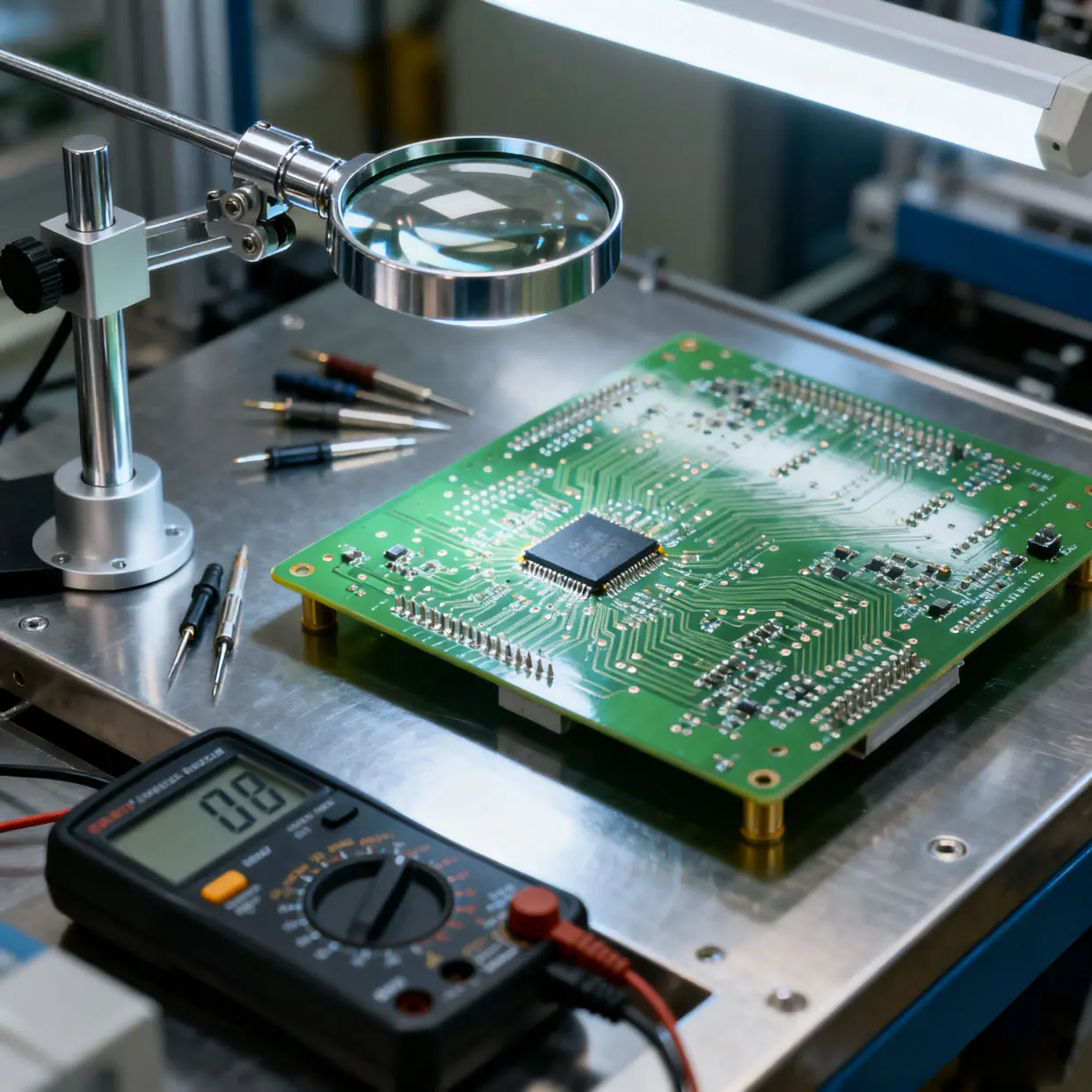
Routing is an extremely important aspect of PCB design, as it directly affects the performance of the PCB board. During the PCB design process, different layout engineers have their own understanding of layout, but all layout engineers agree on how to improve routing efficiency. This not only reduces the project development cycle for customers but also maximizes quality and cost control. The following are the general design processes and steps.
1. Determine the number of PCB layers
The circuit board dimensions and the number of routing layers need to be determined in the initial design phase. If the design requires the use of high-density ball grid array (BGA) components, the minimum number of routing layers needed for these devices must be considered. The number of routing layers and the stacking method directly affect the routing and impedance. The board size helps determine the stacking method and trace width to achieve the desired design outcome.
2. Design rules and constraints
The auto-router itself does not know what to do. To complete the routing task, the routing tool needs to work under the correct rules and constraints. Different signal traces have different routing requirements. All signal traces with special requirements must be classified, and different design classifications vary. Each signal class should have a priority level; the higher the priority, the stricter the rules. Engineer Liu from YuanKun ZhiZao stated that rules involve trace width, maximum via count, parallelism, interaction between signal traces, and layer restrictions. These rules significantly impact the performance of the routing tool. Carefully considering the design requirements is an important step for successful routing.
3. Component placement
To optimize the assembly process, Design for Manufacturing (DFM) rules impose restrictions on component placement. If the assembly department allows component movement, the circuit can be appropriately optimized to facilitate auto-routing. The defined rules and constraints will affect the placement design.
4. Fan-out design
During the fan-out design stage, to enable the auto-router to connect to component pins, each pin of surface-mount devices should have at least one via. This allows for internal layer connections, In-Circuit Testing (ICT), and circuit rework when more connections are needed.
To maximize the efficiency of the auto-router, it is essential to use the largest possible via size and trace width, with a spacing of 50 mils being ideal. Use the via type that maximizes the number of routing paths. When performing fan-out design, consider in-circuit testing issues. Test fixtures can be expensive and are typically ordered just before mass production; it would be too late to add test points to achieve 100% testability at that stage.
5. Manual routing and critical signal handling
Although this article mainly discusses auto-routing, manual routing remains an important process in printed circuit board design, both now and in the future. Manual routing can assist the auto-router in completing its task. Regardless of the number of critical signals, route these signals first, either manually or using a combination of manual and auto-routing tools. Critical signals typically require careful circuit design to achieve the desired performance. After routing, relevant engineering personnel should inspect these signal routes, a process that is relatively straightforward. Once the inspection is passed, these traces should be fixed, and then auto-routing can proceed for the remaining signals.
6. Auto-routing
When routing critical signals, it is necessary to control certain electrical parameters during routing, such as reducing distributed inductance and EMC. Similar considerations apply to routing other signals. All EDA vendors offer methods to control these parameters. Understanding the input parameters of the auto-router and their impact on routing can, to some extent, ensure the quality of the auto-routing.
7. Circuit board aesthetics
Previous designs often focused on the visual appearance of the circuit board, but this is no longer the case. An auto-routed board may not be as aesthetically pleasing as a manually routed one, but it meets the specified requirements in terms of electronic characteristics, and the integrity of the design is assured.
For layout engineers, technical proficiency should not be judged solely based on layer count and speed. Only when conditions such as component count and signal speed are comparable, a true expert is one who can complete a design with a smaller area, fewer layers, and lower cost while ensuring good performance and aesthetics.
Get your free consultation and custom quote at KingshengPCBA.com — your optimized solution starts with one click.
We, KingshengPCBA have 16 years experience in PCB/PCBA manufacturing and can provide our customer with high quality products and services in different industry.
Our products: PCB bare board , PCB Assembly, box-building, Electronic Components Sourcing, Metal&Enclosure Parts Souring,
Our Services: Alternative material Solution, BOM Optimizing, PCB design&layout, Design Optimizing, DFM&DFT,
Our Capability:
Production line Capability:15 SMT Lines with fully automatic production, large capacity of 15Kpcs everyday
Inspection: 3D SPI&3D AOI, X-RAY
Test Capability: Flying Probe Test, ICT, Functional test, humidity test, high and low temp,etc.
Now we have special support and 20% discount for new customer orders. We support quick-run build for prototype and samples.
Do you have production files for quotation? For any question,please feel free to contact us at KingshengPCBA.com. Thanks a lot.
Please send Email to kspcba@c-alley.com or call us through +86 13828766801 Or submit your inquiry by online form. Please fill out below form and attach your manufacturing files( PCB Gerber files and BOM List) if need quotation. We will contact you shortly.
 +86 13828766801
 kspcba@c-alley.com
 https://www.kingshengpcba.com/
 2/F, Building 6, Tangtou 3rd Industrial Zone, Tangtou Community, Shiyan Town, Baoan District, Shenzhen, China, 518108
We would also like to thank our customers for their trust and support. The company's outstanding achievements are mainly due to the loyalty of our customers, which also encourages and spurs our company to forge ahead.