* On your first PCB Assembly order!
* Up to $300 discount
 C - A L L E Y
 Home | Events | PCB | About Us | News | Contact Us
I.With the rise of vehicle intelligence and the widespread adoption of in-vehicle electronics, automotive power products—such as in-vehicle chargers, inverters, fast chargers, energy storage systems and power supply modules for dashcams—have become essential accessories for private cars, ride-hailing vehicles and lorries. As the core control and conversion unit of in-vehicle power systems, the PCBA circuit board directly determines the stability of the device’s output, charging efficiency, safety protection capabilities, shock resistance and service life; it is a crucial hardware foundation for the safety of the vehicle’s entire electrical system.
II.In-vehicle power PCBA integrates a main control management chip, DC-DC conversion module, MOSFET power transistors, voltage regulation and rectification circuits, fast-charging protocol chips, power filtering, battery protection and temperature monitoring units. It is primarily responsible for converting the 12V/24V voltage from the vehicle’s battery into multiple regulated outputs such as 5V, 9V and 12V, supporting functions including fast charging for mobile phones, power supply for laptops, power inversion for small appliances and continuous power supply for in-vehicle devices. Whether it be a simple car charger, a high-power vehicle inverter, or a mobile in-vehicle energy storage unit, all voltage conversion, current regulation, protocol matching and safety protection rely on the PCBA circuit system to function.
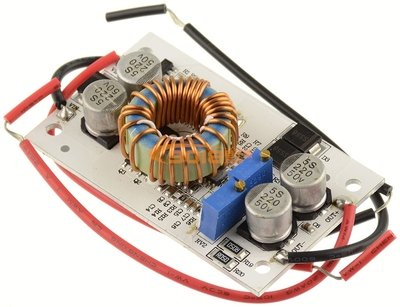
III.The operating environment of in-vehicle power supplies is far more demanding than that of ordinary consumer devices; vehicle vibrations, high temperatures inside the car in summer, low temperatures in winter, sudden voltage surges and drops, electromagnetic interference from the engine, and exposure to moisture, water vapour and oil and grease are ever-present. Consequently, automotive power supply PCBs must possess four core characteristics: resistance to high and low temperatures, vibration, electromagnetic interference, and protection against overcurrent and short circuits. Substandard PCBs are prone to overheating during charging, voltage instability, failure of fast charging, and intermittent connections; in severe cases, they may even burn out the vehicle’s battery and electronic equipment.
IV.In terms of circuit design, the vehicle power supply PCBA places great emphasis on EMC (electromagnetic compatibility), high-power current handling and multiple safety protections. As voltage fluctuations are severe when the vehicle is started or stopped, the circuit must be equipped with voltage regulation and filtering, reverse connection protection and surge protection. The layout separates high-voltage and low-voltage circuits; power circuits feature wider traces and thicker copper foil to minimise temperature rise under high current conditions. The control and power circuits are grounded independently to reduce electromagnetic crosstalk and prevent interference with in-car radio, navigation and dashcam signals. Additionally, multiple protection mechanisms—including overvoltage, undervoltage, overcurrent, short-circuit, overtemperature and reverse battery connection protection—are integrated, with automatic power cut-off upon detection of anomalies to ensure the safety of both the vehicle and the equipment.
V.In terms of materials and manufacturing processes, the high-quality automotive power supply PCBA utilises high-TG, heat-resistant, flame-retardant PCB boards that are resistant to ageing and deformation, and are suitable for the wide temperature range of -40°C to 85°C found inside vehicles. Key power components, capacitors and resistors are selected from automotive-grade industrial materials, offering vibration resistance, minimal temperature drift and high stability. Production utilises precision SMT (Surface Mount Technology) assembly, with reinforced soldering for high-power components to prevent vibration-induced detachment. The units undergo AOI (Automated Optical Inspection), full-load ageing tests, and high/low-temperature cycling tests to eliminate potential faults caused by cold solder joints or poor soldering. Some high-end vehicle power supply PCBs also feature a triple-proof coating—moisture-proof, oil-proof and corrosion-proof—making them suitable for the demanding operating environments of lorries and long-distance vehicles.
VI.With the growing popularity of in-vehicle fast charging, inverters and energy storage systems for campervans, vehicle power supplies are evolving towards higher power ratings, multi-port fast charging, intelligent voltage regulation and compact integration. This trend is driving continuous upgrades in PCBA technology towards higher power density, broader protocol compatibility, enhanced protection and extended service life.
VII.Although seemingly small, in-vehicle power supplies are crucial to the electrical safety of the entire vehicle. Only through professional circuit layout, automotive-grade components and mature SMT manufacturing processes can in-vehicle power supplies deliver stable output, fast charging, comprehensive protection and robust durability, thereby providing a safe, stable and reliable power supply for all in-vehicle electronic equipment.
With 17 years of expertise in PCBA design, manufacturing, and service, KingshengPCBA is ready to help turn your ideas into reality. Feel free to contact us anytime to discuss your requirements and get a professional quotation.
Please send Email to kspcba@c-alley.com or call us through +86 13828766801 Or submit your inquiry by online form. Please fill out below form and attach your manufacturing files( PCB Gerber files and BOM List) if need quotation. We will contact you shortly.
 +86 13828766801
 kspcba@c-alley.com
 https://www.kingshengpcba.com/
 2/F, Building 6, Tangtou 3rd Industrial Zone, Tangtou Community, Shiyan Town, Baoan District, Shenzhen, China, 518108
We would also like to thank our customers for their trust and support. The company's outstanding achievements are mainly due to the loyalty of our customers, which also encourages and spurs our company to forge ahead.