* On your first PCB Assembly order!
* Up to $300 discount
 C - A L L E Y
 Home | Events | PCB | About Us | News | Contact Us
I.Uninterruptible Power Supplies (UPS) act as the guardian of power for data centre servers, office equipment, surveillance systems, smart home devices, medical instruments and industrial automation equipment. They are capable of instantly switching to backup power in the event of sudden mains power cuts or voltage fluctuations, ensuring that equipment remains online, does not shut down and that no data is lost. The PCBA circuit board serves as the control centre and energy management core of the UPS. The system’s voltage regulation accuracy, switching response speed, load-carrying capacity, battery protection and overall safety and reliability are all determined by the design, materials and manufacturing standards of the PCBA.
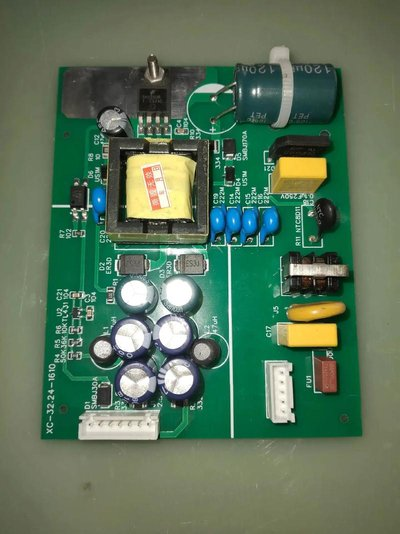
II.The PCBA components within a UPS are primarily divided into the main control board, inverter board, battery management system (BMS) board, mains sampling board and drive protection board. These integrate an MCU main control chip, inverter drive unit, voltage sampling circuit, charge management module, relay control, overcurrent and overvoltage protection, and temperature detection components. It performs critical tasks such as mains monitoring, voltage stabilisation and filtering, battery charge and discharge management, DC-to-AC inversion, and fault self-diagnosis; it serves as both the ‘brain’ of the power conversion system and a safety barrier for the load and batteries.
III.As UPS units remain powered and on standby 24/7, they are frequently subjected to mains surges, fluctuating voltages and the impact of instantaneous start-stop cycles. Consequently, the demands placed on the PCBA in terms of high current carrying capacity, high temperature resistance, shock resistance and high safety redundancy far exceed those of ordinary electronic products. Substandard UPS units on the market frequently suffer from switching delays, tripping under load, battery overcharging and swelling, severe overheating of the unit, and even complete failure. The root cause lies in the unreasonable layout of the PCBA, insufficient copper foil thickness, simplified protection circuits, and the use of substandard components.
IV.In terms of circuit design, the UPS PCBA places particular emphasis on high-power current-carrying design, isolation between high- and low-voltage circuits, and multi-level protection logic. The high-power inverter section employs widened traces and a thick-copper PCB layout to reduce temperature rise and voltage drop in the circuitry during high-current operation. The low-voltage control area and the high-voltage power section are physically separated and isolated in terms of cabling, supplemented by optocoupler isolation to prevent high-voltage interference with control signals. Additionally, multiple protection circuits are integrated to guard against overvoltage, undervoltage, overcurrent, short circuits, overheating and reverse battery connection; in the event of an anomaly, the output is automatically cut off to safeguard downstream equipment and the battery.
V.In terms of material selection and manufacturing processes, standard UPS PCBA boards utilise high-TG, thick-copper, flame-retardant PCBs that are resistant to high temperatures and resistant to delamination and deformation, ensuring long-term stability without overheating or ageing under high-current loads. Power chips, MOSFETs and electrolytic capacitors are all selected in industrial-grade, high-temperature-resistant specifications, suitable for continuous high-load operating conditions. A combination of precision SMT and through-hole assembly processes is employed, with reinforced soldering of power components. The unit undergoes AOI inspection, full-load ageing tests and high/low-temperature cycling tests to ensure millisecond-level switching response, precise voltage regulation and stable operation. PCB assemblies for industrial and outdoor models are further treated with a moisture-proof insulating coating to withstand the damp and dusty conditions of server rooms and low-voltage equipment rooms.
VI.With the widespread adoption of data centres, smart manufacturing, whole-home automation and security surveillance, high-frequency online UPS systems, modular UPS systems and energy storage backup power supplies have become mainstream, driving the evolution of PCB assemblies towards higher power density, compact integration, smart connectivity and remote monitoring.
In summary, UPS systems safeguard the power supply for critical equipment, and the PCBA serves as the core technical backbone of the UPS. Only through professional high-power circuit layout, robust board components, rigorous protection design and mature manufacturing processes can a UPS achieve stable voltage regulation, rapid switching, comprehensive protection and a long service life, thereby providing uninterrupted, safe and reliable power supply for critical equipment across all industries.
With 17 years of expertise in PCBA design, manufacturing, and service, KingshengPCBA is ready to help turn your ideas into reality. Feel free to contact us anytime to discuss your requirements and get a professional quotation.
Please send Email to kspcba@c-alley.com or call us through +86 13828766801 Or submit your inquiry by online form. Please fill out below form and attach your manufacturing files( PCB Gerber files and BOM List) if need quotation. We will contact you shortly.
 +86 13828766801
 kspcba@c-alley.com
 https://www.kingshengpcba.com/
 2/F, Building 6, Tangtou 3rd Industrial Zone, Tangtou Community, Shiyan Town, Baoan District, Shenzhen, China, 518108
We would also like to thank our customers for their trust and support. The company's outstanding achievements are mainly due to the loyalty of our customers, which also encourages and spurs our company to forge ahead.