* On your first PCB Assembly order!
* Up to $300 discount
 C - A L L E Y
 Home | Events | PCB | About Us | News | Contact Us
I.With the widespread adoption of gigabit broadband, 5G base stations, data centres, industrial private networks and whole-home fibre networks, fibre optic equipment has become an indispensable component of modern communication networks, encompassing a range of devices such as fibre optic transceivers, optical terminals, splitters, fibre repeaters and electro-optical converters. As the central hub for control and signal processing within optical fibre equipment, the PCBA circuit board directly determines the system’s electro-optical conversion efficiency, transmission stability, interference resistance and long-term operational reliability; it serves as the fundamental hardware foundation for the stable operation of optical communication networks.
II.The PCBA for optical fibre equipment integrates optical signal transceiver chips, electro-optical conversion modules, the main control unit, network PHY chips, power management circuits, and signal filtering and surge protection modules. Their core function is to facilitate the mutual conversion between optical and electrical signals, enabling long-distance, low-loss, high-bandwidth data transmission. Compared to standard Ethernet cable transmission, fibre optics rely on optical signals that are immune to electromagnetic interference; however, the full realisation of these advantages depends on the PCBA’s precise circuit design and reliable assembly processes.
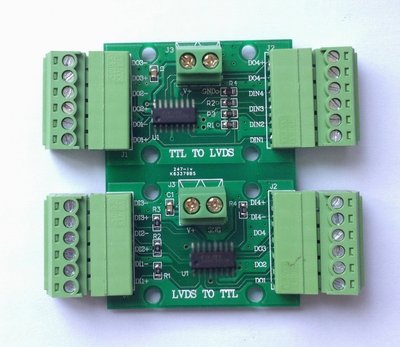
III.Fibre-optic equipment is predominantly deployed in data centre low-voltage rooms, outdoor cabinets, industrial parks and building service shafts, where it operates continuously 24 hours a day. These environments are typically enclosed, hot, humid, dusty and subject to significant power grid fluctuations. Consequently, the requirements for the PCBA’s temperature resistance, moisture resistance, ageing resistance and lightning protection are far higher than those for standard consumer electronics. Substandard PCBA boards frequently result in faults such as packet loss, fluctuating internet speeds, link interruptions, optical power attenuation and equipment crashes, directly impacting the normal operation of broadband services, surveillance transmission and industrial communications.
IV.In terms of circuit design, the primary focus for fibre optic equipment PCBA is on high-speed signal integrity, opto-electrical isolation and electromagnetic compatibility. Optical signals are delicate and susceptible to interference from power supplies and high-frequency circuits. Professional design involves strictly segregating the opto-electrical conversion area, the digital processing area and the high-voltage power supply area, with independent layer shielding and separate routing for high- and low-voltage circuits. High-speed differential signals undergo precise impedance matching and equal-length routing, effectively reducing signal attenuation, timing skew and crosstalk issues, thereby ensuring stable transmission, zero packet loss and low latency for Gigabit and 10 Gigabit fibre-optic links.
V.In terms of materials and manufacturing processes, the PCBA for high-quality optical fibre equipment utilises high-TG, high-temperature-resistant multilayer PCB boards that withstand high voltage and resist delamination due to moisture, making them suitable for long-term, high-load operation. Key components are selected to meet industrial-grade wide-temperature specifications, capable of withstanding extreme temperature fluctuations and the wear and tear of continuous operation. Production employs high-precision SMT assembly processes, with micro-chips mounted with precision and solder joints that are uniform and full. Comprehensive testing, including AOI optical inspection, ageing tests and actual optical power measurements, eliminates potential issues such as cold solder joints and poor soldering. PCBA for outdoor models also undergoes triple-proof coating to provide dust, moisture and corrosion resistance, as well as salt spray resistance, ensuring suitability for complex outdoor operating conditions.
VI.With the accelerated development of computing networks, 5G-A, data centre expansion and FTTR whole-home fibre networks, fibre optic equipment is evolving towards 10-gigabit speeds, miniaturisation, low power consumption and intelligent network management. This, in turn, is driving continuous iteration in PCBA design towards high-density integration, low-loss cabling, robust heat dissipation and high-reliability protection.
Although fibre-optic equipment may appear unremarkable, it underpins the vital communication arteries of entire cities and enterprises, with the PCBA serving as the core support hidden behind the scenes. Only through professional circuit layout, robust board materials and mature SMT manufacturing processes can fibre-optic equipment transmit signals further, at higher speeds and with greater stability, thereby laying a solid hardware foundation for comprehensive optical communication coverage and the development of the digital economy.
With 17 years of expertise in PCBA design, manufacturing, and service, KingshengPCBA is ready to help turn your ideas into reality. Feel free to contact us anytime to discuss your requirements and get a professional quotation.
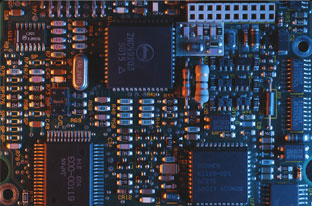
Please send Email to kspcba@c-alley.com or call us through +86 13828766801 Or submit your inquiry by online form. Please fill out below form and attach your manufacturing files( PCB Gerber files and BOM List) if need quotation. We will contact you shortly.
 +86 13828766801
 kspcba@c-alley.com
 https://www.kingshengpcba.com/
 2/F, Building 6, Tangtou 3rd Industrial Zone, Tangtou Community, Shiyan Town, Baoan District, Shenzhen, China, 518108
We would also like to thank our customers for their trust and support. The company's outstanding achievements are mainly due to the loyalty of our customers, which also encourages and spurs our company to forge ahead.