* On your first PCB Assembly order!
* Up to $300 discount
 C - A L L E Y
 Home | Events | PCB | About Us | News | Contact Us
I.With the rapid proliferation of the Internet of Things (IoT), various communication modules—such as 5G, 4G, NB-IoT, Wi-Fi and Bluetooth—have become essential core components for enabling network connectivity in smart homes, industrial equipment, in-vehicle terminals, smart meters and shared devices. As the core component of communication modules, the PCBA directly determines the module’s signal sensitivity, transmission stability, power consumption, interference resistance and service life, making it an indispensable hardware cornerstone in the IoT ecosystem.
II.Communication module PCBs are highly integrated, incorporating baseband chips, RF transceiver units, antenna matching circuits, power management, crystal oscillators, filter amplification and interface control circuits. Their core function is to provide various terminals with wireless data transmission, remote communication, signal transmission and reception, and protocol parsing capabilities. Whether it be smart water or electricity meters, industrial gateways, in-vehicle T-BOX units, security cameras or IoT sensors, the ability to report data online and enable remote control relies entirely on the communication module PCBA to facilitate signal exchange.
III.Compared to standard consumer-grade boards, the key characteristics of communication module PCBAs are their high RF precision requirements, miniaturised form factor and complex operating environments. These modules typically employ surface-mount mini-packages with densely packed internal components, placing extremely stringent demands on PCB routing, impedance control and antenna trace design. Should the layout be suboptimal or impedance deviations be excessive, issues such as weak signals, slow connectivity, frequent disconnections and significant latency fluctuations may arise, directly affecting the normal operation of end devices.
VI.In terms of circuit design, the paramount considerations for the communication module PCBA are RF signal integrity and electromagnetic compatibility. RF traces require precise impedance matching and strictly equal-length routing, with independent RF ground planes to isolate the circuits. Digital, power supply and RF circuits are laid out in separate zones to prevent mutual electromagnetic interference. The antenna feed path features a dedicated clear zone design to reduce dielectric loss, significantly enhancing reception sensitivity and transmission stability, ensuring reliable connectivity even in basements, deep within buildings, and in outdoor environments with weak signals.
V.In terms of material selection and manufacturing processes, the high-quality communication module PCBA utilises low-loss high-frequency PCB materials with stable dielectric parameters, making them suitable for high-frequency signal transmission. All components are industrial-grade, wide-temperature-range materials capable of stable operation in extreme environments ranging from -40°C to 85°C, and are resistant to ageing and vibration. Production employs high-precision SMT assembly techniques, with micro 01005 components mounted with precision. This is complemented by AOI optical inspection, RF performance calibration and full-unit ageing tests. Every outgoing PCBA undergoes 100% signal performance testing to eliminate potential defects such as cold solder joints, frequency drift and signal attenuation.
VI.With the ongoing implementation of the Internet of Things (IoT), smart cities and the Industrial Internet, lightweight, low-power, ultra-compact and multi-mode converged communication modules have become the mainstream trend. The rapid iteration of all-network 5G, Cat.1 and NB-IoT all-in-one modules is also driving the evolution of PCBA towards higher integration, more precise RF processes, lower power consumption and greater environmental adaptability.
In summary, communication modules serve as the ‘wireless bridge’ connecting all things, whilst PCBA forms the robust foundation of this bridge. Only through professional RF layout, high-quality PCB materials and components, and mature, precision SMT processes can communication modules be guaranteed to deliver strong signals, stable connectivity, low power consumption and a long service life, thereby providing solid and reliable hardware support for the remote communication and intelligent interconnection of end devices across all sectors of the IoT.
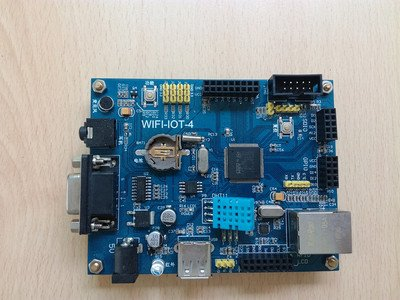
With 17 years of expertise in PCBA design, manufacturing, and service, KingshengPCBA is ready to help turn your ideas into reality. Feel free to contact us anytime to discuss your requirements and get a professional quotation.
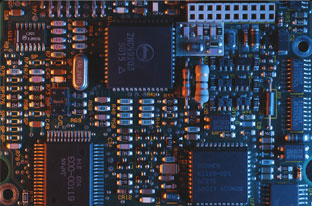
Please send Email to kspcba@c-alley.com or call us through +86 13828766801 Or submit your inquiry by online form. Please fill out below form and attach your manufacturing files( PCB Gerber files and BOM List) if need quotation. We will contact you shortly.
 +86 13828766801
 kspcba@c-alley.com
 https://www.kingshengpcba.com/
 2/F, Building 6, Tangtou 3rd Industrial Zone, Tangtou Community, Shiyan Town, Baoan District, Shenzhen, China, 518108
We would also like to thank our customers for their trust and support. The company's outstanding achievements are mainly due to the loyalty of our customers, which also encourages and spurs our company to forge ahead.