* On your first PCB Assembly order!
* Up to $300 discount
 C - A L L E Y
 Home | Events | PCB | About Us | News | Contact Us
I: What is Metal Core PCB (MCPCB)?
As electronics evolve toward miniaturization and high power density, thermal management becomes critical for reliability. Metal Core PCBs (MCPCBs) address this gap by integrating a thermally conductive metal base, making them indispensable for high-power applications like LED lighting and automotive electronics. This article breaks down their core attributes.
1.Definition of MCPCB
A Metal Core PCB replaces the traditional FR-4 fiberglass substrate with a metal base, prioritizing heat dissipation alongside mechanical stability. Unlike standard PCBs, where the substrate only serves as an insulating support, MCPCBs’ metal core enables thermal conductivity 100–1000 times higher than FR-4. Developed to solve heat accumulation issues that degrade components or cause system failure, they now underpin industries from renewable energy to 5G communications.
2.Structure of MCPCB
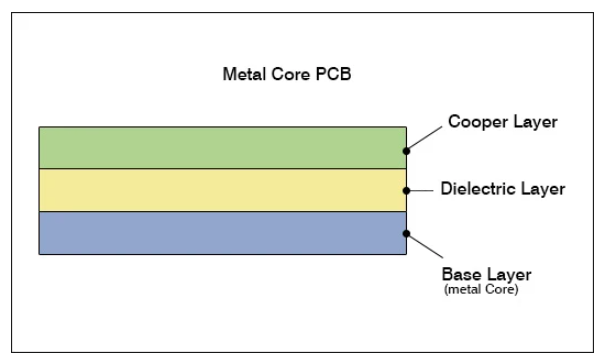
MCPCBs feature three layered components working in tandem to balance thermal, electrical, and mechanical performance: .
A. Metal Base Layer: The foundational heat-dissipating layer, with materials selected for thermal performance, cost, and weight. Aluminum is the most common choice (200 W/mK conductivity, lightweight, affordable), ideal for LEDs and consumer electronics. Copper offers the highest conductivity (400 W/mK) for high-power uses like motor controllers but is heavier and pricier. Alloys (e.g., aluminum-magnesium) balance strength and conductivity for industrial scenarios. .
B.Dielectric Layer: Sandwiched between the metal base and circuit layer, it provides electrical insulation while transferring heat. Materials like ceramic-filled epoxy offer high resistance and thermal conductivity up to 5 W/mK. Thickness ranges from 0.05–0.2mm, with thinner layers boosting heat transfer if manufactured precisely.
C. Circuit Layer: The top copper foil layer, etched into traces and pads for component connections. Electrolytic copper foil is cost-effective for general use; rolled copper foil suits flexible or high-frequency applications. Surface finishes like ENIG enhance solderability and protect traces from corrosion.
II: Performance Advantages of MCPCB
1.Superior Thermal Dissipation MCPCBs outperform FR-4 (0.3–0.5 W/mK) with conductivity ranging from 10–400 W/mK, quickly transferring heat from components to the metal base and surrounding environment. This reduces component operating temperatures—for example, lowering LED junction temps by 20–30°C and extending lifespan from 20,000 to over 50,000 hours.
2.Enhanced Mechanical Strength The metal base provides rigidity against shocks, vibrations, and bending, making MCPCBs ideal for harsh environments like automotive or aerospace. In engine control units or LED headlamps, it prevents solder joint failures and component detachment, ensuring durability under stress.
3.Stable Electrical Performance Efficient heat dissipation maintains stable component temperatures, while the metal base’s low thermal expansion coefficient matches electronic components, minimizing solder joint cracking from thermal cycling. The metal base also acts as a ground plane, reducing electromagnetic interference (EMI) and improving signal integrity for high-frequency applications like 5G infrastructure.
4.Dimensional Stability
The metal base’s low thermal expansion minimizes shape changes with temperature fluctuations, keeping components aligned precisely. This is critical for precision electronics like medical devices or aerospace systems, where misalignment can disrupt functionality.
III: Main Types of MCPCB
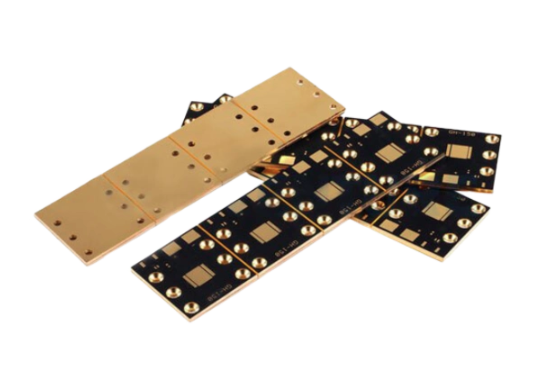
MCPCBs are categorized by their metal base material, each tailored to specific application needs:
1.Aluminum Core PCBs: The most widely used type, balancing cost, weight, and thermal performance. Ideal for LED lighting, consumer electronics, and low-to-medium power automotive components, they are easy to manufacture and offer sufficient conductivity for mainstream uses.
2. Copper Core PCBs: Best for high-power scenarios requiring maximum heat dissipation, such as power supply units, industrial motor controllers, and high-frequency communication equipment. Though pricier, their exceptional conductivity ensures reliable performance in heat-intensive systems.
3.Alloy Core PCBs: Made from aluminum-magnesium or aluminum-silicon alloys, these offer enhanced mechanical strength and rigidity. They suit industrial applications where durability under extreme conditions is a priority, though their thermal conductivity is slightly lower than pure aluminum or copper.
4.Flexible MCPCBs: Combining a thin, flexible metal base (aluminum or copper) with a flexible dielectric layer, these are designed for bendable applications like wearable devices or automotive interior lighting. They maintain thermal dissipation while conforming to irregular shapes.
VI: Conclusion
MCPCBs have become essential in modern electronics by solving thermal management challenges that traditional PCBs cannot address. Their unique structure, superior heat dissipation, mechanical strength, and stable performance make them a go-to solution for high-power and harsh-environment applications. As demand for efficient, reliable electronics grows, advancements in materials and manufacturing will expand MCPCBs’ capabilities and market reach further.
With 17 years of expertise in PCBA design, manufacturing, and service, KingshengPCBA is ready to help turn your ideas into reality. Feel free to contact us anytime to discuss your requirements and get a professional quotation.
Please send Email to kspcba@c-alley.com or call us through +86 13828766801 Or submit your inquiry by online form. Please fill out below form and attach your manufacturing files( PCB Gerber files and BOM List) if need quotation. We will contact you shortly.
 +86 13828766801
 kspcba@c-alley.com
 https://www.kingshengpcba.com/
 2/F, Building 6, Tangtou 3rd Industrial Zone, Tangtou Community, Shiyan Town, Baoan District, Shenzhen, China, 518108
We would also like to thank our customers for their trust and support. The company's outstanding achievements are mainly due to the loyalty of our customers, which also encourages and spurs our company to forge ahead.