* On your first PCB Assembly order!
* Up to $300 discount
 C - A L L E Y
 Home | Events | PCB | About Us | News | Contact Us
When designing a printed circuit board, one seemingly small decision often sparks debate among engineers and product managers: should the solder mask be green or black? Black looks premium and matches many modern products, but does it impact electrical performance, heat dissipation, or signal integrity? Let's separate fact from fiction.
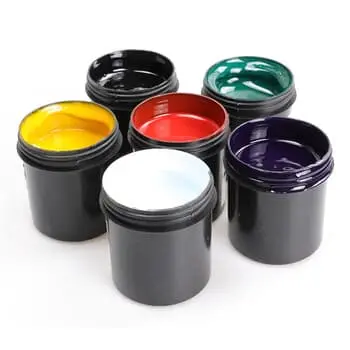
I. What Is Solder Mask?
The colored layer on a PCB is solder mask – a polymer coating that prevents solder bridges during assembly, protects copper traces from oxidation, and provides insulation. Green and black masks use the same epoxy resin base; the only difference is the pigment (green dye vs. carbon black or organic black pigment). In principle, their core material is identical.
II. Electrical Performance: No Practical Difference
For the vast majority of applications – consumer electronics, industrial control, automotive, medical devices – solder mask color has no effect on electrical performance.
Key parameters like dielectric constant (Dk), dissipation factor (Df), and insulation resistance are determined by the resin system, not the color. Reputable solder mask brands (Taiyo, Peters, etc.) ensure consistent electrical properties across colors.
One nuance: some low-grade black inks contain carbon particles that can be very slightly conductive. In practice, with high-quality black solder mask from a reliable PCBA factory, leakage current is negligible – well within industry standards. Only for extreme high-frequency RF or millimeter-wave designs might some engineers prefer green to completely avoid any unknown variables. For normal digital, analog, or power boards, black is perfectly safe.
III. Thermal Performance: No Difference
Does black absorb more heat? The solder mask layer is only 15–25 µm thick, with thermal conductivity around 0.2–0.4 W/m·K. This thin coating has no measurable impact on board-level heat dissipation. Heat flows primarily through copper pours, thermal vias, and the board substrate. If your design has high-power components, focus on copper thickness, thermal pads, and metal-core PCBs – not mask color.
IV. Where Color Actually Matters: Manufacturing and Testing
While electrical and thermal properties are unaffected, color does influence production efficiency and inspection – and this is where a professional PCBA factory adds value.
1. Automated Optical Inspection (AOI)
Green solder mask has been the industry standard for decades. AOI machines are typically calibrated with green boards because they provide excellent contrast between shiny copper pads and the matte green background. Defects like bridges, pinholes, and insufficient clearance are easily detected.
Black mask, on the other hand, absorbs more light and reduces contrast. This means AOI systems need higher-intensity multi-angle lighting and fine-tuned algorithms to achieve the same defect detection rate. An experienced factory – like ours – has dedicated AOI recipes for black solder mask, ensuring zero compromise on quality.
2. Rework and Debugging
Green boards allow engineers to easily trace nets, probe test points, and cut traces under a microscope or even with the naked eye. Black boards, while stylish, make fine traces nearly invisible. Rework requires strong side-lighting and more time. For prototype or debug stages, green is undeniably more practical.
3. In-Circuit Test (ICT)
Color does not affect electrical contact, but if the black mask is applied too thick or unevenly, it can slightly "creep up" around test pads. This is rare with proper process control, but green's visual clarity makes it easier to spot such issues.
V. Why Choose Black Then?
If green is easier to manufacture and test, why is black so popular? Simple: aesthetics and market positioning.
High-end consumer products (smartwatches, premium audio, transparent-case electronics) often use black PCBs to match the industrial design. Black conveys a sense of quality and sophistication. It does not improve performance, but it enhances perceived value – and that is a valid design choice.
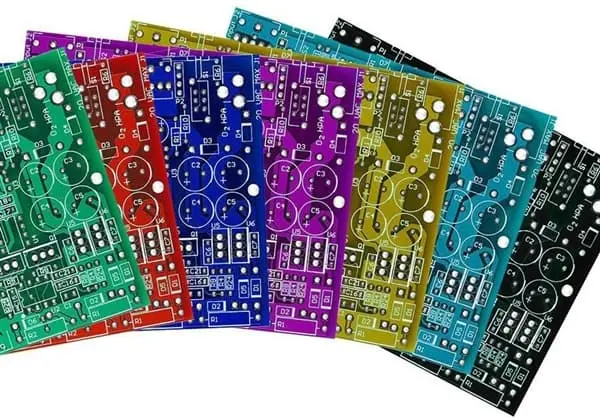
VI. Our Factory Recommendation
When you work with us, we help you choose the right color based on your product's lifecycle:
1. Prototyping, debugging, and educational boards → Green. It saves time during rework and measurement.
2. High-volume consumer products with no visible PCB → Green. Cost-effective, AOI-friendly, and reliable.
3. Premium or transparent-enclosure products → Black. We have the process maturity to handle black mask without compromising test coverage or reliability.
4. High-frequency or RF designs → Green (safer for critical RF parameters).
VII. Final Verdict
Solder mask color does not affect electrical or thermal performance. What truly matters for PCBA quality is the board material, copper thickness, solder mask brand, trace accuracy, surface finish, reflow profile, and inspection coverage – green or black.
Our factory uses only first-tier solder mask inks (green or black) and runs fully optimized AOI, flying probe, and X-ray inspection. We do not lower standards for a color change. So, before you decide, ask yourself: does my end user see the PCB? If yes, choose black for the look. If not, choose green for practicality. Either way, we deliver the same performance. Need a reliable PCBA partner? Contact us today – we are color-agnostic, quality-obsessed.
With 17 years of expertise in PCBA design, manufacturing, and service, Kingsheng PCBA is ready to help turn your ideas into reality. Feel free to contact us anytime to discuss your requirements and get a professional quotation.
Please send Email to kspcba@c-alley.com or call us through +86 13828766801 Or submit your inquiry by online form. Please fill out below form and attach your manufacturing files( PCB Gerber files and BOM List) if need quotation. We will contact you shortly.
 +86 13828766801
 kspcba@c-alley.com
 https://www.kingshengpcba.com/
 2/F, Building 6, Tangtou 3rd Industrial Zone, Tangtou Community, Shiyan Town, Baoan District, Shenzhen, China, 518108
We would also like to thank our customers for their trust and support. The company's outstanding achievements are mainly due to the loyalty of our customers, which also encourages and spurs our company to forge ahead.