* On your first PCB Assembly order!
* Up to $300 discount
 C - A L L E Y
 Home | Events | PCB | About Us | News | Contact Us
In the world of PCBA (Printed Circuit Board Assembly), the reflow soldering profile is the heartbeat of process quality. Among the various thermal profiles, one shape stands out for its effectiveness in handling complex, mixed-component boards: the so-called "Hump Curve". But what exactly is this curve, and why does it matter for your PCBA factory partner?
I. What Is the "Hump Curve"?
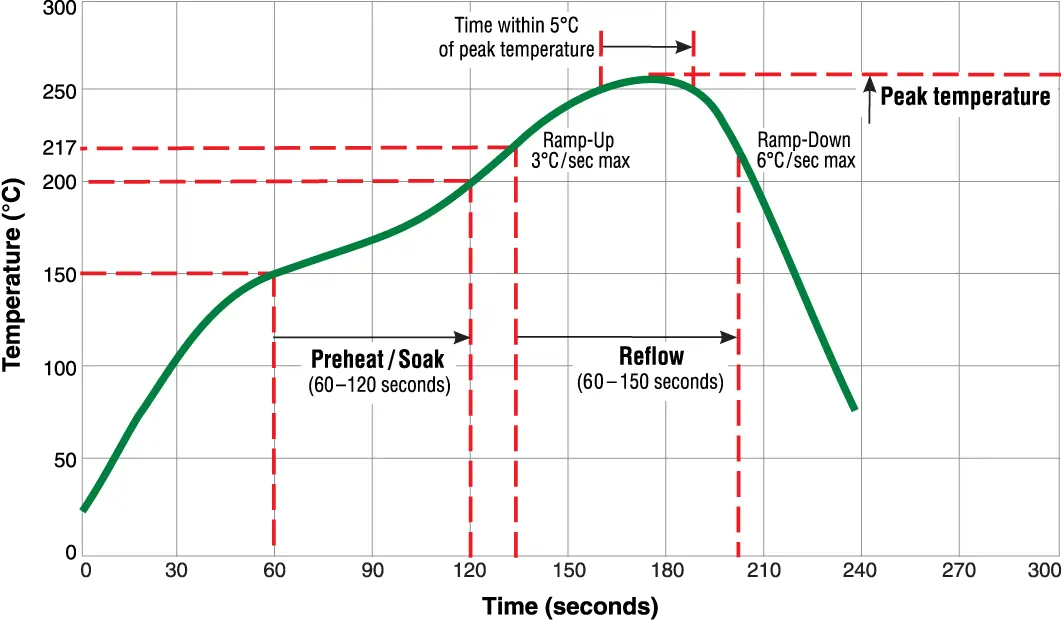
The "Hump Curve" is the industry nickname for the RSS (Ramp-Soak-Spike) temperature profile. Its shape resembles a camel's hump – a steady ramp-up, followed by a flat soaking platform, then a sharp spike to peak temperature, and finally a rapid cool-down. Unlike a linear RTS (Ramp-to-Spike) profile, the RSS curve intentionally includes a prolonged "soak" or plateau zone.
In practical terms, the RSS Hump Curve consists of four distinct phases:
1. Preheat Zone: Controlled heating from room temperature to about 150°C (typical ramp rate 1–3°C/s). This removes moisture, activates flux, and minimizes thermal shock.
2. Soak/ Zone: Temperature stabilizes between 150°C and 180°C for 60–120 seconds. This is the "hump" flat area – it equalizes the temperature across small and large components (e.g., 0201 resistors next to a heavy BGA or power inductor).
3. Reflow (Spike) Zone: The temperature rapidly rises to 235–250°C (for lead-free solder), exceeding the melting point (217°C) for a Time Above Liquidus (TAL) of 30–90 seconds. The solder paste melts, wets pads, and forms reliable joints.
4.Cooling Zone: Controlled cooling at 2–4°C/s to achieve fine, crack-free grain structures.
II. Why the Hump Curve Is Critical for PCBA Reliability
Modern PCBs often carry a wild mix of tiny passive components (01005, 0201) and thermally massive devices (BGAs, QFNs, thick inductors, power modules). If a linear RTS profile is used, small parts overheat – causing tombstoning, solder balling, or internal cracking – while large parts remain cold, leading to cold joints, head-in-pillow defects, or excessive voids. The Hump Curve solves this thermal imbalance. By holding the entire assembly at a uniform soak temperature, it ensures that all components "march together" into the reflow zone. The result is dramatically lower defects:
Reduced tombstoning (both ends of a chip component melt at the same time)
Fewer solder beads and flux spatters
Less BGA voiding and head-in-pillow failures
Minimized PCB warpage and MLCC (ceramic capacitor) micro-cracks
1. Tight Process Windows Demand Precision
A proper Hump Curve is not a "set-and-forget" profile. It requires precise control of:
2. Ramp rate: 1–3°C/s – too fast causes thermal shock; too slow reduces flux activity.
3. Soak temperature and time: Typically 150–180°C for 60–120 s. Excessive soak dries out flux, while insufficient soak leaves volatiles that create voids.
4. Peak temperature: For lead-free alloys, 235–250°C. Too high → intermetallic growth and pad oxidation; too low → incomplete wetting.
5. TAL: 30–90 seconds above liquidus. Short TAL causes cold joints; long TAL encourages brittle intermetallic layers.
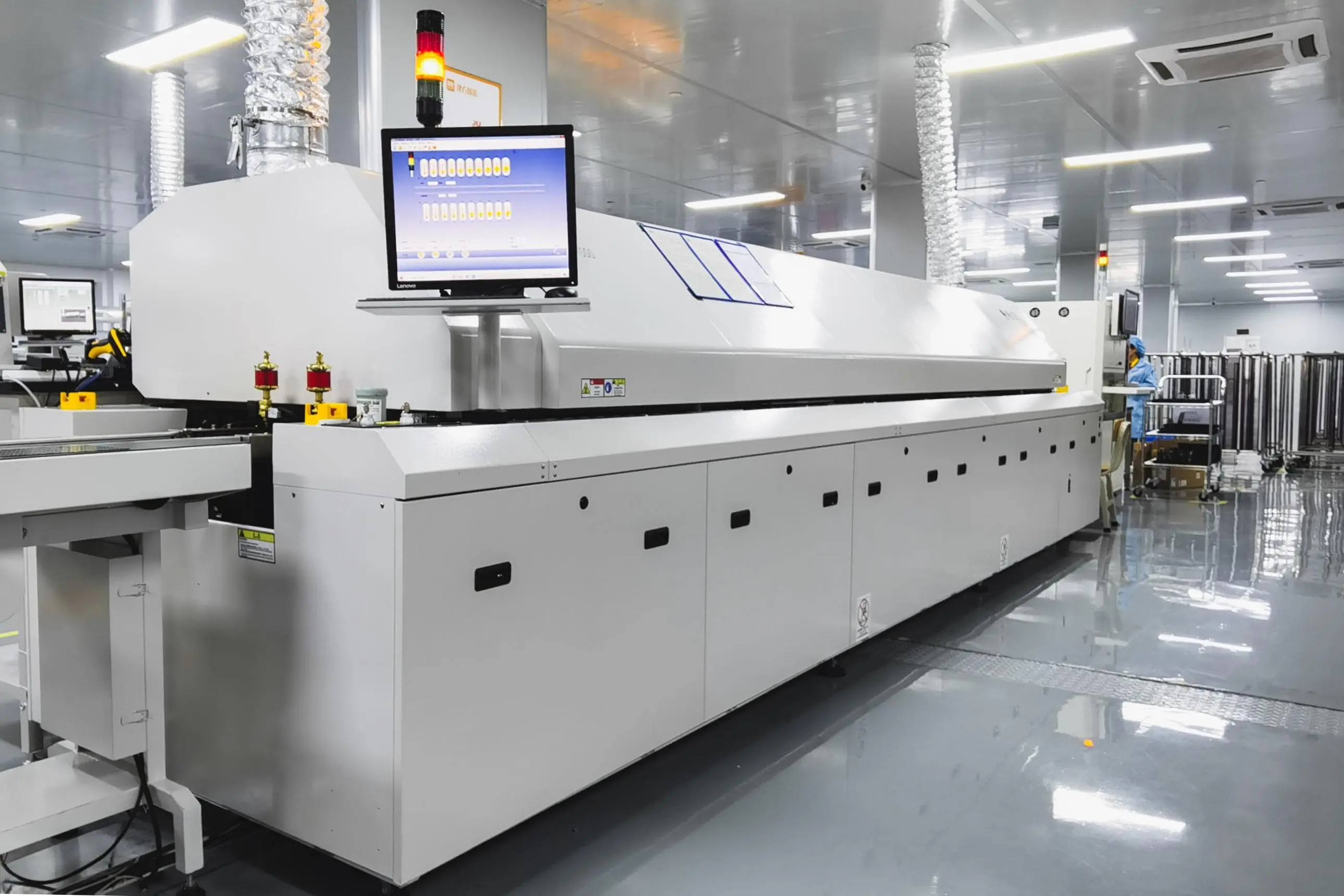
Only an experienced PCBA factory with multi-zone (≥8 zones) reflow ovens, high-precision profilers, and skilled process engineers can generate and validate a customized Hump Curve for each unique board.
III. What This Means When Choosing a PCBA Partner
A factory that blindly uses a generic RTS curve is gambling with your product's long-term reliability – especially for mixed-technology boards, thick copper, ceramic substrates, or automotive/military grades.
Your ideal PCBA manufacturer should demonstrate:
1. Simulation-assisted profiling to generate the optimal RSS Hump Curve based on PCB stack-up, copper distribution, and component layout.
2. Real-time monitoring of every zone, with ±1°C stability.
3. Verification using a profiler and a well-prepared thermocouple-equipped board (measuring hot spots like BGA centers and large component bodies).
4. Ability to adjust chain speed, zone temperatures, and fan speeds to fine-tune the soak plateau and peak spike.
IV. Conclusion
The "Hump Curve" is far more than a quirky shape – it is the hallmark of professional, defect-free reflow soldering. For PCBA buyers, selecting a factory that masters the RSS Hump Curve means fewer field failures, lower rework costs, and products that survive harsh environments. Next time you audit a PCBA supplier, ask to see their reflow profile. If it lacks that distinctive "hump" for mixed assemblies, keep looking – your reliability depends on it.
With 17 years of expertise in PCBA design, manufacturing, and service, KingshengPCBA is ready to help turn your ideas into reality. Feel free to contact us anytime to discuss your requirements and get a professional quotation.

Please send Email to kspcba@c-alley.com or call us through +86 13828766801 Or submit your inquiry by online form. Please fill out below form and attach your manufacturing files( PCB Gerber files and BOM List) if need quotation. We will contact you shortly.
 +86 13828766801
 kspcba@c-alley.com
 https://www.kingshengpcba.com/
 2/F, Building 6, Tangtou 3rd Industrial Zone, Tangtou Community, Shiyan Town, Baoan District, Shenzhen, China, 518108
We would also like to thank our customers for their trust and support. The company's outstanding achievements are mainly due to the loyalty of our customers, which also encourages and spurs our company to forge ahead.