* On your first PCB Assembly order!
* Up to $300 discount
 C - A L L E Y
 Home | Events | PCB | About Us | News | Contact Us
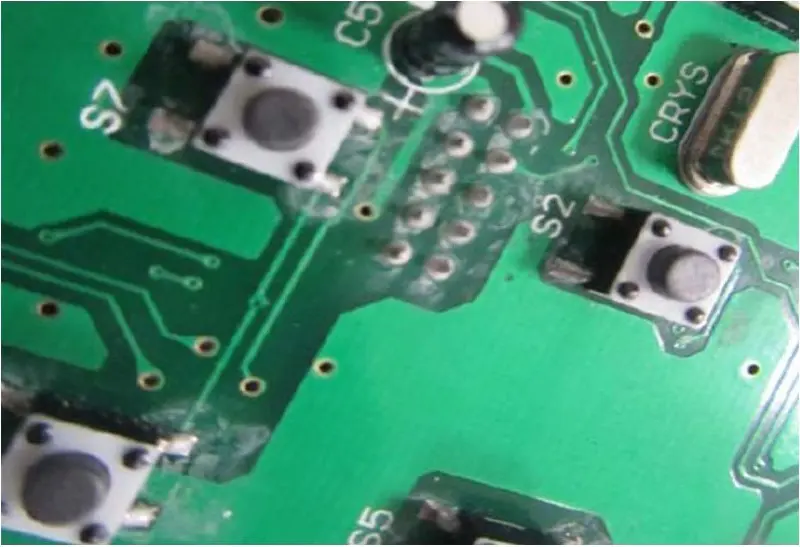
In PCBA manufacturing, reflow soldering is a core process. After soldering at high temperatures, the flux system in the solder paste—including activators, resins, and solvents—does not fully evaporate or decompose. Some portion remains on the board surface as residues. As electronic components trend toward miniaturization and higher density, the pitch between adjacent pads has decreased from 0.5mm to 0.3mm or even smaller. The potential impact of board surface residues on electrical performance has become increasingly prominent. This article analyzes the types of residues, the mechanisms by which they degrade electrical performance, and provides control recommendations.
I. Main Types of Post-Reflow Board Surface Residues
The composition of residues directly determines their threat level to electrical performance.
1.1 Rosin-Based Residues
Rosin is the most common film-forming substance in solder paste. During high-temperature soldering, rosin softens and flows, covering the solder joints and surrounding areas. After cooling, it forms a transparent or light-yellow solid insulating layer. Pure rosin has high impedance under dry conditions, but in humid environments, it absorbs moisture, causing surface insulation resistance (SIR) to decrease.
1.2 Activator Residues
Activators remove oxide films from pad surfaces and component leads. Common activators include organic acids (such as adipic acid and sebacic acid) and halogen compounds (such as bromides). Activators that do not fully decompose or volatilize remain on the board surface. These residues are highly hygroscopic and corrosive, making them a primary factor in electrical performance degradation.
1.3 Metal Salts and Oxides from Solder Paste
During soldering, activators react with metal oxides to form metal salts. Some metal salts remain on the board surface and may undergo electrochemical migration under the combined influence of an electric field and moisture.
II. Mechanisms by Which Board Surface Residues Affect Electrical Performance
Residues do not cause direct short circuits. Instead, they modify the surface condition of the board and trigger failures under specific conditions.
2.1 Reduction in Surface Insulation Resistance (SIR)
Surface insulation resistance measures the insulation capability between two adjacent conductors. Polar substances in residues exhibit very high impedance under dry conditions. However, when ambient relative humidity exceeds 70%, residues absorb moisture and form a continuous water film. Ionic impurities in the water film (such as halide ions and organic acid ions) provide conductive paths. SIR values can drop from the normal range of 10^12Ω or higher to 10^6–10^8Ω. Low SIR leads to increased signal crosstalk and logic level misjudgment.
2.2 Electrochemical Migration (ECM)
Electrochemical migration is one of the most serious failure modes caused by residues. The process involves three steps. First, residues absorb moisture and form an electrolyte film between two biased conductors (such as adjacent pads). Second, metal ions from the anode (typically tin or silver) dissolve into the electrolyte under the electric field. Third, metal ions migrate toward the cathode and are reduced to form metallic dendrites. Dendrites continue to grow and eventually create a permanent short circuit. This phenomenon is particularly common in fine-pitch devices such as 0.4mm pitch QFPs or connectors.
2.3 Corrosion and Current Leakage
Halogen-based activator residues are corrosive. In humid, warm environments, halide ions in the residues attack copper traces or nickel layers around solder joints, producing copper or nickel salts. These corrosion products may themselves be conductive and can reduce cross-sectional area of conductors, leading to open circuits in severe cases. Additionally, the corrosion process generates micro-currents, causing leakage losses.
III. Key Variables Influencing the Severity of Impact
Residues on the same board do not necessarily lead to failure. The following variables determine the actual impact level.
3.1 Residue Distribution Density
Solder paste splashing and printing misalignment can concentrate residues in fine-pitch areas. The gap between fine-pitch leads is only 0.1–0.2mm, and a small amount of residue can create a bridging path.
3.2 Environmental Conditions
High temperature (>40°C) and high humidity (>85% RH) accelerate moisture absorption and ion dissociation. Electronic products without conformal coating have significantly higher failure rates in tropical or coastal regions.
3.3 Applied Voltage
Electric field strength is the driving force for electrochemical migration. Higher voltages increase metal ion migration rates. Low-voltage logic circuits (below 3.3V) face relatively lower risk, while power management areas (above 12V) face higher risk.
IV. Control and Improvement Recommendations
To address residue issues, controls should be implemented from both process and material perspectives.
4.1 Optimize the Reflow Temperature Profile
Increase the peak temperature (within component tolerances) or extend the soak zone time to promote activator decomposition and volatilization. When using a hot-air reflow oven, ensure the board surface reaches the solder paste's recommended peak temperature (typically 240–250°C) and maintain it for 30–60 seconds.
4.2 Select Low-Residue Solder Paste
When choosing no-clean solder paste, evaluate the corrosivity rating of its flux system according to J-STD-004 classification. Solder pastes rated ROL0 or REL0 (halogen-free, low activity) pose the lowest residue risk.
4.3 Add a Cleaning Process
For high-reliability products (such as automotive electronics and medical devices), use an in-line cleaning system. Use deionized water or saponifiers to remove board surface residues. After cleaning, measure ionic contamination with a target value below 1.56μg NaCl/cm².
4.4 Apply Conformal Coating
When residues cannot be completely eliminated, spray acrylic or polyurethane conformal coating after PCBA assembly. The conformal coating forms a physical barrier that blocks moisture contact with residues, significantly reducing the risk of electrochemical migration.
Conclusion
The threat posed by post-reflow board surface residues to electrical performance is gradual and hidden. Under normal environments, mild residues may not cause failure for years. However, under conditions of high humidity, high temperature, or combined electric fields, reduced SIR and electrochemical migration can rapidly lead to functional anomalies. PCBA manufacturers should establish a control strategy from three perspectives: solder paste selection, reflow parameter optimization, and necessary cleaning processes. This is especially critical when accepting high-reliability orders—board surface cleanliness should be a key indicator in process control.
With 17 years of expertise in PCBA design, manufacturing, and service, Kingsheng PCBA is ready to help turn your ideas into reality. Feel free to contact us anytime to discuss your requirements and get a professional quotation.
Please send Email to kspcba@c-alley.com or call us through +86 13828766801 Or submit your inquiry by online form. Please fill out below form and attach your manufacturing files( PCB Gerber files and BOM List) if need quotation. We will contact you shortly.
 +86 13828766801
 kspcba@c-alley.com
 https://www.kingshengpcba.com/
 2/F, Building 6, Tangtou 3rd Industrial Zone, Tangtou Community, Shiyan Town, Baoan District, Shenzhen, China, 518108
We would also like to thank our customers for their trust and support. The company's outstanding achievements are mainly due to the loyalty of our customers, which also encourages and spurs our company to forge ahead.