* On your first PCB Assembly order!
* Up to $300 discount
 C - A L L E Y
 Home | Events | PCB | About Us | News | Contact Us
In surface-mount technology (SMT) and precision electronics assembly, the quality of a PCBA depends on far more than placement accuracy and reflow profiles. The workshop environment—specifically temperature, humidity, and electrostatic discharge (ESD) control—forms the invisible foundation that determines product reliability. As a professional PCBA factory, we understand: environmental control is the first line of defense for high-quality delivery. Here's how we manage it.
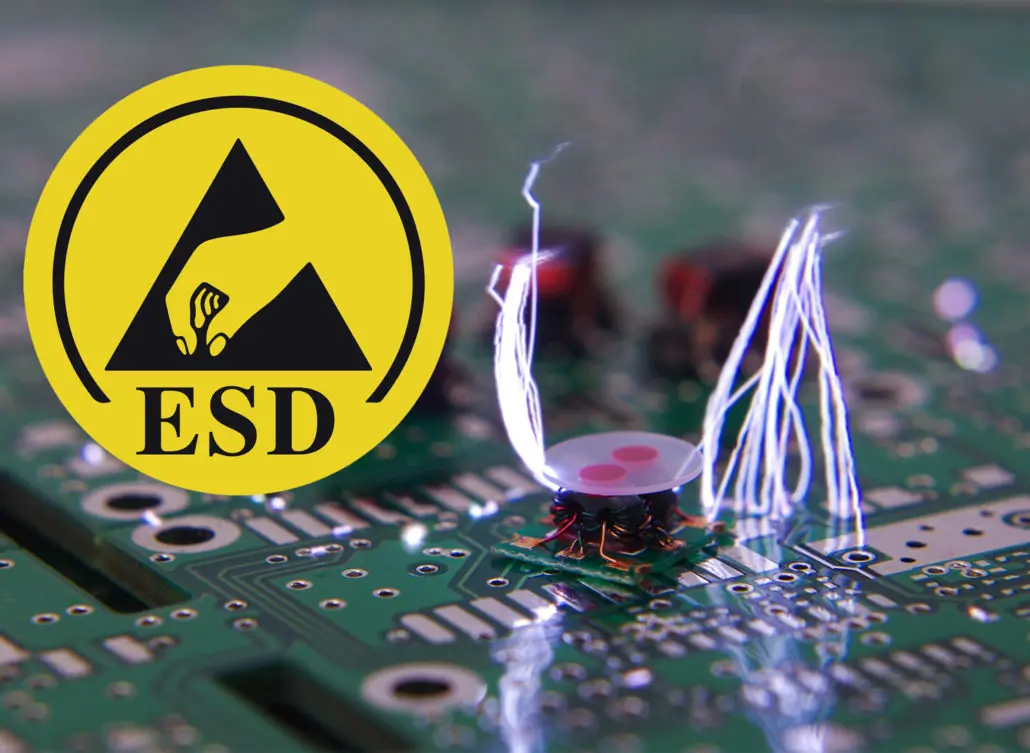
Ⅰ. Temperature & Humidity: More Than Comfort
Temperature and humidity directly affect solder paste behavior, component reliability, and process stability.
1.1 Temperature is kept at 23±3°C (20–26°C).
1.2 Too high (>26°C): Solvents in solder paste evaporate too quickly, causing paste drying, poor printing, and slump. Operators may sweat, risking ionic contamination on boards.
1.3 Too low (<20°C): Solder paste viscosity increases, leading to poor release from stencils and insufficient wetting. Thermal mismatch between PCB and components can also induce warpage.
1.4 Relative humidity (RH) is maintained at 40–60%.
1.5 Why high humidity (>70% RH) is dangerous:
PCB absorbs moisture--- during reflow, rapid vapor expansion causes "popcorning" or delamination.
Moisture combines with halide residues --- electrochemical migration and reduced insulation resistance.
Moisture-sensitive devices (MSDs) like ICs, LEDs, and connectors can crack internally.
1.6 Why low humidity (<30% RH) is dangerous:
Extremely high ESD risk (see next section).
Electrostatic attraction pulls dust and fibers onto fine-pitch pads and component leads, causing intermittent soldering defects like head-in-pillow.
Our workshop uses industrial HVAC systems with multi-point monitoring and real-time alarms. MSDs are stored in nitrogen-purged moisture-proof cabinets per IPC/JEDEC J-STD-033.
Ⅱ. ESD Management: The Invisible Killer
ESD is the most insidious threat in PCBA assembly. A discharge as low as <100V (completely unfelt by humans) can destroy sensitive MOSFET gate oxides, RF chips, or microprocessors.
ESD damage falls into three categories:
2.1 Catastrophic failure – immediate short or open, caught by in-circuit test (ICT).
2.2 Latent failure (most dangerous) – micro-damage that passes test but fails weeks later in the field, causing expensive recalls.
2.3 Parameter drift – degraded performance without total failure, e.g., higher leakage current.
Ⅲ. Our ESD Control System (People, Machine, Material, Method, Environment)
3.1 Grounding: Dedicated ESD ground (impedance <1Ω). All workbenches, equipment, racks, shelving, and conductive flooring are bonded.
3.2 Personnel: Anti-static smocks, caps, ESD shoes or heel straps. Wrist straps tested daily (strap + body resistance <35 MΩ per ANSI/ESD S20.20).
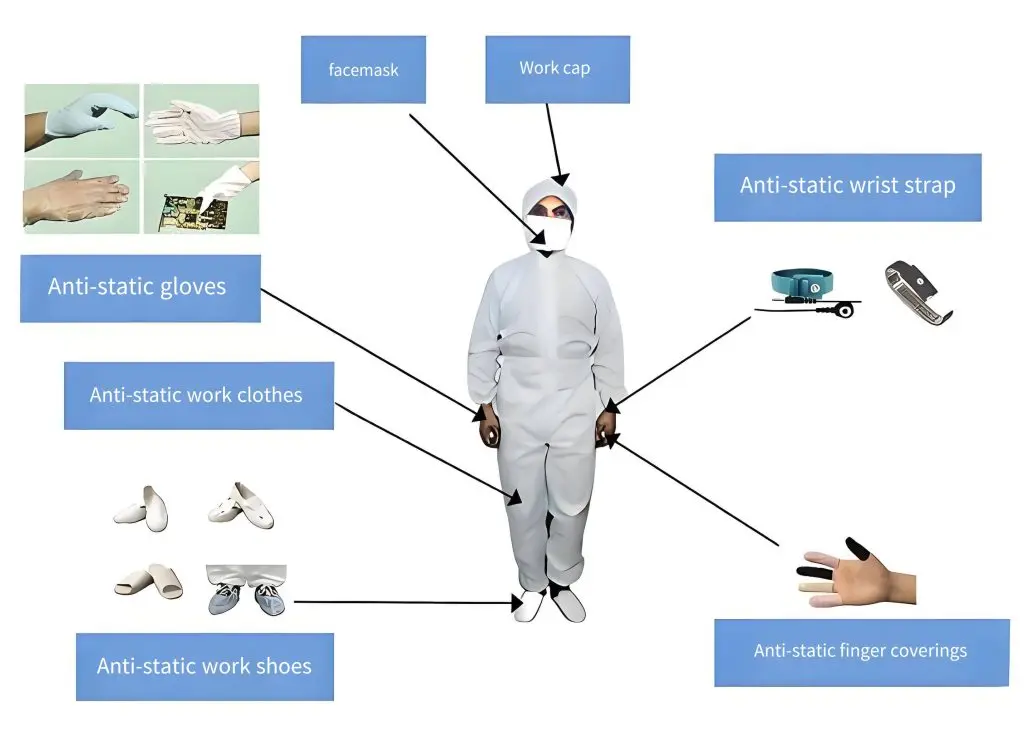
3.3 Work area: ESD workbenches (surface resistance 1×10⁶ – 1×10⁹ Ω), ESD bins, carts, and soldering irons with grounded tips.
3.4 Packaging: Anti-static shielding bags or ESD foam for PCBs and components; never use ordinary plastic.
3.5 Humidification: When RH drops below 40%, automatic humidifiers raise conductivity to suppress static buildup.
3.6 Ionizers: Overhead or benchtop ionizing fans at sensitive stations: manual soldering, rework, AOI, and programming.
3.7 Regular Audits & Training: We check workstation grounding weekly, measure surface/floor resistance monthly, and retrain all manufacturing staff annually. Each operator must pass a written and practical ESD exam. Only continuous monitoring and closed-loop improvement keep ESD under control.
Ⅳ. The Hidden Value: Yield and Cost
Strict environmental control requires investment in HVAC and ESD equipment, but the returns are substantial:
4.1 Lower defect rate – fewer solder balls, voids, delamination, and head-in-pillow defects.
4.2 Eliminate latent failures – avoiding field returns, protecting brand reputation, and reducing warranty costs.
4.3 Higher OEE – stable environment reduces machine alarms and process tuning downtime.
4.4 Meet premium requirements – automotive (IATF 16949), medical (ISO 13485), and military customers demand compliance with ANSI/ESD S20.20 and IPC-A-610.
Ⅴ. Our Commitment
At kingsheng PCBA, we treat environmental control as essential as placement accuracy. We operate a constant temperature, constant humidity, and fully ESD-protected clean workshop, staffed by certified ESD internal auditors.
Every PCBA you entrust to us—from solder paste printing to final inspection—is processed in a fully controlled environment. Because we believe: only extreme environmental control can produce extremely reliable electronics.
Choose us for stability and peace of mind.
With 17 years of expertise in PCBA design, manufacturing, and service, Kingsheng PCBA is ready to help turn your ideas into reality. Feel free to contact us anytime to discuss your requirements and get a professional quotation.
Please send Email to kspcba@c-alley.com or call us through +86 13828766801 Or submit your inquiry by online form. Please fill out below form and attach your manufacturing files( PCB Gerber files and BOM List) if need quotation. We will contact you shortly.
 +86 13828766801
 kspcba@c-alley.com
 https://www.kingshengpcba.com/
 2/F, Building 6, Tangtou 3rd Industrial Zone, Tangtou Community, Shiyan Town, Baoan District, Shenzhen, China, 518108
We would also like to thank our customers for their trust and support. The company's outstanding achievements are mainly due to the loyalty of our customers, which also encourages and spurs our company to forge ahead.