* On your first PCB Assembly order!
* Up to $300 discount
 C - A L L E Y
 Home | Events | PCB | About Us | News | Contact Us
In modern PCBA manufacturing, "impedance control" is more than a technical buzzword—it is a critical factor that determines signal integrity, product reliability, and overall system performance. But what exactly is impedance control, and when must it be applied? This article provides a clear, professional explanation for engineers and procurement professionals.
I. What Is Impedance Control?
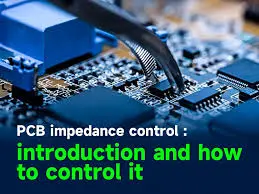
Impedance control refers to the deliberate design and manufacturing process that ensures the characteristic impedance of PCB transmission lines stays within a specified range, such as 50Ω, 75Ω, or 100Ω ±10%.
Characteristic impedance is not DC resistance; it is the instantaneous opposition a signal experiences as it travels along a trace. If the impedance is not continuous or mismatched with the source or load, signal reflections, ringing, overshoot, and EMI will occur. The goal of impedance control is to keep the impedance stable and within tolerance, guaranteeing low-distortion, low-loss signal transmission.
Ⅱ. Why Does Impedance Control Matter?
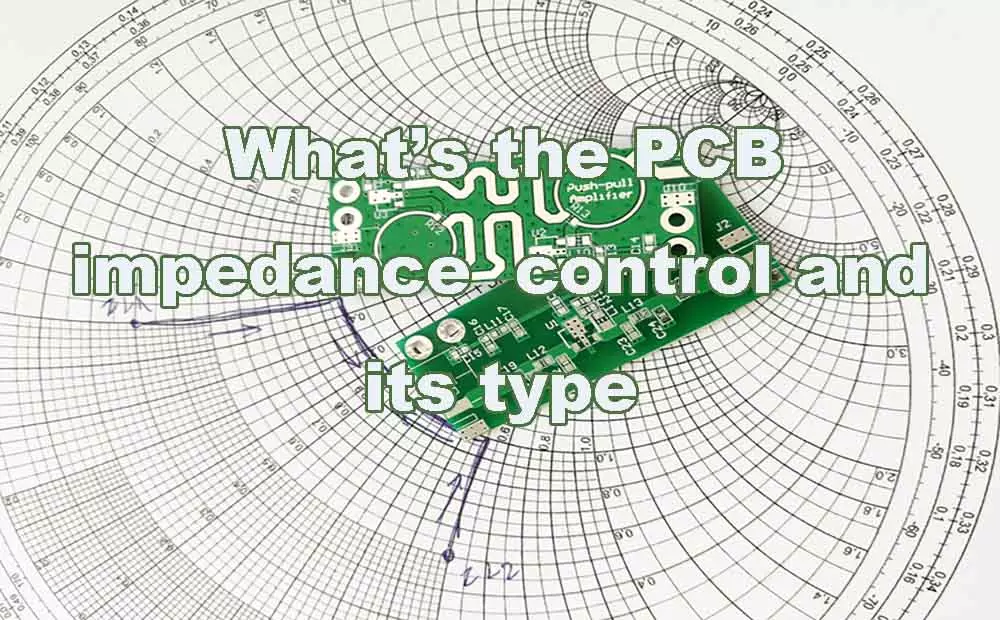
At low speeds, signal wavelengths are much longer than trace lengths, so impedance mismatches have negligible effects. However, with today's high-speed, high-frequency, and compact electronics, edge rates are becoming extremely fast. Without proper impedance control, you may face:
Signal reflections – Partial energy bounces back, causing overshoot/undershoot.
Increased EMI – Reflections radiate noise, causing EMC failures.
Signal distortion – Eye diagrams close, bit error rates rise.
System instability – High-speed buses (DDR, PCIe, USB) may fail intermittently.
Impedance control is therefore not optional for high-performance products.
Ⅲ. When Is Impedance Control Required?
Not every PCB needs tight impedance control. The following scenarios demand it:
3.1. High-speed digital circuits
When clock frequencies exceed 50 MHz or rise/fall times are below 1 ns.
Examples:
DDR memory interfaces (50Ω single-ended, 100Ω differential)
PCIe, SATA, USB 2.0/3.x/4 (e.g., USB 2.0: 90Ω differential)
HDMI, DisplayPort (100Ω differential)
Gigabit Ethernet (100Ω differential)
3.2 RF and microwave circuits
Matching impedance is essential for power transfer and return loss.
Examples: antenna feeds (50Ω/75Ω), RF front-end modules, GPS, Wi-Fi, Bluetooth, 5G, LoRa.
3.3 Analog video/audio interfaces (75Ω video, 110Ω AES/EBU digital audio)
3.4 High-speed backplanes and connectors – impedance consistency across multiple cards.
3.5 Mixed-signal precision boards – to reduce crosstalk and reflections.
Ⅳ. How a Professional PCBA Factory Achieves Impedance Control
Impedance control is not a "push-button" feature. It requires systematic engineering across design, fabrication, and assembly. A qualified PCBA factory should provide:
4.1 Accurate stack-up design – selecting proper materials (FR-4 high-speed grades, Rogers, Megtron) and controlling Dk/Df.
4.2 Tight process control – line width/spacing, etching factor, copper thickness, dielectric thickness, solder mask. Using LDI, AOI, and impedance coupons.
4.3 TDR testing – Time Domain Reflectometer testing with tolerance of ±10% or ±5%, plus full impedance test reports.
4.4 Design for Manufacturing (DFM) support – early design reviews to ensure impedance targets are achievable.
Ⅴ. Why Choose a Factory with Proven Impedance Control Capability?
Impedance control may look like a simple parameter, but it reflects a factory’s true technical depth. Material selection, layer stack-up, exposure, etching, lamination, and testing—every step affects the final impedance. One mistake can ruin an entire batch, leading to signal integrity failures, project delays, and even costly recalls.
As a full-service PCBA factory specializing in high-speed, RF, and HDI boards, we treat impedance control as a core competency. Whether you are working on DDR4/DDR5, PCIe Gen4/Gen5, Wi-Fi 6E/7, or millimeter-wave radar, we deliver reliable impedance solutions.
Ⅵ. Conclusion
Impedance control is not just a specification; it is the foundation of signal integrity. If your product involves high-speed digital interfaces, RF communication, or dense mixed-signal circuits, you need a PCBA partner that truly understands impedance from design to test.
Contact us today for expert design reviews, stack-up recommendations, and manufacturing support. Let us keep your signals clean and your products competitive.
With 17 years of expertise in PCBA design, manufacturing, and service, KingshengPCBA is ready to help turn your ideas into reality. Feel free to contact us anytime to discuss your requirements and get a professional quotation.
Please send Email to kspcba@c-alley.com or call us through +86 13828766801 Or submit your inquiry by online form. Please fill out below form and attach your manufacturing files( PCB Gerber files and BOM List) if need quotation. We will contact you shortly.
 +86 13828766801
 kspcba@c-alley.com
 https://www.kingshengpcba.com/
 2/F, Building 6, Tangtou 3rd Industrial Zone, Tangtou Community, Shiyan Town, Baoan District, Shenzhen, China, 518108
We would also like to thank our customers for their trust and support. The company's outstanding achievements are mainly due to the loyalty of our customers, which also encourages and spurs our company to forge ahead.