* On your first PCB Assembly order!
* Up to $300 discount
 C - A L L E Y
 Home | Events | PCB | About Us | News | Contact Us
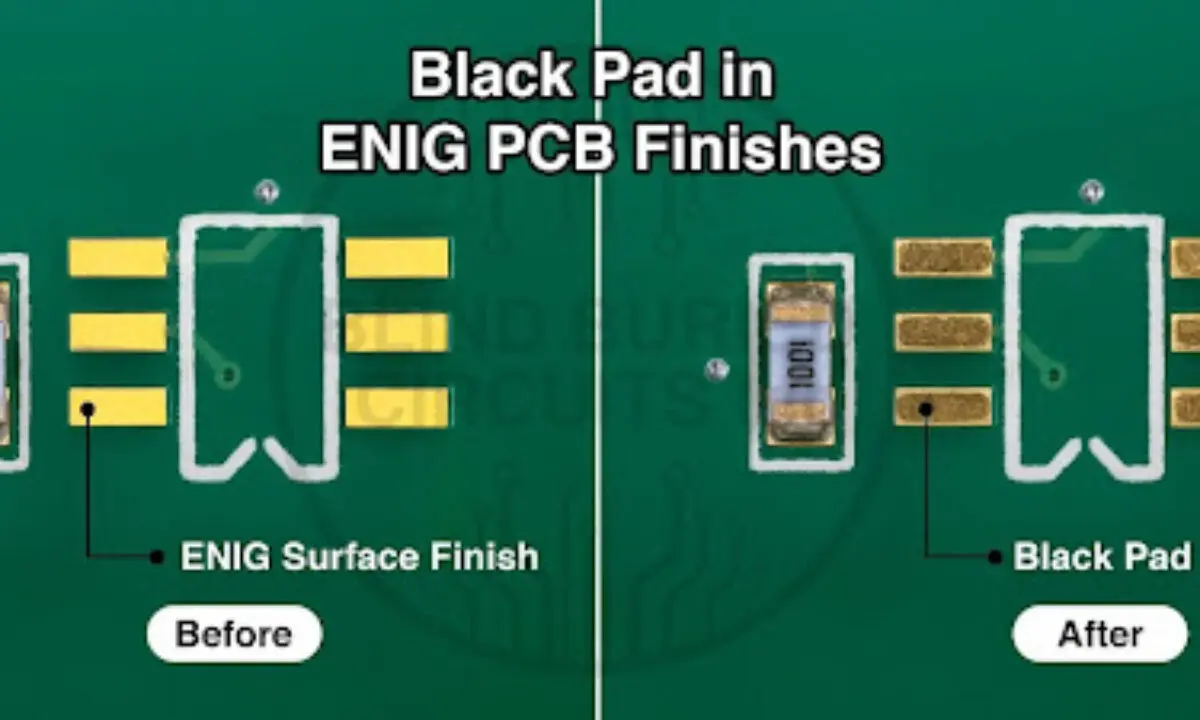
Electroless Nickel Immersion Gold (ENIG) is a go-to surface finish for high-reliability PCBs – it offers excellent flatness, solderability, and low contact resistance. However, ENIG carries a notorious, often hidden defect: Black Pad. This phenomenon, where excessive corrosion of the nickel-phosphorus layer creates a non-weldable, brittle interface, can lead to intermittent connections or outright field failures. Worse, Black Pad is nearly invisible to visual inspection, making it a silent killer that often escapes factory gates.
While many blame the PCB supplier's ENIG process alone, the truth is that in-house handling – specifically temperature/humidity and ESD controls – plays an equally critical role in triggering or preventing Black Pad. Let's break down the science and the practical countermeasures.
I. Temperature & Humidity: The Hidden Catalysts
ENIG’s gold layer is extremely thin (typically 0.025–0.127 µm) and naturally porous. It does not fully seal the underlying nickel from the environment. When relative humidity (RH) exceeds 60 %, moisture penetrates the gold pores, forming a galvanic cell between gold and nickel. This electrochemical reaction accelerates oxidation of nickel into black, non-solderable nickel oxide (NiO). Elevated temperatures (>30 °C) further speed up the corrosion rate.
Field data shows that PCBA factories maintaining 20–25 °C and 30–60 % RH experience up to a 90 % reduction in Black Pad-related failures compared to uncontrolled environments. However, low humidity (<30 %) – while good for corrosion – increases electrostatic risks, so a balanced window is essential.
1.1 Actionable measures for your factory
Strict environmental logging: Install calibrated temperature/humidity recorders in ENIG PCB storage areas and SMT lines. Log data twice per shift.
Vacuum-sealed anti-static bags with desiccants: All incoming ENIG boards must be stored this way. A humidity indicator card (HIC) showing >60 % RH means the batch must be baked before use.
Avoid sulfur-rich materials: Cheap rubber bands, cardboard, or adhesive tapes release sulfur that reacts with ENIG surfaces, accelerating blackening. Use sulfur-free storage bins.
1.2 ESD Management: The Overlooked Aggressor
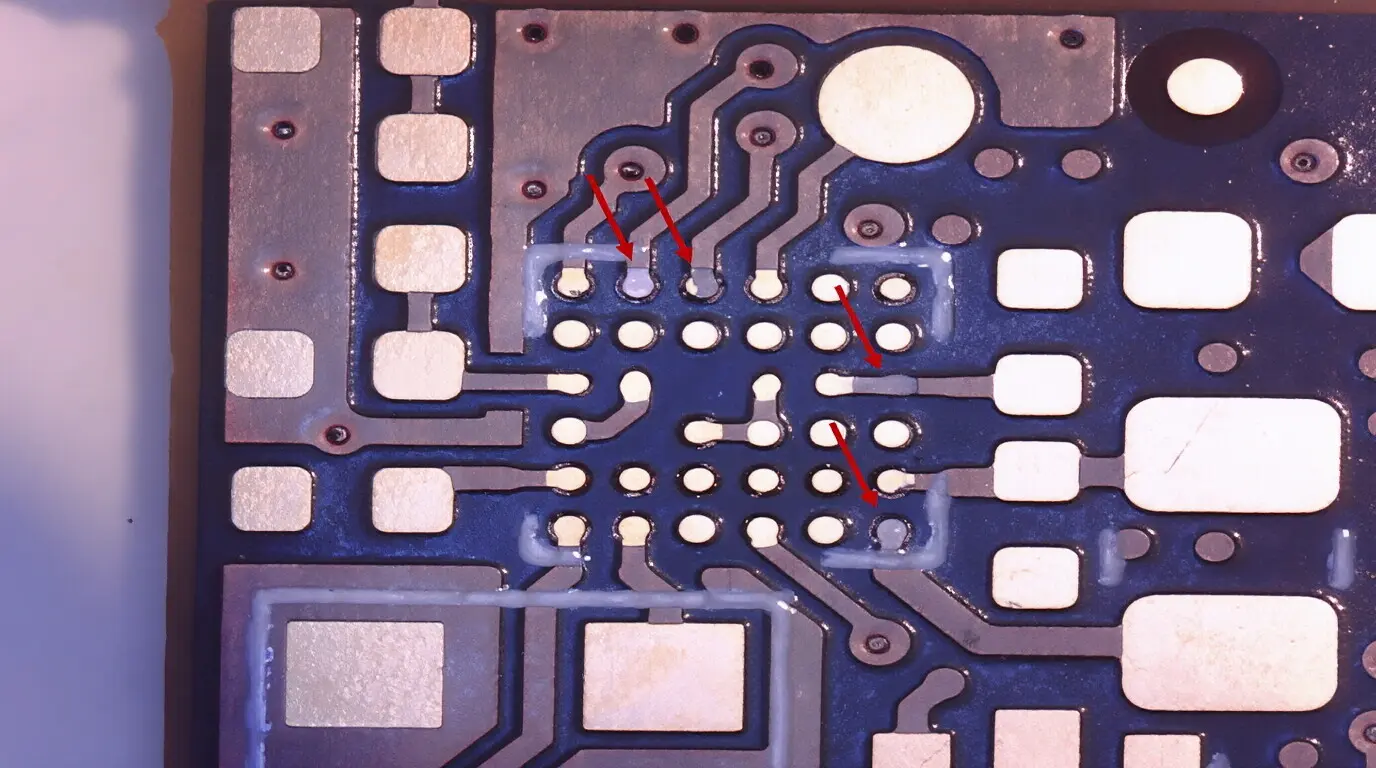
Many engineers associate ESD only with component damage, but it also directly threatens ENIG pads. A static discharge as low as 500 V can create microscopic spark pits through the thin gold layer. These pits expose bare nickel to moisture and airborne contaminants, becoming initiation sites for Black Pad corrosion. Moreover, for assembled PCBA, ESD through ENIG pads can punch through gate oxides in sensitive ICs – a failure that often appears weeks later in the field.
II. Critical ESD controls
2.1 Full EPA (ESD Protected Area) for all ENIG handling stations: Workbenches must have dissipative mats (surface resistivity 10⁶–10⁹ Ω/sq) connected to ground.
2.2 Personnel grounding: Wrist straps with 1 MΩ resistors and ESD-safe gloves are mandatory. Bare hands touching ENIG pads deposit oils and salts that accelerate corrosion.
2.3 Packaging: Use only metallized shielding bags or conductive trays for storage and intra-factory transport. Never use ordinary PE bags or bubble wrap – friction can generate >2000 V, enough to damage pads before assembly.
III. Incoming Quality Control & Warehouse Discipline
Prevention starts at the receiving dock. Implement the following IQC checks for every ENIG lot:
3.1 XRF measurement: Nickel thickness ≥3 µm (IPC-4552B); gold thickness 0.025–0.127 µm. Reject lots with gold <0.025 µm – they are too porous.
3.2 Phosphorus content analysis: 7–9 % phosphorus yields best corrosion resistance. Out-of-range phosphorus makes nickel brittle and prone to Black Pad.
3.3 Visual check under magnification (20–40×): Look for reddish, whitish, or darkened pads – all red flags. Perform a simple solder-dip test on suspect samples.
For warehouse management:
3.4 Strict FIFO (first-in, first-out) – ENIG boards have a limited shelf life even under ideal conditions (typically ≤6 months).
3.5 Re-baking protocol: If a vacuum bag is broken or the HIC shows >60 % RH, bake at 125 °C for 4–6 hours before use. Do not exceed one bake cycle unless specified by the PCB supplier.
IV. Conclusion
Black Pad is not an unavoidable curse – it is a failure mode that thrives on poor environmental and ESD practices. By rigorously controlling temperature (20–25 °C), humidity (30–60 % RH), and ESD (full EPA compliance), PCBA factories can slash the risk of ENIG-related field failures. Combine this with disciplined IQC and storage, and you turn a hidden defect into a preventable footnote. In high-reliability electronics, every pad counts – make sure yours are not black.
With 17 years of expertise in PCBA design, manufacturing, and service, KingshengPCBA is ready to help turn your ideas into reality. Feel free to contact us anytime to discuss your requirements and get a professional quotation.

Please send Email to kspcba@c-alley.com or call us through +86 13828766801 Or submit your inquiry by online form. Please fill out below form and attach your manufacturing files( PCB Gerber files and BOM List) if need quotation. We will contact you shortly.
 +86 13828766801
 kspcba@c-alley.com
 https://www.kingshengpcba.com/
 2/F, Building 6, Tangtou 3rd Industrial Zone, Tangtou Community, Shiyan Town, Baoan District, Shenzhen, China, 518108
We would also like to thank our customers for their trust and support. The company's outstanding achievements are mainly due to the loyalty of our customers, which also encourages and spurs our company to forge ahead.