* On your first PCB Assembly order!
* Up to $300 discount
 C - A L L E Y
 Home | Events | PCB | About Us | News | Contact Us
At KING SHENG PCBA, we know that reliable assembly starts long before a component reaches the pick-and-place machine. It begins at incoming quality control (IQC), where the very first clue to inspection requirements is the packaging itself. Two common formats – Tape & Reel and Tray – demand fundamentally different IQC approaches. Understanding these differences helps us protect component integrity and maintain high first-pass yields.
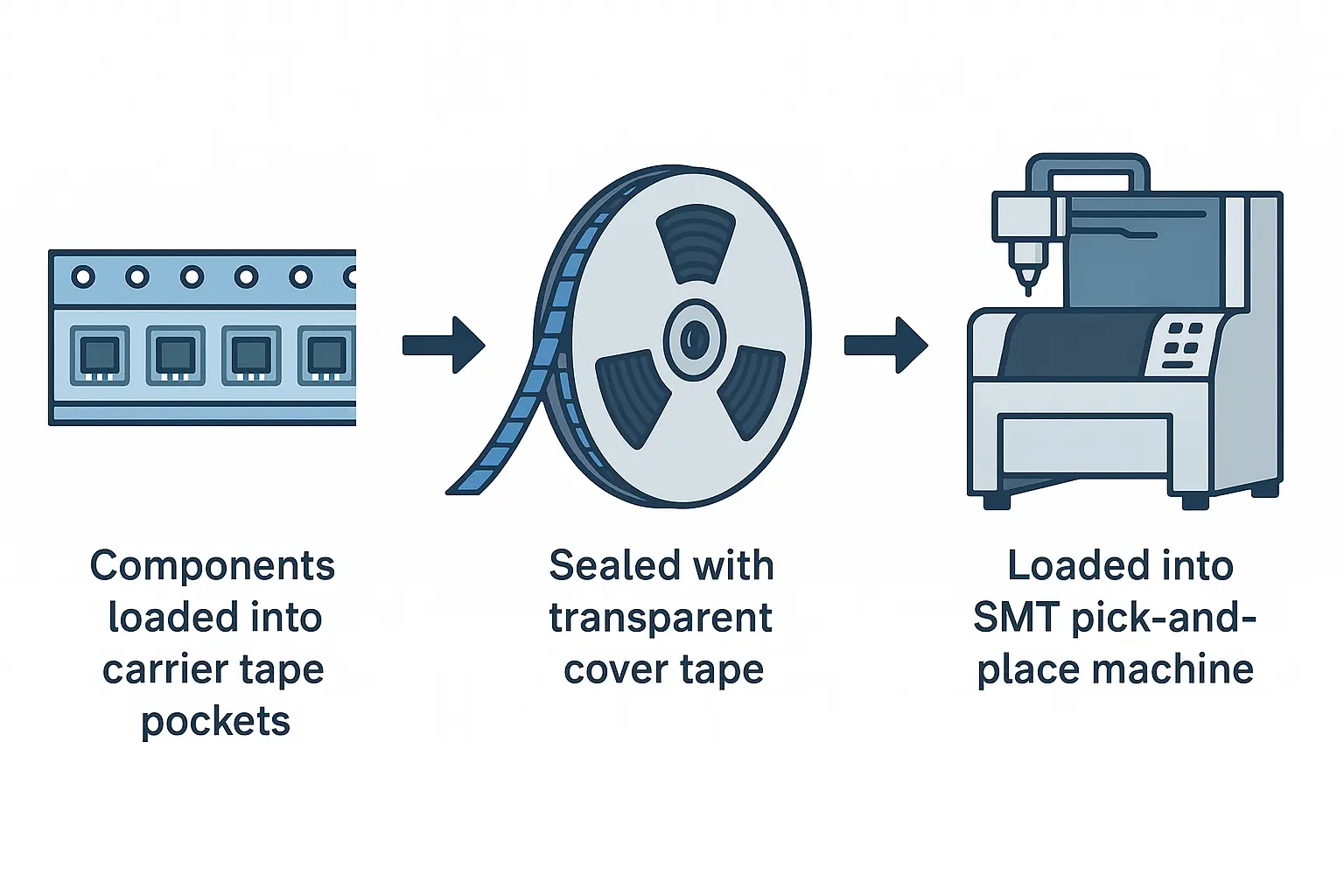
I. Tape & Reel Packaging – Efficiency Meets Automation
Tape & Reel is the workhorse of surface-mount technology, used for over 90% of passive components and small ICs. Components sit in formed cavities on a carrier tape, sealed with a cover tape, and wound onto a reel. This design enables non-stop feeding on automatic placement machines.
During IQC for Tape & Reel, three areas receive special attention. First, packaging integrity – inspectors check that the cover tape is not lifted, the carrier tape is undamaged, and any vacuum bags remain fully sealed. For moisture-sensitive devices, a broken vacuum seal means mandatory baking before reflow. Second, label verification – every reel must display a clear label with part number, quantity, batch code, and MSL level, cross-checked against the BOM. Third, visual sampling – because components are uniformly oriented in the tape, inspectors can quickly examine coplanarity and body condition through the tape windows, making batch sampling fast and efficient.
However, Tape & Reel has a blind spot: slight pin lifting or micro-cracks can hide inside the carrier cavity. At KING SHENG, we address this by adding high-magnification microscopic sampling to our IQC protocol, catching hidden defects before they reach the production line.
II Tray Packaging – Precision Handling for Delicate ICs
Tray packaging is reserved for larger, fine-pitch, or ESD-sensitive devices such as QFP, TQFP, and BGA packages. Each tray is moulded from anti-static material with a precise matrix of pockets, rigid enough to protect components during transport. Stacked trays provide mechanical stability, but they also introduce different IQC challenges.
For tray-packed components, the inspection process is more intensive. Inspection rates are higher – because trays contain fewer components per package and opening exposes them directly to the environment, many EMS providers require 100% visual inspection of every pocket. Manual handling increases – unstacking, opening, inspecting, and transferring tray ICs to feeders are all manual steps, each carrying risks of ESD damage or mechanical impact. Pin coplanarity is critical – even minor tray warpage during shipping can bend leads on QFP or BGA devices. At KING SHENG, we perform 100% coplanarity checks on critical tray-packed ICs using high-magnification optical measurement tools, ensuring compliance with IPC-A-610 standards.
Tray packaging also demands stricter ESD protocols. Every operator must follow proper grounding and use anti-static tools. Compared to Tape & Reel, where automation reduces human touch, tray inspection is labour-intensive but necessary for the safety of precision components.
III Why Packaging Differences Matter for Quality
The core difference between the two formats is the balance between automation-friendliness and manual intervention. Tape & Reel allows batch sampling, rapid visual checks, and minimal handling – making it highly efficient. Tray packaging offers superior protection for large or delicate parts, but requires more thorough, often 100% inspection, with greater attention to pin condition and ESD safety.
IV Conclusion
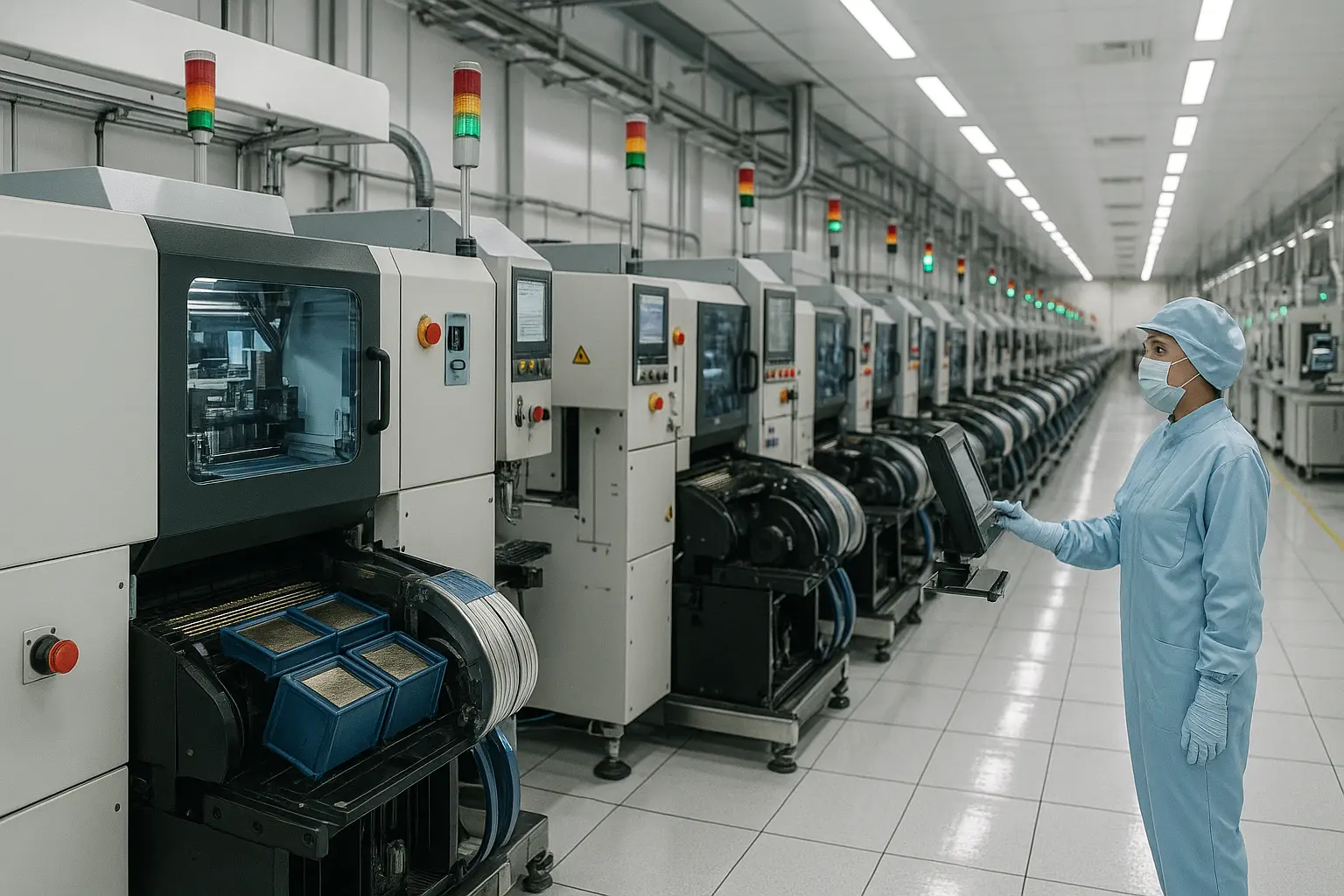
At KING SHENG PCBA, we have built distinct IQC standards for each packaging type. For Tape & Reel, we prioritise seal integrity, label traceability, and batch-based sampling, supplemented by microscopic checks for hidden anomalies. For Tray, we enforce 100% visual and coplanarity inspection using high-magnification optical measurement, verifying every pocket against PCB land patterns.
Our commitment to quality does not stop at IQC. With four SMT lines, Heller reflow ovens, DEK printers, YesTech AOI, X-ray for BGA inspection, and ICT testing, KING SHENG operates a closed-loop quality system. We believe that reliable PCBA starts with reliable incoming components – and that begins with understanding how packaging shapes inspection.
Whether your components arrive on reels or in trays, you can trust KING SHENG to treat them with the appropriate level of care, from dock to delivery. Choose KING SHENG for professional, transparent, and defect-preventive PCBA services – where every part is inspected right, the first time.
With 17 years of expertise in PCBA design, manufacturing, and service, KingshengPCBA is ready to help turn your ideas into reality. Feel free to contact us anytime to discuss your requirements and get a professional quotation.
Please send Email to kspcba@c-alley.com or call us through +86 13828766801 Or submit your inquiry by online form. Please fill out below form and attach your manufacturing files( PCB Gerber files and BOM List) if need quotation. We will contact you shortly.
 +86 13828766801
 kspcba@c-alley.com
 https://www.kingshengpcba.com/
 2/F, Building 6, Tangtou 3rd Industrial Zone, Tangtou Community, Shiyan Town, Baoan District, Shenzhen, China, 518108
We would also like to thank our customers for their trust and support. The company's outstanding achievements are mainly due to the loyalty of our customers, which also encourages and spurs our company to forge ahead.