* On your first PCB Assembly order!
* Up to $300 discount
 C - A L L E Y
 Home | Events | PCB | About Us | News | Contact Us
During the PCBA manufacturing process, component displacement is a common yet troublesome quality issue. When components shift, it not only affects the aesthetic appearance of the board but can also lead to serious electrical faults such as open circuits or short circuits, directly impacting product reliability and service life. So, what exactly causes components to shift during SMT assembly? This article will analyze the reasons from the perspectives of process, equipment, materials, and more.
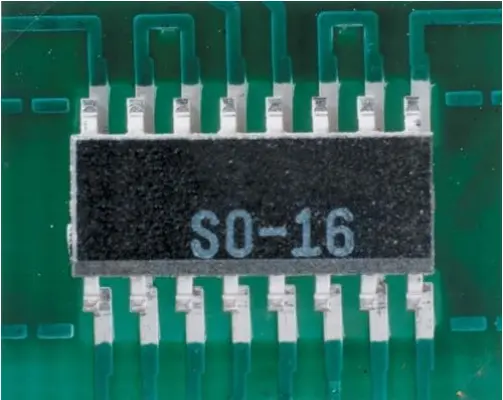
I. Hidden Risks in the Solder Paste Printing Stage
Solder paste printing is the first step in the SMT process and a critical factor affecting placement quality. 1.Uneven Solder Paste Volume or Misalignment
If the stencil aperture is poorly designed, or if there is misalignment between the stencil and PCB during printing, it can result in inconsistent solder paste volume or positional deviation. When the placement machine mounts components onto the solder paste, the paste's viscosity is meant to provide temporary fixation. However, if the paste is significantly misaligned, components can easily shift during subsequent transport or the reflow soldering process.
2.Solder Paste Slumping or Insufficient Viscosity
The viscosity of solder paste is influenced by factors such as ambient temperature and humidity, paste thawing time, and stirring effectiveness. If viscosity is too low, the paste may slump and fail to hold components effectively; if too high, it can cause poor stencil release. Additionally, improper storage or exceeding the paste's shelf life can reduce flux activity, also compromising the initial fixation of components.
II. Placement Machine Precision Issues
The placement machine is the core equipment on an SMT line, and its precision directly determines the initial component position.
1.Insufficient Equipment Precision or Aging
With prolonged use, mechanical components of the placement machine, such as X/Y axis ball screws, guide rails, and encoders, experience wear, leading to decreased repeatability and positioning accuracy. Without timely calibration and maintenance, components will be placed deviating from the intended coordinates.
2.Abnormal Nozzles and Feeders
Worn, clogged, or incorrectly selected nozzles can result in insufficient suction force or pick-up position errors. Issues such as unstable feeder indexing or deformed feeder cover plates can cause components to already have angular or positional offsets during picking, which ultimately manifest in the placement results.
III. Thermal Effects During the Reflow Soldering Process
The reflow oven is a "high-risk zone" for component displacement. Hot air flow and changes in surface tension during solder melting can both induce movement.
1.Improper Reflow Profile Settings
If the ramp-up rate is too fast, solvents in the solder paste can volatilize violently, causing "solder spattering" that pushes components. Conversely, insufficient time in the soak zone can lead to excessive temperature differences across the PCB, causing components to drift due to uneven heating.
2.Tombstoning and Drifting During Soldering
For small-sized passive components like resistors and capacitors, if there is an imbalance in solder paste volume on the two pads, asymmetrical pad design, or thermal imbalance across the PCB during reflow, the surface tension of the molten solder can pull the component, causing it to tilt towards one end or even stand up vertically – a phenomenon known as "tombstoning." For larger components, uneven air pressure within a forced convection reflow oven can also push them out of position the moment the solder melts.
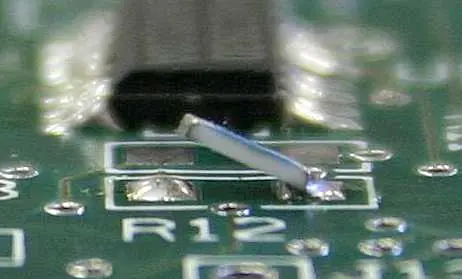
IV. PCB Design and Component Layout as Inherent Factors
Some displacement issues originate in the design phase.
1.Asymmetrical Pad Dimensions
If pad dimensions do not match the component size, or if the two pads for the same component differ significantly in size or shape, the forces exerted by the molten solder on each end during reflow will be unequal, easily leading to displacement.
2.Improper Mix of Large and Small Components
During reflow, large components absorb more heat. If small components are placed too close, they can be affected by the resulting uneven thermal distribution, leading to shifting or tombstoning. Furthermore, inconsistent component layout orientation can disrupt the uniformity of hot air flow.
V. Material and Operational Management Factors
1. PCB Moisture Absorption or Warpage
If PCBs absorb moisture during storage, they are prone to warping under the high temperatures of reflow. This changes the contact between components and pads, inducing shifting.
2. Oxidized Component Leads
Severely oxidized component leads or terminations have poor solderability. The solder paste cannot wet them evenly, resulting in uneven tension forces acting on the component during soldering, which can also cause shifting.
Conclusion
Component displacement may appear to be an issue arising from a single point, but it is often the result of a combination of factors across design, process, equipment, and materials. As a PCBA manufacturing facility, we consistently adhere to the principle of "prevention first, control upfront." By focusing on critical areas such as printing accuracy, placement stability, and oven temperature uniformity, we establish a comprehensive process control system to minimize the occurrence of shifting defects to the greatest extent possible..
With 17 years of expertise in PCBA design, manufacturing, and service, KingshengPCBA is ready to help turn your ideas into reality. Feel free to contact us anytime to discuss your requirements and get a professional quotation.
Please send Email to kspcba@c-alley.com or call us through +86 13828766801 Or submit your inquiry by online form. Please fill out below form and attach your manufacturing files( PCB Gerber files and BOM List) if need quotation. We will contact you shortly.
 +86 13828766801
 kspcba@c-alley.com
 https://www.kingshengpcba.com/
 2/F, Building 6, Tangtou 3rd Industrial Zone, Tangtou Community, Shiyan Town, Baoan District, Shenzhen, China, 518108
We would also like to thank our customers for their trust and support. The company's outstanding achievements are mainly due to the loyalty of our customers, which also encourages and spurs our company to forge ahead.