Fixing Methods for Heat Sinks and Large Components: A Key Process Analysis in PCBA Manufacturing
 C - A L L E Y
Home | Events | PCB | About Us | News | Contact Us
In PCBA processing, the fixation of heat sinks and large components is a critical yet often overlooked step. Insecure attachment can lead to poor heat dissipation, component loosening, or even short circuits, solder joint cracks, and complete board failure. This article discusses mainstream fixing methods and their appropriate applications.
I. Why Special Attention Is Needed for Heat Sinks and Large Components
Large components (such as transformers, large capacitors, power modules) and heat sinks have significant mass. During vibration, shock, or prolonged thermal cycling, relying solely on solder to bear mechanical stress is insufficient. Solder joints primarily provide electrical connections and have limited mechanical strength. Once external forces or thermal stress exceed the joint’s tolerance, cold joints, cracks, or detachment may occur. Therefore, auxiliary fixation structures are essential.
II. Comparison of Mainstream Fixing Methods
1. Screw Fixing (Most Reliable, Requires Space)
Screws are the preferred method for fixing large heat sinks and power components. PCBs must have pre-drilled mounting holes, with metal or plastic brackets pressing the component against the board.
Advantages: High mechanical strength, good vibration resistance, removable.
Disadvantages: Occupies PCB area, adds assembly steps, requires torque control (over-tightening can crack components or PCB).
Applications: High-power MOSFETs, rectifier bridges, IGBT modules that need good contact and heat transfer.
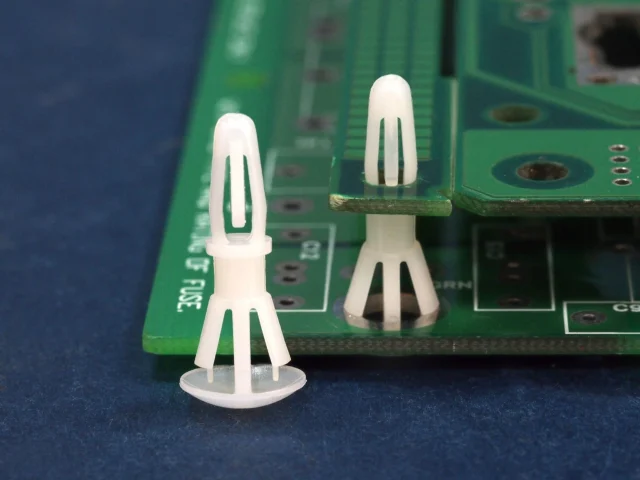 2. Snap-Fits and Clips (Quick Assembly)
Plastic or metal clips snap onto the edge of components or heat sinks, common in memory heat spreaders and small power transistors.
Advantages: Tool-free, fast assembly, low cost.
Disadvantages: Limited holding force, prone to loosening after repeated use.
Applications: Medium-sized heat sinks in products without severe vibration.
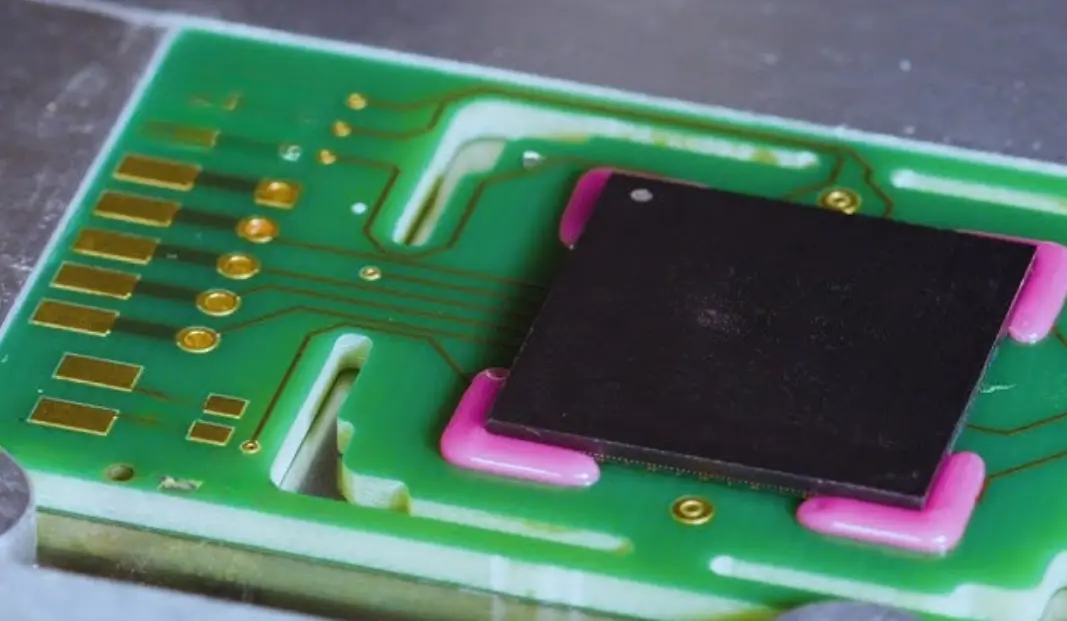
3. Adhesive Bonding (Thermal / Structural Adhesive)
Thermal adhesive transfers heat while providing fixation; structural adhesive offers purely mechanical locking.
Advantages: No drilling required, suitable for compact designs; adhesive cushions thermal stress.
Disadvantages: Long curing time, difficult rework, strength degrades with aging.
Applications: Small heat sinks, irregularly shaped components without screw holes.
 4. Hold-Down Bars and Overall Clamping Plates (High-End Solution)
In high-reliability products (e.g., telecom base stations, automotive electronics), overall clamping plates simultaneously secure multiple components and heat sinks.
Advantages: Uniform force, excellent vibration resistance, best thermal contact consistency.
Disadvantages: High cost, requires custom metal parts.
Applications: High-density, high-vibration environments such as automotive ECUs and server power supplies.
III. Common Design Mistakes
1. Relying solely on solder for mechanical support: Large transformers must use tie straps or adhesive bases; otherwise, shipping vibration can tear off pads.
2. Ignoring thermal expansion mismatch: Hard connections (e.g., screws) between plastic components and metal heat sinks can cause cracking. Use spring clips or thermal pads to compensate.
3. Screwing directly into the PCB: Without copper standoffs or reinforced holes, the PCB inner layers can be damaged by repeated vibration. Use metal bushings or nylon screws.
IV. Recommendations
As a PCBA manufacturer, we recommend defining fixation strategies for large components early in the design phase:
Small-batch / R&D stage: Prefer screws + thermal pads for reliability and adjustability.
High-volume / consumer electronics: Use snap-fits or press-fit clips with automated assembly lines for efficiency.
Automotive / industrial high-reliability products: Combine overall clamping plates + underfill + screws, prioritizing quality over cost.
Shenzhen Kingsheng Technology Co., Ltd. has rich experience and a professional technical team in PCBA.
Contact KingshengPCBA today to request a quote or discuss your PCBA project.
 +86 13828766801
 kspcba@c-alley.com
 https://www.kingshengpcba.com/
 2/F, Building 6, Tangtou 3rd Industrial Zone, Tangtou Community, Shiyan Town, Baoan District, Shenzhen, China, 518108