* On your first PCB Assembly order!
* Up to $300 discount
 C - A L L E Y
 Home | Events | PCB | About Us | News | Contact Us
Introduction
In today’s fast-evolving electronics industry, traditional rigid PCBs are no longer the onlysolution. Flexible (Flex) and Rigid-Flex PCBs have emerged as game-changers, offering unparalleled design freedom, reliability, and space-saving benefits. But why should engineers and product developers consider Flex or Rigid-Flex assembly? This blog explores the key advantages, applications, and decision-making factors to help you determine if these technologies are right for your next project.
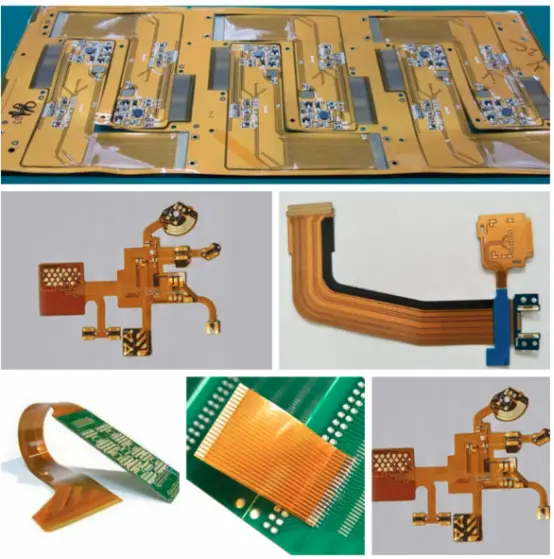
I. What Are Flex and Rigid-Flex PCBs?
Flex PCBs
1.Made from polyimide or other flexible substrates.
2.Can bend, twist, or fold to fit dynamic or compact spaces.
3.Ideal for wearables, medical devices, and consumer electronics.
Rigid-Flex PCBs
1.Combine rigid sections (for components) and flexible sections (for interconnects).
2.Eliminate the need for connectors, improving reliability and signal integrity.
3.Used in aerospace, military, and high-performance electronics.
II. Top Reasons to Choose Flex or Rigid-Flex Assembly
1. Space and Weight Savings
1.Flex PCBs reduce thickness and weight compared to rigid boards with connectors.
2.3D packaging allows folding into tight spaces (e.g., foldable smartphones, drones).
2. Enhanced Durability & Reliability
1.Fewer solder joints and connectors mean lower failure rates.
2.Withstand vibrations, shocks, and extreme temperatures (critical for automotive and aerospace).
3. Improved Signal Integrity
1.Fewer interconnects reduce signal loss and EMI.
2.High-speed applications (5G, IoT) benefit from controlled impedance in flex circuits.
4. Design Freedom & Customization
1.Flex circuits can conform to unique shapes (curved displays, implantable medical devices).
2.Rigid-Flex allows modular designs with integrated rigid sections for complex systems.
III. Cost Efficiency in the Long Run
1.Higher initial cost but lower assembly costs (no connectors, reduced manual labor).
2.Longer lifespan reduces replacement and maintenance expenses.
VI. Flex vs. Rigid-Flex: Which One Should You Choose?
Decision Check list:
1. Does your product need to bend or fold? → Flex PCB
2. Do you need both rigid mounting and flexible interconnects? → Rigid-Flex PCB
3. Is high reliability critical? → Rigid-Flex (fewer failure points)
V. Future Trends in Flex & Rigid-Flex Technology
1.Ultra-Thin Flex Circuits (<0.1mm) for next-gen wearables.
2.Stretchable Electronics for medical and soft robotics.
3.Embedded Components in Rigid-Flex for miniaturization.
4.Sustainable Materials (bio-based polyimide) for eco-friendly PCBs.
Conclusion: Is Flex or Rigid-Flex Right for Your Project?
Flex and Rigid-Flex PCBs offer superior performance, reliability, and design flexibility compared to traditional rigid boards. While they may have a higher upfront cost, the long-term benefits in durability, space savings, and signal integrity make them indispensable for modern electronics. Need help deciding? Consult with our PCB experts to determine the best solution for your application.
With 17 years of expertise in PCBA design, manufacturing, and service, KingshengPCBA is ready to help turn your ideas into reality. Feel free to contact us anytime to discuss your requirements and get a professional quotation.
Please send Email to kspcba@c-alley.com or call us through +86 13828766801 Or submit your inquiry by online form. Please fill out below form and attach your manufacturing files( PCB Gerber files and BOM List) if need quotation. We will contact you shortly.
 +86 13828766801
 kspcba@c-alley.com
 https://www.kingshengpcba.com/
 2/F, Building 6, Tangtou 3rd Industrial Zone, Tangtou Community, Shiyan Town, Baoan District, Shenzhen, China, 518108
We would also like to thank our customers for their trust and support. The company's outstanding achievements are mainly due to the loyalty of our customers, which also encourages and spurs our company to forge ahead.