* On your first PCB Assembly order!
* Up to $300 discount
 C - A L L E Y
 Home | Events | PCB | About Us | News | Contact Us
Introduction
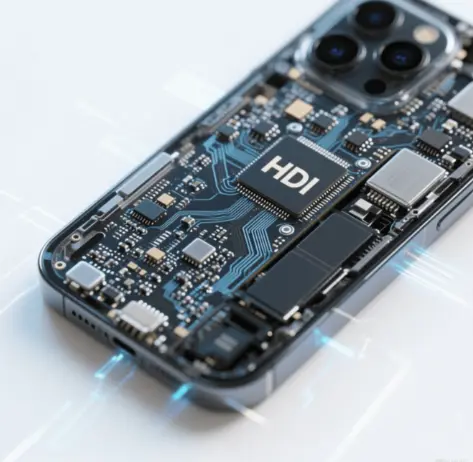
High-Density Interconnect (HDI) and rigid-flex PCBs represent two of the most advanced technologies in modern electronics manufacturing. While HDI focuses on miniaturization and high-performance routing, rigid-flex PCBs combine the benefits of rigid and flexible substrates for complex, space-constrained applications. But is HDI truly suitable for rigid-flex PCBs? This blog explores the compatibility, advantages, challenges, and best practices of integrating HDI into rigid-flex designs.
I. Understanding HDI and Rigid-Flex PCBs
What is HDI?
HDI (High-Density Interconnect) technology enables finer trace widths, microvias, and higher layer density compared to traditional PCBs.
Key features include:
1.Laser-drilled microvias (blind/buried vias) for compact routing.
2.Thinner traces and spaces (down to 2/2 mil or less).
3.Sequential lamination for complex multilayer designs.
What are Rigid-Flex PCBs?
Rigid-flex PCBs integrate rigid and flexible substrates into a single structure, offering:
1.3D design flexibility for dynamic or space-constrained applications.
2.Reduced connectors and interconnects, improving reliability.
3.Lightweight and durable construction for aerospace, medical, and wearables.
II. The Case for HDI in Rigid-Flex PCBs
Advantages of Combining HDI with Rigid-Flex
1. Higher Component Density – HDI allows more components in a smaller area, ideal for compact rigid-flex designs (e.g., foldable smartphones, medical implants).
2. Improved Signal Integrity – Microvias reduce signal loss and crosstalk, crucial for high-speed applications (5G, IoT).
3. Enhanced Reliability – Fewer mechanical connectors mean fewer failure points, improving durability in harsh environments.
4. Weight and Space Savings – HDI’s fine-pitch routing complements rigid-flex’s ability to fit into tight, irregular spaces.
Applications Where HDI Rigid-Flex Excels
1.Aerospace & Defense (avionics, drones)
2.Medical Devices (implantable electronics, diagnostic tools)
3.Consumer Electronics (foldable phones, wearables)
4.Automotive (ADAS, infotainment systems)
II. Challenges and Considerations
Manufacturing Complexities
1. Lamination Issues – Combining HDI’s sequential buildup with rigid-flex layers requires precise alignment and bonding.
2. Flexible Material Limitations – Polyimide substrates may not support ultra-fine traces as easily as rigid FR4.
3. Cost Implications – HDI rigid-flex PCBs are more expensive due to advanced materials and processes.
Design Best Practices
1.Collaborate Early with Fabricators – Ensure manufacturability before finalizing the stackup.
2. Optimize Via Structures – Use staggered or stacked microvias carefully to avoid stress points in flex areas.
3. Controlled Impedance Routing – Maintain signal integrity across rigid and flex transitions.
IV. Future Trends: Where HDI and Rigid-Flex Are Headed
1.Ultra-Thin HDI Flex – Emerging materials enable thinner, more flexible HDI circuits.
2.Embedded Components – Passive and active components integrated directly into rigid-flex HDI boards.
3.Additive Manufacturing – 3D printing could revolutionize hybrid PCB fabrication.
Conclusion:
Is HDI Suitable for Rigid-Flex PCBs?
Yes—but with careful planning. The combination of HDI and rigid-flex offers unparalleled performance in miniaturized, high-reliability applications. However, designers must balance cost, manufacturability, and material constraints. As technology advances, we expect even tighter integration, making HDI rigid-flex PCBs a cornerstone of next-gen electronics.
Would you like a deeper dive into any specific aspect, such as material selection or case studies? Let us know in the comments!
With 17 years of expertise in PCBA design, manufacturing, and service, KingshengPCBA is ready to help turn your ideas into reality. Feel free to contact us anytime to discuss your requirements and get a professional quotation.
Please send Email to kspcba@c-alley.com or call us through +86 13828766801 Or submit your inquiry by online form. Please fill out below form and attach your manufacturing files( PCB Gerber files and BOM List) if need quotation. We will contact you shortly.
 +86 13828766801
 kspcba@c-alley.com
 https://www.kingshengpcba.com/
 2/F, Building 6, Tangtou 3rd Industrial Zone, Tangtou Community, Shiyan Town, Baoan District, Shenzhen, China, 518108
We would also like to thank our customers for their trust and support. The company's outstanding achievements are mainly due to the loyalty of our customers, which also encourages and spurs our company to forge ahead.