* On your first PCB Assembly order!
* Up to $300 discount
 C - A L L E Y
 Home | Events | PCB | About Us | News | Contact Us
In the Printed Circuit Board Assembly (PCBA) industry, Surface Mount Technology (SMT) and Dual In-line Package (DIP) are the two dominant soldering technologies. Their differences span multiple dimensions, including working principles, application scenarios, production efficiency, cost control, and reliability.
This guide provides a comprehensive comparison of SMT vs DIP in PCBA manufacturing to help you choose the right process for your project.
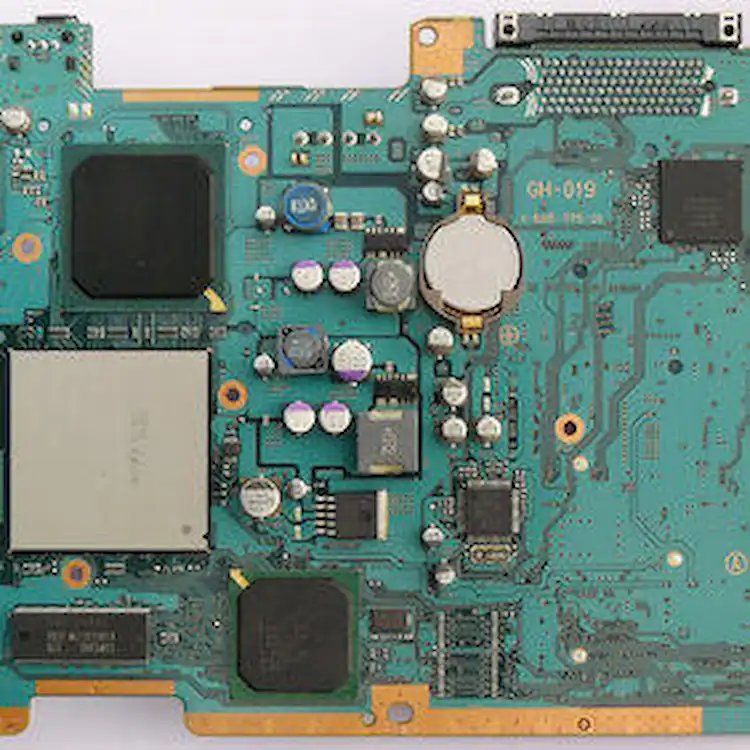
Surface Mount Technology
1. Technical Principles and Process Flow
SMT (Surface Mount Technology)
SMT mounts leadless or short-lead components (such as ICs, resistors, and capacitors) directly onto the PCB surface. Electrical connections are formed through reflow soldering.
Solder Paste Printing → SPI Inspection → Pick and Place → Reflow Soldering → AOI Inspection
DIP (Dual In-line Package Technology)
DIP inserts component leads into plated through-holes on the PCB, followed by wave soldering or manual soldering.
Component Insertion → Wave Soldering → Lead Trimming → Post-Soldering → Cleaning → Inspection
2. Application Scenarios
Where SMT is Used
Common Industries:
Why SMT?
Driven by demand for compact, lightweight, and cost-effective products, SMT enables high-density layouts and automated production.
Example:
Smartphone motherboards rely on SMT to achieve high component integration in limited space.
Where DIP is Used
Specialized Industries:
Why DIP?
These applications require superior mechanical strength, heat resistance, and long-term reliability.
Example:
Industrial control boards use DIP components to maintain stability under vibration and high temperatures.
3. Production Efficiency and Cost Control
SMT Efficiency & Cost
Conclusion: Ideal for large-scale manufacturing with optimized cost efficiency.
DIP Efficiency & Cost
Conclusion: Suitable for low-volume or specialized production.
4. Reliability and Maintenance
SMT Reliability
Advantages:
Limitations:
DIP Reliability
Advantages:
Limitations:
5. How to Choose: SMT vs DIP
Choose SMT When:
Typical Products:
Consumer electronics, automotive systems, medical devices
Choose DIP When:
Typical Products:
Industrial equipment, aerospace electronics, defense systems
Hybrid Approach (SMT + DIP)
Best for: Complex PCB designs requiring both performance and durability
Example:
6. Industry Trends and Future Outlook
Conclusion
Choosing between SMT and DIP in PCBA assembly depends on your product requirements, production scale, and reliability expectations. In many cases, a hybrid solution delivers the best balance.
If you’re looking for expert support in PCBA prototyping, contract manufacturing, or full turnkey assembly, Kingsheng PCBA offers tailored solutions to meet your needs.
With 17 years of expertise in PCBA design, manufacturing, and service, KingshengPCBA is ready to help turn your ideas into reality. Feel free to contact us anytime to discuss your requirements and get a professional quotation.
Please send Email to kspcba@c-alley.com or call us through +86 13828766801 Or submit your inquiry by online form. Please fill out below form and attach your manufacturing files( PCB Gerber files and BOM List) if need quotation. We will contact you shortly.
 +86 13828766801
 kspcba@c-alley.com
 https://www.kingshengpcba.com/
 2/F, Building 6, Tangtou 3rd Industrial Zone, Tangtou Community, Shiyan Town, Baoan District, Shenzhen, China, 518108
We would also like to thank our customers for their trust and support. The company's outstanding achievements are mainly due to the loyalty of our customers, which also encourages and spurs our company to forge ahead.