* On your first PCB Assembly order!
* Up to $300 discount
 C - A L L E Y
 Home | Events | PCB | About Us | News | Contact Us
In the PCBA assembly process, soldering reliability directly determines the service life and stability of electronic products. As a technical professional with years of industry experience, I'd like to share key control points for ensuring soldering reliability.
I. Material Selection is the Foundation
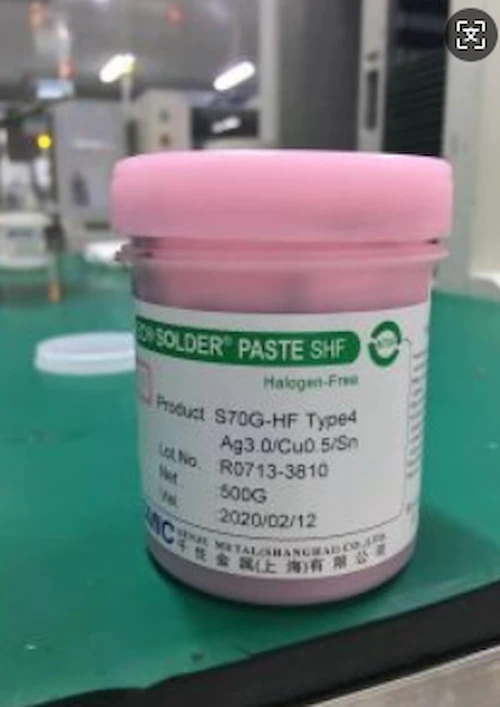
The quality of solder paste is crucial. When selecting solder paste, attention should be paid to alloy composition, particle size, and viscosity characteristics. Currently, the industry commonly uses SAC305 (tin-silver-copper) lead-free solder paste, which exhibits excellent wettability and fatigue resistance. Solder paste should be stored refrigerated at 2-8℃ and must be returned to room temperature for over 4 hours before use to prevent moisture condensation.
PCB pad surface finish also affects soldering quality. OSP, ENIG, and HASL each have their advantages and disadvantages, and selection should be based on product type. For example, ENIG is recommended for fine-pitch devices to ensure flatness and solderability.
II. Precise Control of Process Parameters
The reflow soldering temperature curve is central to soldering quality. An ideal curve should include four stages: preheating, soaking, reflow, and cooling. The preheating rate should be controlled at 1-3℃/second to avoid thermal shock; the soaking stage ensures uniform component temperature; the reflow peak temperature is typically controlled between 235-245℃ for 45-75 seconds; the cooling rate should exceed 3℃/second to form a fine-grained structure and improve solder joint strength.
For wave soldering, flux application amount, preheating temperature, and soldering time all require precise control. Soldering time is generally controlled at 2-4 seconds—excessive time can lead to overly thick intermetallic compounds, affecting reliability.
III. Environmental Factors Cannot Be Ignored
Workshop temperature and humidity directly impact soldering quality. Recommended conditions are 23±3℃ with 40-60% relative humidity. Excessive humidity can easily cause solder balls and voids, while insufficient humidity increases electrostatic discharge risks.
Nitrogen-protected soldering can significantly improve wettability and reduce oxidation, particularly suitable for fine-pitch and difficult-to-solder surfaces. Research indicates that when oxygen content is controlled below 500ppm, solder spread rate can increase by more than 15%.
IV. Quality Inspection and Continuous Improvement
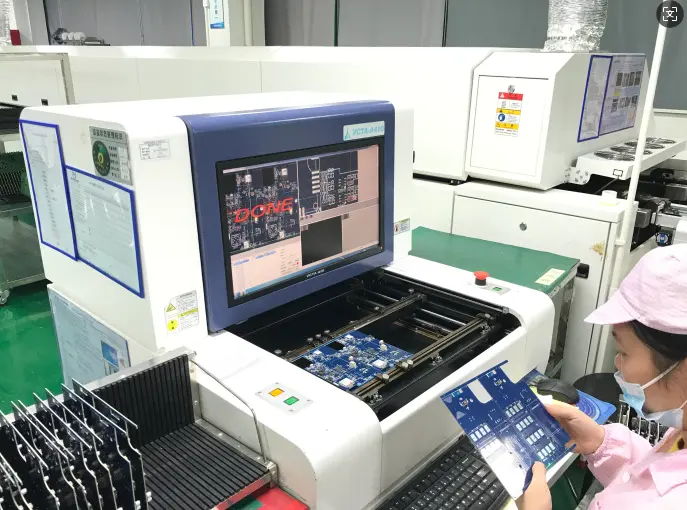
Establishing a comprehensive quality inspection system is crucial. AOI can detect visual defects, X-ray can identify voids and bridges in hidden solder joints like BGAs, while metallographic cross-section analysis can evaluate intermetallic compound layer thickness and solder joint microstructure.
Statistics show that maintaining solder joint voidage below 15% is acceptable for most products, but for high-reliability products, this standard should be tightened to below 5%.
V. Personnel Training and Operational Standards
Even the most advanced equipment requires skilled operators. Regular IPC standard training and hands-on assessments ensure operators understand process requirements and common defect solutions. Establish standard operating procedures to minimize quality fluctuations caused by human factors.
Summary: Building a Systematic Engineering Approach to Soldering Reliability
Ensuring soldering reliability is not merely the optimization of a single link, but a systematic project that permeates the five dimensions of Man, Machine, Material, Method, and Environment. Based on the previous in-depth analysis, its core essentials can be distilled into the following closed-loop management system:
1. Source Control: Material is the Foundation
Soldering quality begins with material selection. From the alloy composition and storage management of solder paste to the suitability of PCB pad surface finishes, the stability of each material is a physical prerequisite for reliable solder joints.
2. Strict Process Control: Parameters are the Core
Whether it is the precise temperature zone control in reflow soldering or the management of time and flux volume in wave soldering, everything must be validated through scientific process windows. Only by closely integrating equipment parameters with product characteristics can we ensure that the microstructure of the solder joint achieves optimal strength.
3. Environmental Assurance: Details Determine Success or Failure
Environmental factors like temperature, humidity, and cleanliness may seem auxiliary, but they are catalysts affecting the chemical reactions of soldering. Controlling the production environment well, supplemented by advanced methods like nitrogen protection, can minimize external interference.
4. Inspection Feedback: Data Drives Improvement
By leveraging inspection methods such as AOI, X-ray, and cross-sectioning, we convert invisible quality metrics like void percentage and IMC thickness into actionable data. This serves not only to intercept defects but also to provide feedback for adjusting upstream process parameters, forming a positive cycle of continuous optimization.
5. Human Execution: Standards are the Baseline
Even the most sophisticated equipment requires human operation. Through standardized operating procedures and IPC standard training, we reduce human-induced variability and ensure that all technical standards are implemented without compromise.
Soldering reliability is not inspected into a product, but is achieved through rigorous design, stable processes, and standardized management. Only by integrating these five dimensions can we truly enhance the long-term service life and market competitiveness of PCBA products.
I hope these experience-sharing points prove helpful to your production practice. If you encounter specific issues in actual production, feel free to exchange ideas and discuss solutions.
With 16 years of expertise in PCBA design, manufacturing, and service, KingshengPCBA is ready to help turn your ideas into reality. Feel free to contact us anytime to discuss your requirements and get a professional quotation.

Please send Email to kspcba@c-alley.com or call us through +86 13828766801 Or submit your inquiry by online form. Please fill out below form and attach your manufacturing files( PCB Gerber files and BOM List) if need quotation. We will contact you shortly.
 +86 13828766801
 kspcba@c-alley.com
 https://www.kingshengpcba.com/
 2/F, Building 6, Tangtou 3rd Industrial Zone, Tangtou Community, Shiyan Town, Baoan District, Shenzhen, China, 518108
We would also like to thank our customers for their trust and support. The company's outstanding achievements are mainly due to the loyalty of our customers, which also encourages and spurs our company to forge ahead.