* On your first PCB Assembly order!
* Up to $300 discount
 C - A L L E Y
 Home | Events | PCB | About Us | News | Contact Us
As a practitioner who has been in the PCBA processing industry for many years, I often get asked this question by clients: "Why is the price so high for prototyping, but the unit price becomes much cheaper during mass production?"
Today, let's break down exactly how big the price difference is between PCBA prototyping and mass production, and the underlying logic behind this discrepancy.
Conclusion First: Unit Price Can Differ by 3 to 10 Times
Generally speaking, the unit price for a prototype circuit board assembly can be 3 to 10 times that of a mass-produced unit. If your board is very simple, the multiplier might be on the lower end; if the board has complex processes and many SMD components, the difference could be even greater.
Why such a big difference? The core reasons lie in cost structure and operational efficiency.
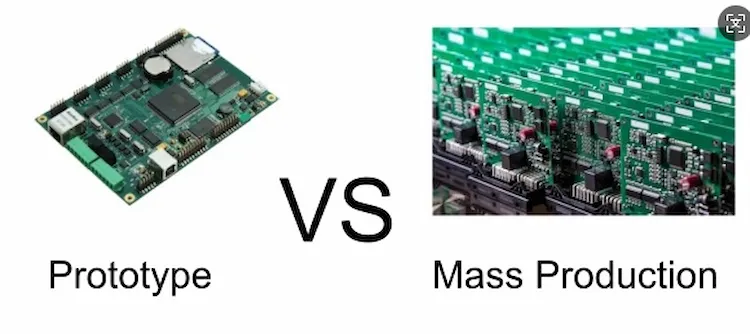
1. Different Logic for Allocating Fixed Costs
The cost of PCBA processing primarily consists of two parts: Fixed Costs + Variable Costs.
For Example:
Let's assume a hypothetical order has fixed costs of $100 (engineering + stencil + setup) and variable costs of $10 per board (materials and processing).
See? For the exact same board, because the fixed cost is spread over 1000 units, the price per board plummets from $30 to $10.10, a difference of nearly 3 times.
2. Production Losses and Efficiency
Prototyping usually involves "trial and error." In mass production, losses from nozzle wear, component rejection rates, and solder paste waste are factored into the overall cost. However, during the prototype stage, the machine might just be calibrated and then stopped after placing components on only 5 boards. The material losses incurred during debugging all have to be absorbed into the price of those 5 boards.
In mass production, machines run at full speed, placement heads operate almost non-stop, maximizing output per unit of time. Consequently, the depreciation of machinery and labor costs allocated to each board are much lower.
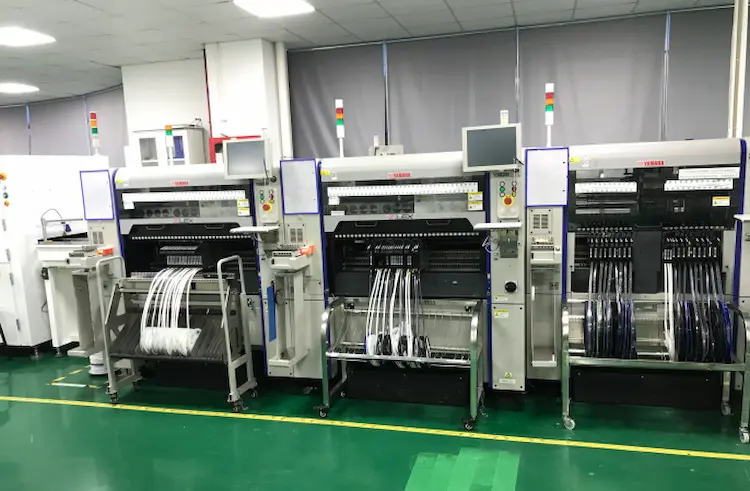
3. Component Procurement Costs
The cost of the Bill of Materials (BOM) for mass production is often lower than for prototyping. This is a point many people overlook.
4. Time Cost of Process Preparation
Line changeover (switching from producing product A to product B) is one of the most headache-inducing tasks in an SMT workshop. The process – loading reels, aligning the stencil, producing and checking the first article – can take half a day. For a mass production order, this changeover time is a tiny fraction of the total production time. But for a prototype order, you might spend 2 hours on changeover and only 10 minutes on actual placement. The labor and machine downtime costs for those 2 hours inevitably get factored into your prototype price.
Advice for Procurement Professionals
If you're in the product R&D phase with a tight budget, here are a few ways to potentially lower costs:
Summary
The high cost of PCBA prototyping is due to the "startup costs"; the low cost of mass production comes from "economies of scale." Next time you see a quote, take a closer look at that seemingly high "engineering fee." It represents the engineer's effort and the machine's idle time, not just the cost of the boards themselves.
With 16 years of expertise in PCBA design, manufacturing, and service, KingshengPCBA is ready to help turn your ideas into reality. Feel free to contact us anytime to discuss your requirements and get a professional quotation.
Please send Email to kspcba@c-alley.com or call us through +86 13828766801 Or submit your inquiry by online form. Please fill out below form and attach your manufacturing files( PCB Gerber files and BOM List) if need quotation. We will contact you shortly.
 +86 13828766801
 kspcba@c-alley.com
 https://www.kingshengpcba.com/
 2/F, Building 6, Tangtou 3rd Industrial Zone, Tangtou Community, Shiyan Town, Baoan District, Shenzhen, China, 518108
We would also like to thank our customers for their trust and support. The company's outstanding achievements are mainly due to the loyalty of our customers, which also encourages and spurs our company to forge ahead.