* On your first PCB Assembly order!
* Up to $300 discount
 C - A L L E Y
 Home | Events | PCB | About Us | News | Contact Us
In the field of electronic product manufacturing, the PCBA testing process is a critical step in ensuring the quality and reliability of printed circuit boards. A circuit board that appears flawless may harbour defects such as cold solder joints, short circuits or faulty components; only through rigorous testing can these potential issues be identified and eliminated. A comprehensive PCBA testing process not only effectively reduces product defect rates but also significantly enhances production efficiency and product performance.
This article will provide a detailed overview of the five key steps in PCBA testing—visual inspection, automated optical inspection (AOI), in-circuit testing (ICT), functional testing and ageing testing—to help readers gain a comprehensive understanding of this vital process, thereby optimising product quality management and establishing a zero-defect quality defence line.
1: Visual inspection – the first line of quality control
Visual inspection is the first stage in the PCBA testing process. This step relies primarily on experienced operators who carefully examine every part of the circuit board, either with the naked eye or using tools such as magnifying glasses. The inspection covers the correct placement and positioning of components, soldering quality, surface defects and the accuracy of the silkscreen.
Although automated inspection technologies are becoming increasingly widespread, visual inspection remains irreplaceable. Experienced inspectors can quickly identify anomalies, such as unusual solder joint lustre, slight component misalignment, or scratches on the PCB surface. These subtle defects may not immediately cause functional failure, but they can develop into reliability issues over time.
Visual inspection may appear straightforward, but in practice it requires inspectors to possess extensive experience and keen observational skills. An excellent inspector can balance speed and accuracy, swiftly screening out obvious issues to save time and costs in subsequent testing. Many factories have established a certification system for inspector skill levels, ensuring consistency in inspection standards through regular training and assessments.
Visual inspection standards typically adhere to IPC-A-610, the widely accepted visual acceptance standard within the electronics assembly industry. The three grades—Class 1, Class 2 and Class 3—correspond to different product categories; consumer electronics generally adopt the Class 2 standard, whilst products with high reliability requirements, such as those for the defence and medical sectors, must meet Class 3 requirements.
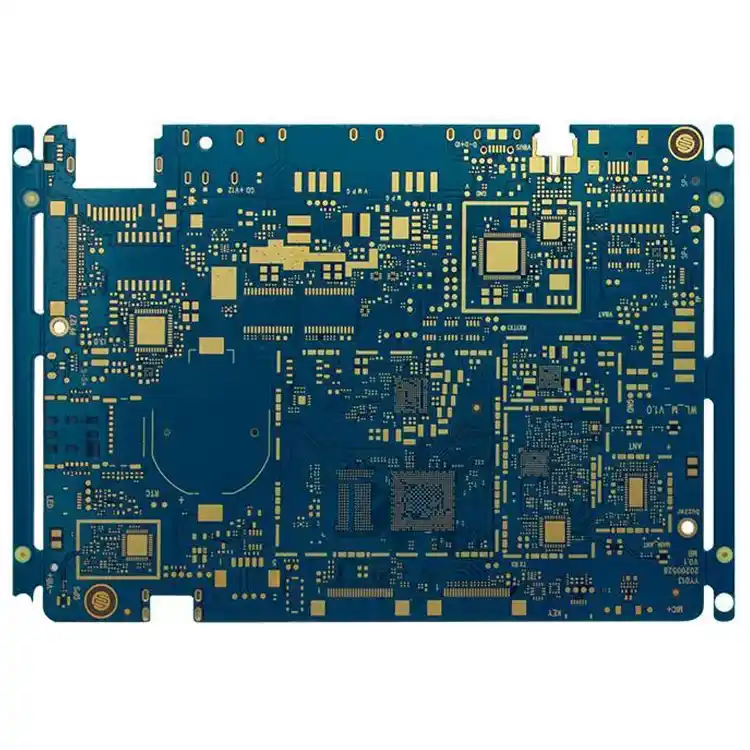
2: Automated Optical Inspection – Efficient and Accurate Automated Inspection
Automated Optical Inspection (AOI) is a critical stage in the PCBA testing process. It utilises high-precision cameras and advanced image processing technology to automatically inspect the quality of PCB assemblies. AOI systems can quickly and accurately identify missing or misplaced components, soldering defects (such as solder balls, short circuits and open circuits), incorrect polarity, and the correctness of component values.
The advantages of AOI lie in its efficiency and consistency. It can inspect a large number of PCBs in a short time and is not subject to human error, ensuring the reliability of the inspection results. Modern AOI equipment is equipped with multi-angle lighting and colour cameras, enabling it to capture the three-dimensional morphology of solder joints and achieving a high detection rate for defects such as cold solder joints, tombstoning and insufficient solder.
However, AOI also has its limitations, such as the inability to detect soldering issues hidden beneath components. For components with invisible bottom solder joints, such as BGAs and QFNs, AOI is ineffective. Consequently, AOI is typically used in conjunction with other testing methods to achieve comprehensive quality control.
In terms of production line layout, AOI can be deployed at multiple stages: to inspect solder joint quality after reflow soldering, to check the soldering of through-hole components after wave soldering, and as a final quality control check prior to final inspection. Through real-time feedback from AOI, anomalies in the production process can be identified promptly, thereby preventing batch defects from occurring.
3: Online Testing – Comprehensive Verification of Electrical Performance
In-circuit testing (ICT) is a critical step in the PCBA testing process. Using specially designed test fixtures, ICT involves probes making direct contact with test points on the PCB to perform electrical performance tests on every component on the board. ICT primarily checks component values (such as resistance, capacitance and inductance), short circuits and open circuits, component polarity, and simple functional circuits.
The advantages of ICT lie in its high speed and comprehensive coverage. It can rapidly detect the majority of manufacturing defects and provide detailed fault diagnosis information. For defects such as resistance value deviations, insufficient capacitance, or reverse-biased diodes, ICT can pinpoint the specific component, significantly reducing repair time.
However, ICT also has certain limitations. It requires expensive, specialised test fixtures; for small-batch, high-variety production models, the cost of these fixtures may be difficult to amortise. Furthermore, high-frequency circuits or areas with dense component placement are difficult to test. Probe contact may cause damage to tiny pads, and test point design must be approached with caution for extremely small components such as 01005.
4: Functional Testing – Comprehensive validation under real-world conditions
Functional testing is a crucial stage in the PCBA testing process; it simulates the product’s operating conditions in a real-world environment to comprehensively verify the PCB’s performance and functionality. Functional testing typically includes power supply testing, signal integrity testing, interface testing, software functional testing and environmental testing.
The advantage of functional testing lies in its ability to comprehensively assess the PCB’s actual operational performance and identify issues that other testing methods might overlook. ICT can only verify whether components are correctly installed and connected, but cannot confirm whether the circuit functions correctly. Functional testing verifies the product’s functional integrity by running actual programmes and applying real-world loads.
Functional testing usually requires the development of dedicated test fixtures and test programmes. For PCBA assemblies containing MCUs, the test programme must simulate various input conditions to verify that the output meets expectations. For communication interfaces, signal quality and protocol compatibility must be tested. For power modules, performance metrics such as load regulation and ripple noise must be tested.
Functional testing is time-consuming and often acts as a bottleneck in the production line. To improve testing efficiency, parallel testing approaches can be adopted to test multiple PCBs simultaneously. Test programmes must also be continuously optimised to eliminate redundant steps and reduce testing time. A data management system can track test results, analyse failure modes, and guide process improvements.
5: Ageing Test – The Ultimate Test of Reliability
Ageing testing is the final critical step in the PCBA testing process, designed to simulate long-term product usage and identify potential reliability issues. Ageing testing typically includes high-temperature testing, temperature cycling testing, voltage stress testing and vibration testing.
Ageing tests can effectively screen out early failures and improve the long-term reliability of products. The failure rate of electronic products follows a bathtub curve, with a higher failure rate during the early failure phase. Ageing tests can eliminate these early failures before the product leaves the factory, thereby reducing the failure rate in the field.
High-temperature testing involves operating the PCBA for extended periods in an environment exceeding normal operating temperatures to accelerate the exposure of potential defects. For semiconductor devices, high temperatures accelerate electromigration; for solder joints, high temperatures accelerate the growth of intermetallic compounds. Temperature cycling testing simulates temperature fluctuations encountered in actual use, testing the thermal fatigue life of solder joints.
However, ageing tests are time-consuming and may take anywhere from several hours to several days. To strike a balance between testing effectiveness and production efficiency, a sampling approach can be adopted: 100% ageing testing is carried out for products with high reliability requirements, whilst batch sampling is used for consumer electronics. Testing times must also be optimised according to product characteristics to ensure effective screening without affecting delivery lead times.
The accumulation of ageing test data holds long-term value. By analysing failure modes and failure times, it is possible to assess a product’s reliability level and predict its service life. This data can also be fed back into the design and manufacturing processes to guide continuous improvement.
Conclusion
The PCBA testing process is a critical step in ensuring the quality of electronic products. Through five key stages—visual inspection, automated optical inspection, in-circuit testing, functional testing and ageing testing—the quality and performance of PCBA can be comprehensively assessed. Each stage plays a unique role and holds significant importance, collectively forming a complete quality assurance system.
When implementing the PCBA testing process, companies should flexibly adjust the weighting and sequence of each step according to their product characteristics and quality requirements. For consumer electronics, ageing tests can be simplified to reduce costs and shorten lead times; for automotive electronics, environmental testing must be strengthened to ensure reliability under various harsh operating conditions. Continuously optimising the testing process and introducing advanced testing equipment and management tools can significantly improve testing efficiency and accuracy.
By continuously refining the PCBA testing process, companies can effectively enhance product quality, strengthen market competitiveness, and provide users with more reliable and higher-quality electronic products. Zero defects is not an unattainable goal, but rather an ideal that can be gradually approached through systematic testing and continuous improvement.
ICT programme development must be carried out in parallel with the design process. Test points must be reserved during the design phase to ensure reliable probe contact. The dimensions and spacing of test points must comply with fixture manufacturing requirements, and they must be distributed evenly to avoid concentration. Modern ICT systems also support boundary scan testing; for devices with JTAG interfaces, this enables probe-less testing, compensating for the limitations of physical test points.
With 16 years of expertise in PCBA design, manufacturing, and service, KingshengPCBA is ready to help turn your ideas into reality. Feel free to contact us anytime to discuss your requirements and get a professional quotation.
Please send Email to kspcba@c-alley.com or call us through +86 13828766801 Or submit your inquiry by online form. Please fill out below form and attach your manufacturing files( PCB Gerber files and BOM List) if need quotation. We will contact you shortly.
 +86 13828766801
 kspcba@c-alley.com
 https://www.kingshengpcba.com/
 2/F, Building 6, Tangtou 3rd Industrial Zone, Tangtou Community, Shiyan Town, Baoan District, Shenzhen, China, 518108
We would also like to thank our customers for their trust and support. The company's outstanding achievements are mainly due to the loyalty of our customers, which also encourages and spurs our company to forge ahead.