* On your first PCB Assembly order!
* Up to $300 discount
 C - A L L E Y
 Home | Events | PCB | About Us | News | Contact Us
Gold has always commanded attention—as a store of value, a symbol of wealth, and a hedge against uncertainty. In 2026, it is commanding attention for another reason: its unprecedented price surge is sending shockwaves through the electronics manufacturing industry. With gold trading above $4,900 per ounce in early 2026 and analysts projecting prices could reach $6,000–$7,150 by year-end, the impact on PCB costs has become impossible to ignore.
At Shenzhen Kingsheng Tech Co., Ltd. , with over 22 years of specialized PCB manufacturing experience serving clients in Australia, the United States, Italy, and across Europe, we are helping our global partners navigate this golden squeeze. Here's what you need to understand about which PCBs are most affected and how to manage the impact.
Why Gold in PCBs?
Understanding ENIG and Its Role Gold appears in PCBs primarily through surface finishes, with ENIG (Electroless Nickel Immersion Gold) being the most common. Gold offers irreplaceable benefits:
However, these benefits come at a cost—and when gold prices surge, ENIG boards feel the impact immediately.
The Economics of ENIG: Breaking Down the Numbers
To understand which PCBs are most affected, we must first understand how gold contributes to PCB cost.
For a standard 1-square-meter double-sided PCB with 20% gold-plated area and 2 microinch gold thickness:
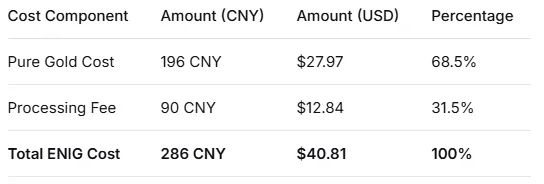
Key insight: Pure gold accounts for over two-thirds of ENIG costs, making it extremely sensitive to gold price fluctuations.
The sensitivity is dramatic: for every 0.025μm increase in gold thickness, pure gold cost rises by approximately 49 CNY per square meter at current gold prices
Which PCBs Are Most Impacted?
Not all PCBs feel the gold squeeze equally. Here's a breakdown by application and specification:
1. High-Reliability & Mission-Critical PCBs
Most severely impacted:
For these boards, ENIG is typically a non-negotiable requirement due to strict reliability standards. Key sectors include:
Aerospace and defense electronics – Require wire-bondable "soft gold" or electroplated "hard gold" for mission-critical applications.
In these cases, ENIG is often specified by design, leaving manufacturers with little to no alternative—costs must be absorbed or passed through..
2. High-Density Interconnect (HDI) and Fine-Pitch Boards
Severely impacted:
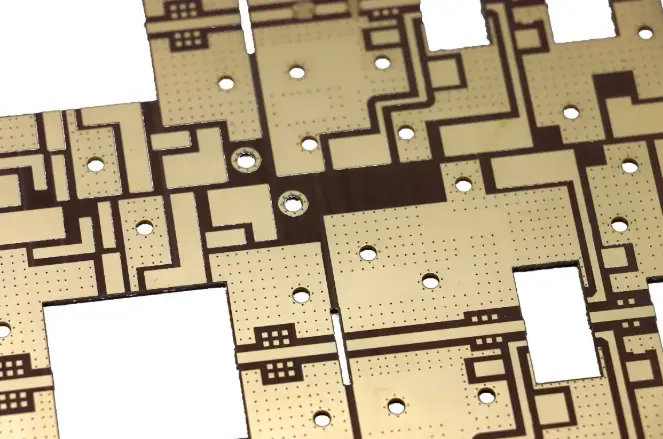
HDI boards with fine-pitch components (BGAs with 0.4mm pitch or finer) require the flat, coplanar surface that only ENIG provides. These include:
The ENIG requirement here is driven by manufacturability—alternative finishes like OSP cannot provide the flatness needed for reliable fine-pitch assembly.
3. Boards with Large Gold Areas
Severely impacted:
Certain PCB designs unintentionally require extensive gold plating, including:
As industry experts point out, “Every square millimeter of ENIG carries a cost directly linked to the spot price of gold. When the gold prices rise, the boards with large ENIG areas rise with it.”
4. RF and Microwave PCBs
Moderately to severely impacted:
RF designers often specify ENIG to avoid solder mask interfering with reference planes. However, as experts point out, "RF and microwave designers often lean toward larger than necessary gold areas because they do not want solder mask acting as part of the reference plane. That works in electronically, but the cost exposure is significant".
5. Standard Commercial and Industrial PCBs
"The problem is that gold remains in many designs because 'that is how we have always done it'".
6.High-Volume Consumer Electronics
For high-volume production products, cost pressure is particularly significant. Manufacturers are actively responding by adopting multiple strategies: shifting non-critical boards to OSP finish, applying ENIG only for fine-pitch components, and exploring the use of low-silver or silver-free solder pastes. Looking ahead, the industry is widely focused on a core question:
Can gold eventually be replaced? As veteran expert Peter Bigelow notes, "Necessity may once again be mothering invention. It may also be time to think outside the box and consider materials used in related emerging applications."
Currently, the long-term alternatives being explored by the industry include advanced OSP formulations with extended shelf life, conductive polymers for specific applications, graphene-based coatings in the research phase, and nanochemistries for printed electronics. However, it is foreseeable that in the short term, gold remains an indispensable material for high-reliability and fine-pitch applications.
Our Commitment: 22 Years of Experience, Ready for the Challenge
At Shenzhen Kingsheng Tech, our 22 years in the PCB industry have prepared us for moments like this. We maintain:
We help clients navigate the golden squeeze by:
Ready to discuss how gold price dynamics affect your PCB projects?
Contact Shenzhen Kingsheng Tech today to learn how our 22 years of experience can help you optimize your designs for cost-effectiveness without compromising reliability.
With 16 years of expertise in PCBA design, manufacturing, and service, KingshengPCBA is ready to help turn your ideas into reality. Feel free to contact us anytime to discuss your requirements and get a professional quotation.
Please send Email to kspcba@c-alley.com or call us through +86 13828766801 Or submit your inquiry by online form. Please fill out below form and attach your manufacturing files( PCB Gerber files and BOM List) if need quotation. We will contact you shortly.
 +86 13828766801
 kspcba@c-alley.com
 https://www.kingshengpcba.com/
 2/F, Building 6, Tangtou 3rd Industrial Zone, Tangtou Community, Shiyan Town, Baoan District, Shenzhen, China, 518108
We would also like to thank our customers for their trust and support. The company's outstanding achievements are mainly due to the loyalty of our customers, which also encourages and spurs our company to forge ahead.