* On your first PCB Assembly order!
* Up to $300 discount
 C - A L L E Y
 Home | Events | PCB | About Us | News | Contact Us
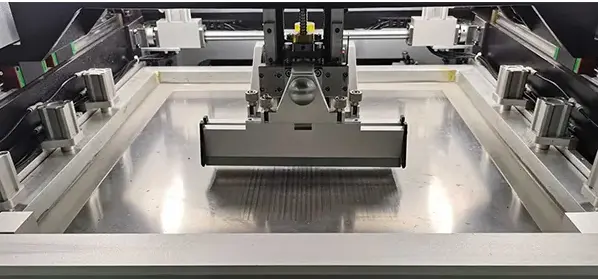
On a busy PCBA line, the moment the squeegee lifts is often viewed as the finish line for printing. But in reality, it is the starting gun for a race. Every board that rolls off the printer carries a silent timer called Dwell Time—the window between paste deposition and component placement. Ignoring this timer is one of the most common, yet preventable, causes of latent soldering defects.
Ⅰ.The Anatomy of Fresh Paste
To understand why dwell time is critical, we must look at what solder paste is. Under a microscope, it is a chaotic mix of tiny metal alloy spheres suspended in a viscous flux vehicle. This flux isn't just glue; it is a chemically engineered cleaning agent designed to activate at specific temperatures.
When the paste is first printed, the flux is evenly distributed, holding the spheres in a precise, block-like shape that matches the stencil aperture. This shape is crucial for consistent solder volume.
Ⅱ.The Degradation Process
If a PCB sits idle after printing, a slow but steady degradation begins. It happens whether the board is on a cart or waiting in the buffer lane of a placement machine.
The flux contains volatile solvents. Exposed to the air, these solvents begin to evaporate. As the paste loses its solvent content, it becomes tackier initially, but then starts to dry out. This changes its rheology—its flow behavior. When the placement nozzle finally tries to place a component, the paste may not "give" correctly, leading to insufficient wetting or component shift.
Heat and gravity are constant enemies. As the paste warms to room temperature, it loses the internal structure it gained from the shear force of printing. This is called "slump." The edges of the deposit round off and flatten. On fine-pitch components (like 0.4mm QFPs), this slump can bridge the gap between pads, creating solder balls or shorts after reflow.
This is the most insidious effect. The flux's job is to remove oxidation from the metal surfaces. However, if the board sits too long, the surfaces of the solder spheres themselves begin to re-oxidize. The flux activators are designed to trigger in the preheat zone of the oven; if they have been sitting idle for hours, they may lose their potency. When the board finally hits reflow, the oxidized spheres cannot coalesce properly, resulting in a dull, grainy joint or the dreaded "Head-in-Pillow" defect where the component ball never fully merges with the paste.
Ⅲ.Reading the Signs
Experienced operators can spot dwell time issues before reflow. The paste will appear "crusty" or have a dry, cracked surface. If you see this, the board is compromised. Running it through placement and reflow will only hide the defect until the final inspection or, worse, in the field.
Ⅳ.Setting the Standard
Most modern solder pastes are engineered to last between 4 to 8 hours, but this depends heavily on environmental factors like humidity and temperature. The best practice is to establish a strict "First-In, First-Out" protocol. Treat printed boards like fresh bread—they have a shelf life, and the clock starts the moment they leave the printer.
In PCBA, time is a variable you can control. Remember: treat your printed solder paste like wet paint—it’s only good until it starts to dry.
With 16 years of expertise in PCBA design, manufacturing, and service, KingshengPCBA is ready to help turn your ideas into reality. Feel free to contact us anytime to discuss your requirements and get a professional quotation.
Please send Email to kspcba@c-alley.com or call us through +86 13828766801 Or submit your inquiry by online form. Please fill out below form and attach your manufacturing files( PCB Gerber files and BOM List) if need quotation. We will contact you shortly.
 +86 13828766801
 kspcba@c-alley.com
 https://www.kingshengpcba.com/
 2/F, Building 6, Tangtou 3rd Industrial Zone, Tangtou Community, Shiyan Town, Baoan District, Shenzhen, China, 518108
We would also like to thank our customers for their trust and support. The company's outstanding achievements are mainly due to the loyalty of our customers, which also encourages and spurs our company to forge ahead.