* On your first PCB Assembly order!
* Up to $300 discount
 C - A L L E Y
 Home | Events | PCB | About Us | News | Contact Us
Ⅰ.Introduction
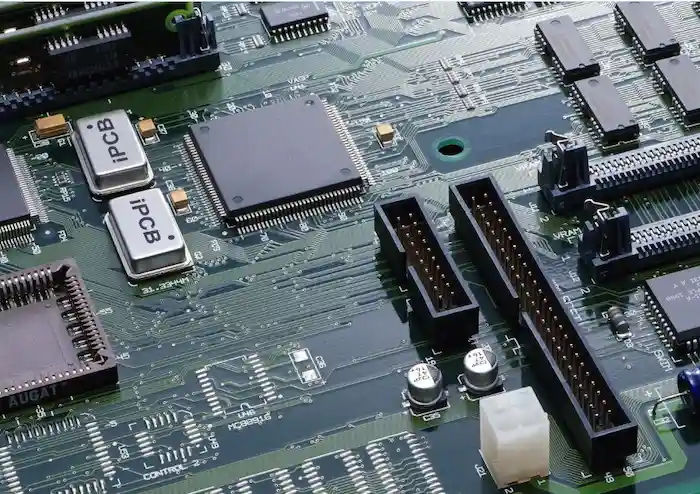
As electronic assemblies grow more complex and cost pressures increase, the Through-Hole Reflow (THR) process—often called "pin-in-paste"—has emerged as a game-changer in PCBA manufacturing. By placing through-hole components on the board alongside surface-mount devices and sending them through the reflow oven together, manufacturers eliminate the need for a separate wave soldering step. However, this efficiency comes with a challenge: ensuring the molten solder completely fills the plated through-hole (PTH) barrel to form a reliable joint. The solution begins not on the production line, but at the engineering workstation with intelligent stencil aperture design.
Ⅱ.The Volume Equation
Unlike surface-mount pads where solder paste merely forms a fillet, through-hole reflow requires enough paste to fill the entire barrel. The first step in stencil design is calculating the required solder volume. The theoretical volume needed equals the PTH barrel volume minus the volume occupied by the component lead. However, solder paste consists of approximately 50% metal spheres and 50% flux by volume. During reflow, the flux evaporates, causing significant shrinkage. To compensate, stencil apertures must deliver roughly twice the calculated metal volume—a factor that fundamentally drives aperture sizing decisions.
Ⅲ.Stencil Thickness: The Foundation
Standard surface-mount stencils of 5 or 6 mils (0.12–0.15 mm) rarely provide sufficient paste volume for through-hole applications. To achieve proper barrel fill, thicker stencils are essential. For most connectors and through-hole components, 7 or 8 mils (0.18–0.20 mm) represents the minimum effective thickness. When dealing with exceptionally large holes or heavy connectors, stepped stencils offer an elegant solution: increasing thickness only in THR areas while maintaining standard thickness for fine-pitch components where excessive paste could cause bridging.
Ⅳ.Aperture Size and Shape Strategies
Once thickness is established, aperture geometry becomes critical. The primary goal is maximizing paste volume while ensuring clean release. The aperture should fully cover the annular ring and, where component spacing permits, extend beyond it by 10–20% to add extra material.
Shape selection significantly influences results. While round apertures seem intuitive, they often limit volume and trap air. "Home plate" shapes (squares with rounded corners) provide superior paste release and greater area than circles. For large holes, the "window-paning" technique—using multiple small apertures arranged around the pad—offers distinct advantages. This approach maintains better stencil support, prevents sagging, and creates channels for air escape during component insertion.
Ⅴ.Venting Considerations
Air entrapment represents a hidden threat in THR soldering. When component leads insert through paste-coated holes, trapped air can expand during reflow, creating voids or ejecting solder as balls. Cross-shaped or "X" apertures naturally provide escape routes for air, significantly reducing voiding risks.
Ⅵ.Conclusion
Successful through-hole reflow depends on recognizing that stencils for THR serve a fundamentally different purpose than those for surface-mount assembly. By calculating required volumes, selecting appropriate thicknesses, and implementing advanced aperture geometries, engineers can ensure reliable, void-free barrel fills. In an industry where every process simplification improves quality and reduces cost, mastering THR stencil design represents a competitive advantage worth pursuing.
With 16 years of expertise in PCBA design, manufacturing, and service, KingshengPCBA is ready to help turn your ideas into reality. Feel free to contact us anytime to discuss your requirements and get a professional quotation.

Please send Email to kspcba@c-alley.com or call us through +86 13828766801 Or submit your inquiry by online form. Please fill out below form and attach your manufacturing files( PCB Gerber files and BOM List) if need quotation. We will contact you shortly.
 +86 13828766801
 kspcba@c-alley.com
 https://www.kingshengpcba.com/
 2/F, Building 6, Tangtou 3rd Industrial Zone, Tangtou Community, Shiyan Town, Baoan District, Shenzhen, China, 518108
We would also like to thank our customers for their trust and support. The company's outstanding achievements are mainly due to the loyalty of our customers, which also encourages and spurs our company to forge ahead.