* On your first PCB Assembly order!
* Up to $300 discount
 C - A L L E Y
 Home | Events | PCB | About Us | News | Contact Us
In today's world, where electronic products are becoming increasingly complex and powerful, PCBA (Printed Circuit Board Assembly), as the core component of electronic devices, has its reliability directly impacting the overall product's performance, lifespan, and user satisfaction. Therefore, the testing and verification of PCBA are particularly critical. They are not only key steps in ensuring product quality but also the foundation for enhancing product competitiveness and building brand reputation. This article provides a comprehensive and in-depth analysis of PCBA testing and verification from multiple dimensions.
I. The Importance of PCBA Testing
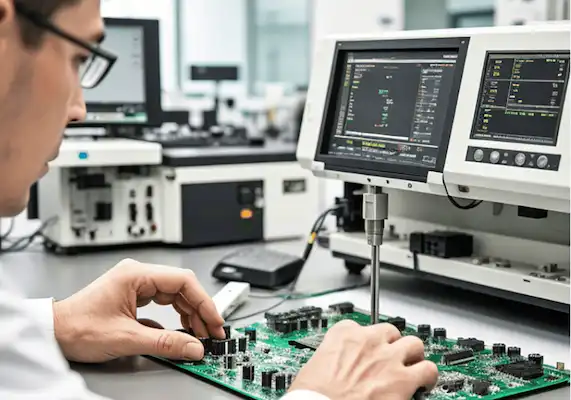
PCBA testing is the process of evaluating the performance, functionality, and reliability of a circuit board after assembly through a series of inspection methods. This process not only determines whether the product functions properly but also directly affects its long-term stability and lifespan. Through rigorous testing, defects in design and manufacturing can be promptly identified and corrected, reducing post-production repair costs and customer complaints while enhancing customer satisfaction and brand loyalty.
II. Main Aspects of PCBA Testing
1. Functional Testing
Functional testing is a fundamental test to verify whether the PCBA meets design requirements. It primarily simulates real-world working scenarios to check whether the input and output of the circuit board align with expectations, ensuring all functions operate correctly. For example, for a circuit board with LED lights, functional testing will verify whether the LEDs light up and turn off as intended.
2. Performance Testing
Performance testing is the process of comprehensively evaluating various performance indicators of the PCBA. This includes, but is not limited to, electrical performance (such as voltage, current, resistance, and capacitance), signal integrity, and thermal performance. Performance testing aims to ensure that the PCBA operates stably and efficiently under specified working conditions, meeting the product’s performance requirements.
3. Reliability Testing
Reliability testing is a critical step in evaluating the stability and durability of the PCBA under prolonged use or extreme environmental conditions. Common reliability tests include high-temperature aging tests, low-temperature tests, humidity tests, vibration tests, and shock tests. These tests simulate various harsh environments the product may encounter, assessing the PCBA’s endurance and reliability.
4. Compatibility Testing
With the diversification and increasing complexity of electronic products, compatibility between different components has become a significant concern. Compatibility testing verifies whether the PCBA can work well with other parts or systems, ensuring the stability and reliability of the entire product system.
III. Key Steps in PCBA Verification
1. Design Verification
Design verification is the process of validating the rationality and feasibility of a PCB design through simulations and other methods after the design is completed. It helps identify and address design issues early, reducing risks in subsequent manufacturing and testing.
2. Sample Verification
Sample verification involves comprehensive inspection and testing of the first batch of PCBA samples produced. This process verifies the feasibility and stability of the manufacturing process, identifies potential quality issues, and provides a basis for improvements in subsequent mass production.
3. Mass Production Verification
During mass production, continuous quality monitoring and verification of the PCBA are essential. This includes regular sampling inspections, process monitoring, and defective product analysis to ensure the quality, stability, and consistency of each production batch.
IV. Strategies to Improve PCBA Testing and Verification Efficiency
1. Introducing Automated Testing Equipment
Automated testing equipment can significantly improve testing efficiency and accuracy while reducing human errors and the risk of missed inspections. For example, using automated testing systems for batch functional and performance testing of PCBA can greatly enhance testing speed and consistency.
2. Establishing a Comprehensive Testing Process
Developing detailed and standardized testing procedures and criteria ensures that each testing step has clear operational guidelines and evaluation standards. This helps improve testing efficiency and quality control.
3. Enhancing Test Data Collection and Analysis
Establishing a test database to collect, organize, and analyze test data can help identify potential quality issues and trends promptly, providing strong support for subsequent improvements and optimizations.
4. Promoting Continuous Improvement and Innovation
Continuously introducing new technologies, methods, and tools to drive ongoing improvements and innovation in testing and verification. For example, leveraging AI and big data technologies to optimize testing strategies and improve testing accuracy.
Conclusion
PCBA testing and verification are essential processes to guarantee electronic product quality and strengthen market competitiveness. Through rigorous and systematic testing protocols, KingshengPCBA ensures that every circuit board assembly delivers stable and reliable performance across diverse operating conditions, thereby enabling superior end-user experiences.
As a full-service partner, KingshengPCBA offers integrated solutions spanning layout design, PCB fabrication, SMT assembly, and comprehensive validation testing. We welcome you to contact us for Turnkey PCBA Services to your project requirements.
Please send Email to kspcba@c-alley.com or call us through +86 13828766801 Or submit your inquiry by online form. Please fill out below form and attach your manufacturing files( PCB Gerber files and BOM List) if need quotation. We will contact you shortly.
 +86 13828766801
 kspcba@c-alley.com
 https://www.kingshengpcba.com/
 2/F, Building 6, Tangtou 3rd Industrial Zone, Tangtou Community, Shiyan Town, Baoan District, Shenzhen, China, 518108
We would also like to thank our customers for their trust and support. The company's outstanding achievements are mainly due to the loyalty of our customers, which also encourages and spurs our company to forge ahead.