* On your first PCB Assembly order!
* Up to $300 discount
 C - A L L E Y
 Home | Events | PCB | About Us | News | Contact Us
Amidst the wave of miniaturisation and intelligentisation in medical equipment, SiP technology is quietly reshaping the landscape of the medical electronics industry through its unique advantage of high integration.
At the 2024 Global Medical Devices Exhibition, a continuous glucose monitoring patch no larger than a coin caused a sensation within the industry. This revolutionary product employs system-in-package (SiP) technology to integrate sensors, processors and wireless communication modules within a miniature enclosure, enabling continuous operation for 30 days without replacement. This marks the formal advent of ‘invisible healthcare’ in medical electronics – where devices are transitioning from conspicuous desktop units to smart terminals seamlessly integrated into daily life.
As a vital branch of semiconductor packaging technology, System-in-Package achieves high performance, miniaturisation, and low power consumption by integrating multiple functional chips and components within a single enclosure. With medical devices evolving towards portability and intelligence, SiP technology is emerging as a key driver of innovation in medical electronics.
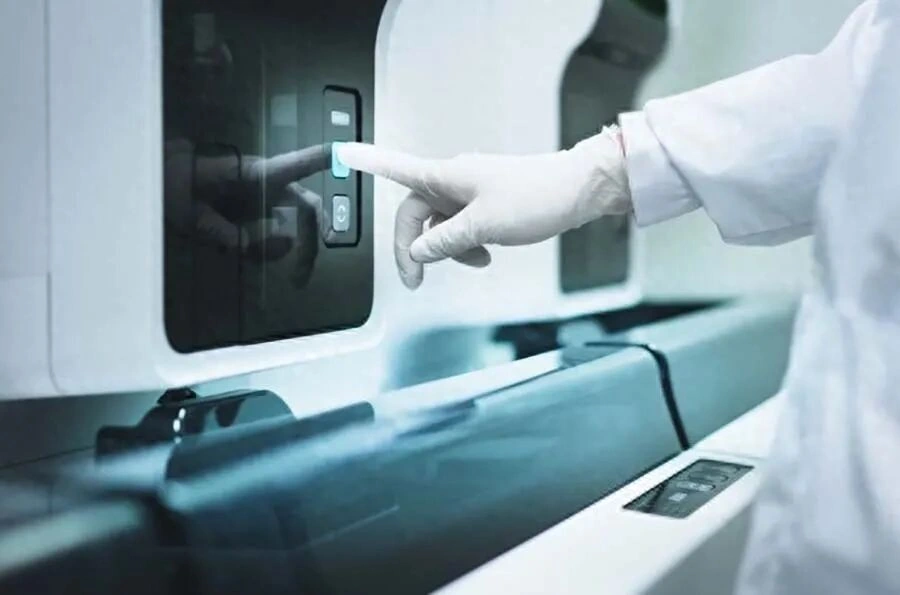
1.SiP Technology Advantages: How to Meet the Unique Requirements of Medical Electronics?
Medical electronic devices impose exceptionally stringent requirements on reliability, power consumption and size. Through its unique technical characteristics, SiP technology perfectly aligns with these demands, making it an ideal choice for innovation in medical electronics.
High integration and miniaturisation constitute the core advantages of SiP technology. Conventional medical devices typically employ discrete components or board-level integration, occupying substantial space and limiting device miniaturisation. SiP technology integrates multiple chips and passive components within a single package, reducing overall volume by over 60%. For instance, wearable medical patches utilising SiP integration can be controlled to a thickness under 1mm, significantly enhancing patient comfort.
Regarding power consumption control, SiP technology significantly reduces overall power usage by optimising system-level routing and signal paths. Implantable medical devices are highly sensitive to power consumption; SiP technology can extend the battery life of devices such as pacemakers to over ten years, reducing the need for patients to undergo frequent replacement surgeries.
Enhanced reliability represents another significant advantage of SiP technology within medical electronics. Medical devices frequently require prolonged, stable operation in complex environments. By reducing external interconnect points, SiP technology mitigates the failure risks commonly associated with traditional board-level connections. Data indicates that medical devices employing SiP packaging achieve a 35% improvement in Mean Time Between Failures (MTBF).
Furthermore, SiP technology accelerates the development cycle for medical products. By utilising validated SiP modules, medical device manufacturers can focus on core algorithm and clinical application development, reducing time-to-market by approximately 40%. This plug-and-play approach is particularly well-suited for medical start-ups with limited development resources.
2. SiP Applications in Medical Electronics: Comprehensive Coverage from Wearables to Implantables
SiP technology is demonstrating immense potential across various segments of medical electronics, with its applications continually expanding from health monitoring to disease treatment.
Wearable Medical Devices
Wearable devices represent the most extensive application area for SiP technology in healthcare. Through SiP integration, devices such as smartwatches and health monitoring patches achieve multi-parameter health monitoring capabilities. Modern SiP modules can simultaneously monitor metrics including heart rate, blood oxygen levels, body temperature, and activity levels, wirelessly transmitting data to cloud platforms.
According to the latest market research, China's medical wearable device market reached 9.5 billion yuan in 2024, with SiP-enabled products accounting for over 35% of the market. This proportion is projected to rise to over 60% by 2030, achieving a compound annual growth rate of 16.2%.
Implantable Medical Devices
Implantable devices impose exceptionally stringent demands on size and reliability, where SiP technology demonstrates irreplaceable value. Through SiP integration, implantable devices such as pacemakers, neurostimulators, and drug delivery systems have achieved unprecedented miniaturisation.
For instance, the latest generation of deep brain stimulators (DBS) employing SiP technology has seen its volume reduced by 50% while significantly enhancing functionality. These devices can now monitor neural signals in real time and adaptively adjust stimulation parameters. Such intelligent stimulators provide more personalised treatment options for patients with neurological disorders such as Parkinson's disease.
Medical Imaging Equipment
Portable medical imaging equipment represents another significant application domain for SiP technology. Devices such as ultrasound scanners and digital X-ray systems have transitioned from large, fixed installations to handheld units through SiP integration.
Handheld ultrasound probes, integrating high-frequency signal processing and wireless transmission modules via SiP technology, now weigh under 300 grams while delivering image quality approaching that of desktop units. This portability enables clinicians to conduct rapid diagnoses in emergency departments and pre-hospital settings, significantly enhancing healthcare accessibility.
Emergency and Telemedicine Devices
System-in-Package (SiP) technology also plays a pivotal role in telemedicine devices. Through SiP integration, portable electrocardiogram machines, pulse oximeters and similar equipment achieve clinical-grade performance within a consumer-grade form factor.
Particularly following the COVID-19 pandemic, surging demand for telemedicine has driven requirements for compact, user-friendly home healthcare devices. SiP technology enables these devices to deliver reliable medical data while maintaining sufficient user-friendliness for operation by non-specialist patients.
3. Technical Challenges: Special Requirements for Medical-Grade SiP and Countermeasures
Although SiP technology holds great promise in medical electronics, it also faces a series of unique technical challenges requiring innovation across materials, design, and testing.
Thermal Management Challenges
Medical electronic devices, particularly implantable devices, impose stringent constraints on thermal dissipation to prevent thermal injury to human tissue. The high integration of SiP systems results in significantly increased power density, making thermal management a critical challenge.
Solutions encompass employing high thermal conductivity packaging materials such as diamond-filled composites, optimising chip layout to minimise hotspot formation, and introducing advanced thermal management techniques like microfluidic cooling. For implantable devices, optimising thermal transfer pathways is also essential to ensure surface temperatures remain below safety thresholds.
Signal Integrity and Electromagnetic Compatibility
Medical devices typically operate within complex electromagnetic environments while potentially generating electromagnetic interference themselves. The high-density wiring of SiP systems heightens risks of signal crosstalk and electromagnetic interference.
Mitigation strategies include employing shielding layers, differential signal transmission, and meticulously designed grounding schemes. Particularly in SiP designs incorporating mixed signals (analogue/digital), stringent isolation and filtering measures are required to ensure accurate acquisition of faint physiological signals remains unaffected by digital circuit interference.
Reliability and Long-Term Stability
Medical devices, particularly implantable devices, require exceptionally high reliability and long-term stability. Mismatched thermal expansion coefficients between different materials within SiP packaging may induce mechanical stresses during thermal cycling, compromising long-term reliability.
Simulation analysis and accelerated life testing enable the early identification of potential failure points. Stress-buffering techniques, such as employing flexible substrates and underfill compounds, can significantly enhance the mechanical stability of the package. For implantable devices with a service life exceeding ten years, material ageing effects must also be considered, necessitating targeted optimisation.
Testing and Verification Challenges
The high integration level of SiPs poses challenges to traditional testing methodologies. With limited external access points, test coverage for internal nodes may prove inadequate. Concurrently, medical devices must comply with stringent regulatory requirements such as FDA and CE certification, demanding greater comprehensiveness and traceability in testing.
Testability must be considered during the design phase. Built-in self-test (BIST) and boundary scan technologies enhance the controllability and observability of internal nodes. Concurrently, establishing a robust data logging and traceability system ensures that test data for each SiP module is complete and auditable, thereby meeting regulatory requirements for medical devices.
4. Market Outlook: Growth Potential of SiP in Medical Electronics
SiP technology is experiencing rapid growth within the medical electronics market, driven by multiple converging factors.
Market Size and Growth Trends
According to the latest research report, products employing advanced packaging technologies accounted for 35% of China's medical electronics market in 2024, with SiP technology occupying a significant position. By 2030, the market size for medical chips based on advanced packaging within China's medical electronics sector is projected to reach RMB 9.5 billion, with a compound annual growth rate of 16.2%. Particularly with the proliferation of AI-assisted diagnostic systems, multi-sensor fusion modules are poised to become the largest growth driver. These modules integrate multiple sensors and processors via SiP technology, enabling more precise health monitoring and disease diagnosis.
5. Future Trends: Convergence and Innovation of SiP Technology with Medical Electronics
SiP technology holds vast potential for advancement within medical electronics, with multiple technological innovations propelling this field towards higher levels of development.
Heterogeneous Integration Technology
Future SiP technology will increasingly adopt heterogeneous integration, combining chips with different process nodes and materials within a single package. For instance, integrating silicon-based CMOS chips with compound semiconductor RF chips enables high-performance, low-power medical monitoring systems.
The integration of biosensors with traditional semiconductor chips represents another significant direction. By embedding biosensing elements directly within SiP packages, more precise physiological signal monitoring becomes achievable, providing technological support for personalised medicine.
Advanced Packaging Materials
Innovation in packaging materials will be a key driver for the advancement of SiP technology. Biocompatible packaging materials such as medical-grade silicone and polyurethane enable SiP modules to come into direct contact with human tissue, thereby expanding the application scope of implantable devices.
Flexible and stretchable electronic materials represent another frontier. These materials allow SiP modules to conform to the body's contours and movements, enhancing the comfort and fit of wearable devices to yield more accurate monitoring data.
AI and Edge Computing Integration
As AI permeates healthcare, dedicated AI accelerators will be integrated within SiP packages to enable local intelligent data processing. This edge intelligence reduces reliance on cloud computing for medical devices, accelerating response times while safeguarding patient privacy.
For instance, smart ECG monitoring patches can utilise embedded AI algorithms to identify arrhythmias in real time and trigger immediate alerts without requiring data upload for cloud analysis, significantly enhancing response speed.
Energy Harvesting and Wireless Charging
Future medical electronic devices will increasingly adopt energy harvesting technologies to capture power from the environment or the human body. System-in-Package (SiP) technology enables the integration of multiple energy harvesting modules—such as kinetic, thermal, and radio-frequency energy collectors—combined with efficient power management to extend device operating times or even achieve self-sufficient operation.
The integration of wireless charging technology will also become more prevalent. By incorporating wireless charging receiver coils and power management circuits within SiP packaging, implantable devices can be wirelessly charged via external charging units, thereby eliminating the infection risks associated with wires penetrating the skin.
With 16 years of expertise in PCBA design, manufacturing, and service, KingshengPCBA is ready to help turn your ideas into reality. Feel free to contact us anytime to discuss your requirements and get a professional quotation.
Please send Email to kspcba@c-alley.com or call us through +86 13828766801 Or submit your inquiry by online form. Please fill out below form and attach your manufacturing files( PCB Gerber files and BOM List) if need quotation. We will contact you shortly.
 +86 13828766801
 kspcba@c-alley.com
 https://www.kingshengpcba.com/
 2/F, Building 6, Tangtou 3rd Industrial Zone, Tangtou Community, Shiyan Town, Baoan District, Shenzhen, China, 518108
We would also like to thank our customers for their trust and support. The company's outstanding achievements are mainly due to the loyalty of our customers, which also encourages and spurs our company to forge ahead.