* On your first PCB Assembly order!
* Up to $300 discount
 C - A L L E Y
 Home | Events | PCB | About Us | News | Contact Us
Navigating PCB via terminology—stacked, staggered, blind, buried, microvias—can be overwhelming. In the rush toward miniaturization, there’s a temptation to default to the smallest possible via. However, choosing a via structure without considering manufacturing reliability and cost can solve one problem while creating several more. This guide cuts through the jargon to answer a fundamental question: How do you select the right via for your specific PCB design? We focus on practical reliability, DFM (Design for Manufacturability) guidelines, and when to transition from standard to advanced HDI via structures.
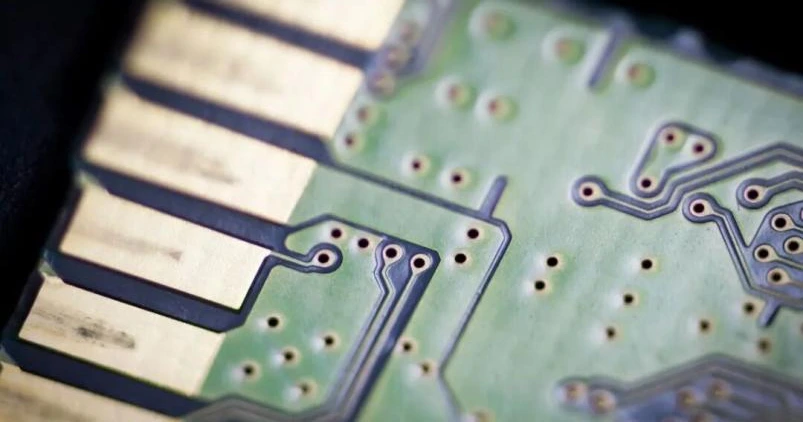
The #1 Rule: Never Select Via Types in Isolation
Selecting PCB vias is not a one-size-fits-all decision. A solution perfect for a six-layer automotive board may fail in a rigid-flex medical device or a multilayer communication module. A design that looks flawless in CAD can be unmanufacturable or unreliable in reality. The key is to choose a via strategy that balances your routing density needs with your manufacturer’s process capabilities.
Through-Hole Vias: Reliable and cost-effective for layer interconnection, but consume significant space.
Blind/Buried Vias: Increase routing density locally but add manufacturing complexity and cost.
Staggered Microvias: The cornerstone of HDI design, offering greater routing freedom.
Stacked Vias: Maximize vertical space in ultra-compact designs but require advanced processes like copper filling for reliability.
The Takeaway: Your via architecture must be a negotiated outcome between design goals and production reality.
The Pillars of Via Reliability: More Than Just a Hole
Pursuing density without considering reliability during thermal cycling, reflow soldering, and field operation is a critical mistake. A reliable via is defined by:
Complete, Uniform Copper Plating: Ensures electrical continuity and mechanical strength.
Controlled Aspect Ratio: Must align with your fabricator’s drilling and plating capabilities (typically ≤ 8:1 for mechanically drilled vias).
Absence of Voids: Voids in plating or fill can lead to cracking and failure.
Mechanical Support: Especially for stacked vias, which require structural reinforcement.
Do not just pursue smaller vias; pursue better vias. Ensure your manufacturer can reliably produce your chosen structure.
HDI vs. Standard Vias: A Practical Decision Framework
When should you upgrade your via strategy? Use this simple framework:
| Via Type | Best For | Key Considerations |
|---|---|---|
| Through-Hole | Simple boards, low-cost designs, interconnecting all layers. | Limited routing density, not suitable for fine-pitch BGA breakout. |
| Blind/Buried | Localized layer transitions, moderate density increase. | Increases layer count and process steps, higher cost than through-hole. |
| Microvias (Staggered) | HDI PCBs, breaking out fine-pitch components (≤0.5mm BGA). | Requires laser drilling, enables higher routing density. |
| Stacked Microvias | Ultra-HDI, extreme space constraints, vertical routing efficiency. | Highest cost/complexity; requires copper filling for reliability |
Upgrade Trigger: Move to microvias or stacked vias only when your design’s performance or density goals cannot be met with simpler structures. If you’re using larger-pitch components, traditional vias are likely sufficient and more cost-effective.
Copper-Filled Vias: Strategic Application Over Default Use
Copper-filled vias are not just cosmetic. They provide superior thermal conductivity, enhance structural integrity for stacked vias, and eliminate voids in PTH (Plated Through-Hole) applications for better solder joint reliability.
However, they come with trade-offs:
Increased Cost & Lead Time: Require specialized plating and planarization processes.
Limited Availability: Not all fabricators offer this capability.
Design Tip: Specify copper-filled vias only where necessary: under high-power components for thermal management, within stacked via structures, or in critical high-speed signal paths. For most other applications, standard resin-filled or capped vias are adequate and more economical.
Critical DFM Check: Drilling Constraints & Aspect Ratio
Aspect Ratio (Drill Depth / Drill Diameter) is a fundamental manufacturing constraint. Higher ratios make uniform copper plating difficult, risking reliability failures.
Standard Rule: For mechanically drilled vias, maintain an aspect ratio ≤ 8:1 for reliable plating.
For Microvias: Laser-drilled microvias have much lower aspect ratios (typically ~0.75:1), which is why they are more reliable for HDI stacking.
Always consult your fabricator’s capabilities before finalizing designs with high aspect ratios or very small via diameters (< 8 mils).
The Non-Negotiable Step: Consult Your Manufacturer Early
This is the most important advice in this guide. If your design uses:
1.Vias below 8 mils in diameter
2.Any stacked or staggered microvia structures
3.Copper-filled vias
4.Blind/buried vias in new configurations
...you must consult your PCB manufacturer during the design phase. A brief call or email can:
1.Validate the manufacturability of your via strategy.
2.Prevent costly respins and weeks of delay.
3.Uncover alternative, more cost-effective solutions that meet your needs.
Their process knowledge is invaluable. Use it.
Conclusion: The Right Via is the One That Works
PCB via design is not about maximizing connections at any cost. It’s about building a robust interconnect architecture that supports your electrical and mechanical goals while being reliably producible.
Before finalizing your board, ask:
DFM Alignment: Does my via strategy match my manufacturer’s proven process capabilities?
Reliability vs. Density: Have I sacrificed long-term reliability for short-term space savings?
Cost-Benefit: Do the benefits of advanced vias justify their added complexity and expense?
Remember: The best via isn’t always the smallest—it’s the one that gets your product to market reliably, on time, and on budget.
With 16 years of expertise in PCBA design, manufacturing, and service, KingshengPCBA is ready to help turn your ideas into reality. Feel free to contact us anytime to discuss your requirements and get a professional quotation.

Please send Email to kspcba@c-alley.com or call us through +86 13828766801 Or submit your inquiry by online form. Please fill out below form and attach your manufacturing files( PCB Gerber files and BOM List) if need quotation. We will contact you shortly.
 +86 13828766801
 kspcba@c-alley.com
 https://www.kingshengpcba.com/
 2/F, Building 6, Tangtou 3rd Industrial Zone, Tangtou Community, Shiyan Town, Baoan District, Shenzhen, China, 518108
We would also like to thank our customers for their trust and support. The company's outstanding achievements are mainly due to the loyalty of our customers, which also encourages and spurs our company to forge ahead.