* On your first PCB Assembly order!
* Up to $300 discount
 C - A L L E Y
 Home | Events | PCB | About Us | News | Contact Us
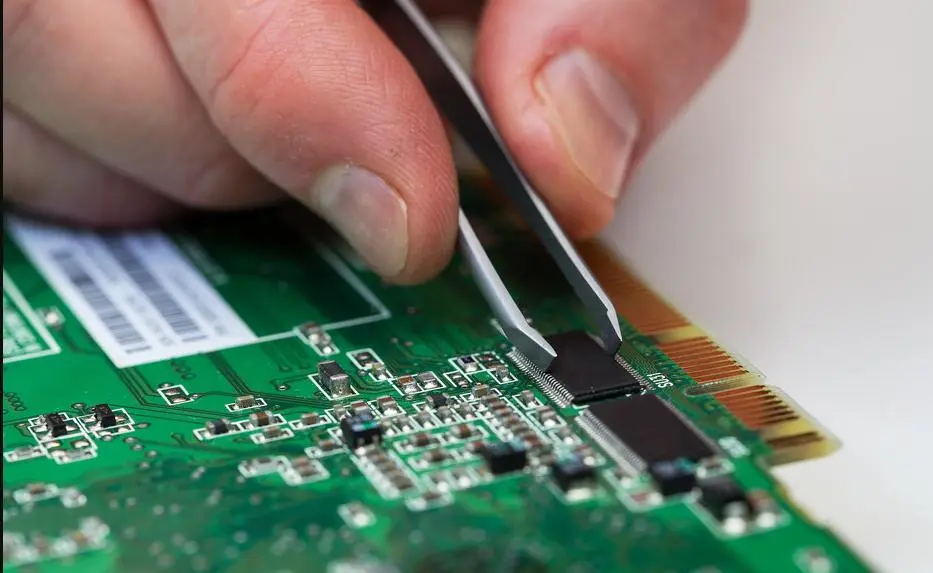
SMT, Surface Mount Technology, is an electronic assembly method used to mount electronic components, known as SMC (Surface Mount Components) or SMD (Surface Mount Devices), directly onto the surface of a bare PCB (Printed Circuit Board). SMT assembly relies on a series of automated machines to complete the mounting and soldering process efficiently.
Q1: What Equipment Is Used in SMT Assembly?
A1: A standard SMT production line typically includes the following equipment:
- Solder paste printer
- Pick-and-place machine
- Reflow soldering oven
- AOI (Automated Optical Inspection) system
- Magnifier or microscope for manual inspection
These machines work together to ensure accuracy, speed, and consistency in SMT manufacturing.
Q2: What Are the Key Characteristics of SMT Assembly?
A2: Compared with traditional assembly methods such as THT (Through-Hole Technology), SMT assembly offers multiple advantages:
- Higher assembly density
- Smaller product size and lighter weight
- Improved reliability and shock resistance
- Lower defect rate
- Support for high-frequency circuits
- Reduced EMI (Electromagnetic Interference) and RF interference
- Higher throughput and automation
- Lower overall manufacturing cost
Q3: What Is the Difference Between SMT Assembly and THT Assembly?
A3: SMT and THT differ in several key aspects:
- Lead length: THT components have longer leads than SMT components
- PCB drilling: THT requires drilled holes; SMT does not
- Soldering method: THT mainly uses wave soldering, while SMT uses reflow soldering
- Automation: SMT supports full automation; THT relies heavily on manual operation
- Component size: THT components are larger and heavier; SMT components save board space
Q4: Why Are SMT Components Widely Used in Electronics Manufacturing?
A4: SMT components are widely adopted for several reasons:
- Modern electronic products demand miniaturization and lightweight design, which THT cannot easily achieve
- SMT supports high integration of ICs (Integrated Circuits) to meet large-scale and high-density functional requirements
- SMT is ideal for mass production, automation, and cost reduction
- SMT accelerates the development and application of ICs and semiconductor technologies
- SMT complies with international electronics manufacturing standards
Q5: In Which Industries Are SMT Components Used?
A5: SMT components are widely applied across numerous industries, including:
- Consumer electronics
- Computers and telecommunications
- Medical devices
- Automotive electronics
- Industrial control systems
- Military and defense
- Aerospace and aviation
Q6: What Is the Typical SMT Assembly Process?
A6: A standard SMT assembly workflow includes the following steps:
- Solder paste printing
- Chip placement (pick-and-place)
- Reflow soldering
- AOI inspection
- X-ray inspection (if required)
- Rework (if necessary)
Visual inspection is typically performed after each major step.
Q7: What Is Solder Paste Printing and Its Role in SMT Assembly?
A7: Solder paste printing is the process of applying solder paste onto PCB pads using a stencil. The stencil contains precise apertures that allow solder paste to be deposited only on designated pads. This solder paste temporarily holds SMDs in place and prepares them for soldering during reflow.
Q8: What Is Chip Placement in SMT Assembly?
A8: Chip placement is the core operation of SMT assembly. It refers to the high-speed, high-precision placement of SMCs or SMDs onto the PCB pads coated with solder paste. The adhesive force of the solder paste temporarily secures the components before reflow soldering.
Q9: Why Is Reflow Soldering Used in SMT Assembly?
A9: Reflow soldering is used to permanently bond components to the PCB. The PCB passes through a reflow oven with multiple temperature zones. During heating, the solder paste melts and forms solder joints. As the temperature gradually decreases, the solder solidifies, firmly fixing components onto their corresponding pads.
Q10: Is PCB Cleaning Required After SMT Assembly?
A10: Yes. Assembled PCBs must be cleaned before leaving the workshop. Dust, flux residues, and other contaminants left after reflow soldering can negatively affect product reliability. Cleaning ensures stable electrical performance and long-term reliability.
Q11: What Types of Inspection Are Used in SMT Assembly?
A11: Inspection is critical to ensuring PCB quality and performance. Common inspection methods include:
- Visual inspection: Identifies obvious defects such as misalignment, missing components, or polarity errors
- Magnifier or microscope inspection: Enhances visual accuracy
- AOI inspection: Detects solder joint and placement defects after soldering
- X-ray inspection: Identifies hidden defects such as BGA solder voids
Using multiple inspection methods significantly improves final product reliability.
Q12: What Are the Environmental Requirements for an SMT Workshop?
A12: An SMT workshop must meet the following basic environmental conditions:
- Ambient temperature: 25 ±3°C (temperature control equipment recommended)
- Room height: Minimum 3 meters
- Relative humidity (RH): 45%–75% (humidity control equipment required if outside this range)
- ESD control: 150 kΩ ±10%, with proper electrostatic grounding
Conclusion
SMT assembly is a critical process in modern electronics manufacturing, enabling high-density, high-performance, and cost-efficient PCB production. Understanding SMT processes, equipment, inspection methods, and environmental requirements helps manufacturers achieve better quality, reliability, and scalability.
If you are looking for professional SMT or PCBA solutions, a well-controlled SMT process is essential for delivering high-quality electronic products.
KingshengPCBA is ready to help turn your ideas into reality. Feel free to contact us anytime to discuss your requirements and get a professional quotation.
Please send Email to kspcba@c-alley.com or call us through +86 13828766801 Or submit your inquiry by online form. Please fill out below form and attach your manufacturing files( PCB Gerber files and BOM List) if need quotation. We will contact you shortly.
 +86 13828766801
 kspcba@c-alley.com
 https://www.kingshengpcba.com/
 2/F, Building 6, Tangtou 3rd Industrial Zone, Tangtou Community, Shiyan Town, Baoan District, Shenzhen, China, 518108
We would also like to thank our customers for their trust and support. The company's outstanding achievements are mainly due to the loyalty of our customers, which also encourages and spurs our company to forge ahead.