* On your first PCB Assembly order!
* Up to $300 discount
 C - A L L E Y
 Home | Events | PCB | About Us | News | Contact Us
In electronics manufacturing, SMT prototyping (SMT sample assembly) is a critical stage between product design and mass production. Whether the SMT prototype is qualified directly affects product performance, reliability, time-to-market, and overall manufacturing cost.
For electronics manufacturers, purchasing managers, and hardware engineers, knowing how to accurately evaluate SMT prototyping quality is essential. A qualified SMT prototype not only validates the design but also lays a solid foundation for stable mass production.
This article provides a systematic and practical evaluation framework to help you accurately judge whether an SMT prototype meets quality requirements.
1. Component Placement Accuracy
Component placement accuracy is the primary criterion for evaluating SMT prototyping quality. All components must be placed precisely according to design requirements. Even small placement deviations can affect circuit performance and downstream manufacturing processes.
1.1 Measurement and Inspection Methods
Inspection tools
- Optical microscope
- Automated Optical Inspection (AOI)
These tools enable fast and accurate detection of placement deviations.
Inspection procedure
- Verify component positions using the BOM and placement coordinate files
- Scan the PCB with AOI equipment
- Compare actual placement with theoretical coordinates
- Generate inspection reports highlighting deviations
1.2 Placement Tolerance Criteria
Different components and PCB designs allow different placement tolerances
Evaluators must follow industry standards and customer specifications
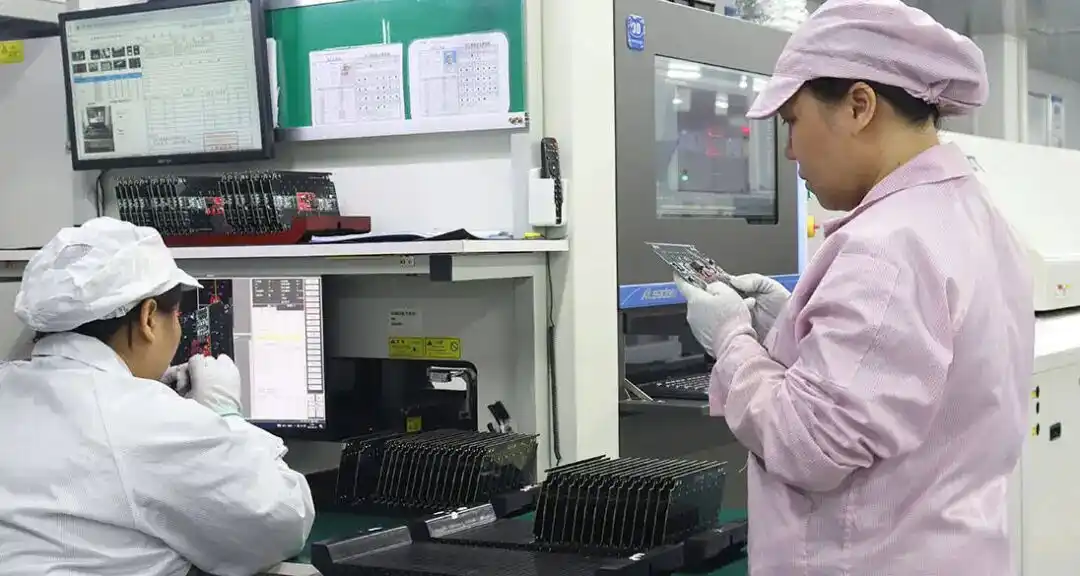
Special attention should be paid to high-frequency components, fine-pitch ICs, and precision chips, as even minor misalignment may cause performance degradation or functional failure.
2. Soldering Quality Evaluation
Soldering quality directly determines the reliability and durability of SMT prototypes.
2.1 Visual Inspection of Solder Joints
Qualified solder joints should be clean, smooth, and shiny, with a metallic luster
No contamination, residue, bubbles, or cracks should be present
Use magnifiers or microscopes to identify hidden defects
Solder distribution
- Solder should be evenly distributed
- No solder bridging, cold joints, or false soldering
- Solder bridges may cause short circuits, while cold joints can lead to intermittent failures
2.2 Electrical Performance Testing
Testing methods
- Resistance testing
- Insulation resistance testing
- Continuity testing
Result analysis
- Identify abnormal readings
- Mark defective solder joints
- Record issues for rework and root cause analysis
3. Via and Through-Hole Quality
Vias and through-holes play a critical role in electrical interconnection and signal integrity.
3.1 Via Quality Assessment
Use microscopes or X-ray inspection to examine internal via structure
Ensure smooth via walls with no contamination or cracks
Verify that via wall thickness meets design specifications
3.2 Through-Hole Quality Assessment
Inspect hole smoothness, diameter, and plating quality
Ensure proper component insertion and solderability
Validate connection reliability through electrical testing
4. Package and Encapsulation Quality
Packaging quality affects both product appearance and long-term reliability.
4.1 Encapsulation Materials
Materials should offer high-temperature resistance, corrosion resistance, and good electrical insulation
Verify material certifications and inspection reports
4.2 Encapsulation Process Quality
Solder mask coverage must be accurate, with no misalignment or missing areas
Finished surfaces should be flat, smooth, and free of burrs or gaps
Use optical tools for detailed inspection
5. Thermal Effects and Component Installation
Temperature control is a key factor in SMT assembly quality.
5.1 Thermal Process Control
Monitor soldering temperatures in real time
Ensure temperature profiles remain within specified limits
Optimize preheating, reflow, and cooling parameters according to component and PCB characteristics
5.2 Component Orientation and Flatness
Verify that all components are installed in the correct orientation
Incorrect orientation may cause immediate or latent functional failures
Check component coplanarity and spacing to ensure compliance with design requirements
6. Visual Inspection and Post-Prototype Considerations
6.1 Visual Inspection Process
Prepare inspection tools (magnifiers, microscopes, AOI systems)
Follow a standardized inspection checklist
Record and classify defects such as missing components, solder bridges, or misplacement
Provide timely feedback for corrective actions
6.2 Maintenance and Serviceability
Evaluate ease of repair and component replacement
Consider future product updates and design changes
Prototypes with good maintainability reduce long-term operational costs
7. Comprehensive Evaluation and Continuous Improvement
Judging SMT prototyping quality requires a holistic assessment, not a single inspection point.
7.1 Establishing an Evaluation System
Define clear evaluation criteria based on product type and customer requirements
Standardize inspection processes and documentation
Collect data such as process parameters, inspection results, and customer feedback
7.2 Continuous Improvement Mechanism
Perform root cause analysis on identified issues
Implement corrective and preventive actions
Optimize SMT processes and introduce advanced equipment or materials
Provide continuous training for operators and engineers
Conclusiont
SMT prototyping is a critical gatekeeper in electronics manufacturing. Accurately judging whether an SMT prototype is qualified requires evaluation across placement accuracy, soldering quality, via reliability, packaging integrity, thermal control, and overall process stability.
By adopting a structured evaluation approach and a continuous improvement mindset, manufacturers and procurement teams can significantly reduce risks, improve product reliability, and ensure a smooth transition from prototyping to mass production.
KingshengPCBA is ready to help turn your ideas into reality. Feel free to contact us anytime to discuss your requirements and get a professional quotation.

Please send Email to kspcba@c-alley.com or call us through +86 13828766801 Or submit your inquiry by online form. Please fill out below form and attach your manufacturing files( PCB Gerber files and BOM List) if need quotation. We will contact you shortly.
 +86 13828766801
 kspcba@c-alley.com
 https://www.kingshengpcba.com/
 2/F, Building 6, Tangtou 3rd Industrial Zone, Tangtou Community, Shiyan Town, Baoan District, Shenzhen, China, 518108
We would also like to thank our customers for their trust and support. The company's outstanding achievements are mainly due to the loyalty of our customers, which also encourages and spurs our company to forge ahead.