* On your first PCB Assembly order!
* Up to $300 discount
 C - A L L E Y
 Home | Events | PCB | About Us | News | Contact Us
In modern electronics manufacturing, Ceramic PCBs and FR4 PCBs serve very different technical requirements. Choosing the right substrate directly impacts thermal performance, electrical reliability, lifespan, and cost. This article provides a comprehensive, SEO-optimized comparison of ceramic circuit boards and traditional FR4 circuit boards, covering materials, processes, advantages, limitations, and application scenarios.
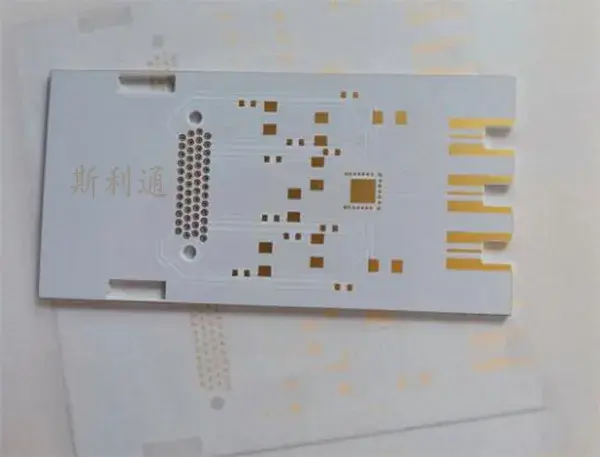
What is a Ceramic PCB?
A Ceramic PCB (Printed Circuit Board) is a type of circuit board manufactured using ceramic materials as the substrate rather than conventional fiberglass-reinforced epoxy resin (FR4). Ceramic substrates offer:
- Excellent high-temperature stability
- Superior mechanical strength
- Outstanding dielectric performance
- Longer service life
Due to these properties, ceramic PCBs are widely used in high-temperature, high-frequency, and high-power circuits, such as:
- LED lighting modules
- Power amplifiers
- Semiconductor lasers
- RF transceivers
- Sensors
- Microwave and RF devices
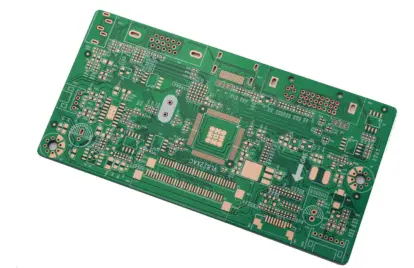
What is an FR4 PCB?
An FR4 PCB is the most commonly used printed circuit board in electronics. It is made of glass fiber cloth reinforced epoxy resin, with copper circuits formed through processes such as imaging, chemical etching, electroplating, and drilling.
FR4 PCBs serve as the mechanical and electrical carrier for electronic components and are widely used due to their:
- Mature manufacturing process
- Low cost
- Good mechanical strength
- Suitability for mass production
Ceramic PCB vs FR4 PCB: Key Differences
The fundamental difference between ceramic PCBs and FR4 PCBs lies in the substrate material, which directly affects thermal, electrical, and mechanical performance.
| Comparison Item | Ceramic PCB | FR4 PCB |
| Substrate material | Ceramic (Al2O3, AlN, ZrO2, etc.) | Glass fiber epoxy resin |
| Thermal conductivity | Very high | Low to medium |
| Heat resistance | Excellent (high-temperature tolerant) | Limited |
| Dielectric performance | Excellent | Moderate |
| Mechanical strength | High hardness, rigid | Good but less rigid |
| Lifespan | Long | Moderate |
| Cost | Higher | Lower |
| Typical applications | High power, RF, harsh environments | Consumer & general electronics |
Ceramic PCB Classification by Material
Alumina Ceramic (Al₂O₃)
- Excellent electrical insulation
- High-temperature stability
- High hardness and mechanical strength
- Widely used in high-power electronic devices
Aluminum Nitride Ceramic (AlN)
- Extremely high thermal conductivity
- Good thermal stability
- Ideal for high-power electronics and LED lighting
Zirconia Ceramic (ZrO₂)
- Very high strength and hardness
- Excellent wear resistance
- Suitable for high-voltage electrical equipment
Ceramic PCB Classification by Manufacturing Process
HTCC (High Temperature Co-fired Ceramic)
HTCC technology is suitable for high-temperature and high-power applications. It is widely used in:
- Power electronics
- Aerospace and satellite communication
- Optical communication
- Medical equipment
- Automotive electronics
- Petrochemical industries
Typical products include:
- High-power LEDs
- Power amplifiers
- Inductors
- Sensors
- Energy storage capacitors
LTCC (Low Temperature Co-fired Ceramic)
LTCC is ideal for RF, microwave, and antenna applications, offering excellent high-frequency performance.
Typical applications include:
- Microwave modules
- Antenna modules
- Pressure sensors
- Gas sensors
- Accelerometers
- Microwave filters and power dividers
LTCC is also widely used in medical, automotive, aerospace, communication, and electronic industries.
DBC (Direct Bonded Copper)
DBC ceramic substrates are mainly used for heat dissipation in high-power semiconductor devices, such as:
- IGBT modules
- MOSFETs
- GaN and SiC devices
They offer outstanding thermal conductivity and mechanical strength, making them ideal for:
- Power modules
- Power electronics
- Electric vehicle (EV) controllers
DPC (Direct Plated Copper)
DPC ceramic PCBs are primarily used for high-power LED thermal management, featuring:
- High strength
- High thermal conductivity
- Excellent electrical performance
Typical applications include:
- LED lighting
- UV LEDs
- COB LED modules
LAM (Laminated Ceramic Metal Substrate)
LAM substrates combine ceramic and metal layers to optimize both thermal dissipation and electrical performance.
They are commonly used in:
- High-power LED lighting
- Power supply modules
- Electric vehicle motor drive systems
FR4 PCB and Other Common PCB Types
In addition to standard FR4 boards, several advanced PCB types are widely used across industries:
IC Substrate
IC substrates are used for chip packaging, testing, and production, with applications in:
- Semiconductor manufacturing
- Electronics production
- Aerospace
- Military systems
Rigid-Flex PCB
Rigid-flex PCBs combine rigid boards and flexible circuits, offering both durability and flexibility. Common applications include:
- Consumer electronics
-Medical devices
-Automotive electronics
- Aerospace systems
HDI Blind and Buried Via PCB
HDI (High Density Interconnect) PCBs feature finer traces and smaller vias to support miniaturization and high performance.
They are widely used in:
- Mobile communication devices
- Computers
- Consumer electronics
Conclusion: Ceramic PCB vs FR4 PCB – Which Should You Choose for Industrial, Medical, and Automotive Electronics?
Ceramic PCBs outperform FR4 PCBs in thermal management, high-frequency performance, and long-term reliability, making them the preferred choice for demanding environments. However, FR4 PCBs remain dominant in cost-sensitive and general-purpose electronics.
Selecting the right PCB substrate should be based on power density, operating temperature, frequency requirements, reliability expectations, regulatory compliance, and budget constraints, especially for industrial automation, medical devices, and automotive electronics. For high-power, high-frequency, or harsh-environment applications, ceramic PCBs are often the optimal solution.
With 16 years of expertise in PCBA design, manufacturing, and service, KingshengPCBA is ready to help turn your ideas into reality. Feel free to contact us anytime to discuss your requirements and get a professional quotation.
Please send Email to kspcba@c-alley.com or call us through +86 13828766801 Or submit your inquiry by online form. Please fill out below form and attach your manufacturing files( PCB Gerber files and BOM List) if need quotation. We will contact you shortly.
 +86 13828766801
 kspcba@c-alley.com
 https://www.kingshengpcba.com/
 2/F, Building 6, Tangtou 3rd Industrial Zone, Tangtou Community, Shiyan Town, Baoan District, Shenzhen, China, 518108
We would also like to thank our customers for their trust and support. The company's outstanding achievements are mainly due to the loyalty of our customers, which also encourages and spurs our company to forge ahead.