* On your first PCB Assembly order!
* Up to $300 discount
 C - A L L E Y
 Home | Events | PCB | About Us | News | Contact Us
As a PCBA manufacturer deeply embedded in the global electronics supply chain, I've witnessed firsthand how this foundational sector evolves alongside technological breakthroughs and shifting market demands. As we head into the final stretch of 2026, it is critical to break down the defining trends reshaping our industry and what they mean for businesses, engineers, and investors alike.
AI Emerges as the Dominant Growth Driver
The most transformative shift in 2026 is AI's role as the core catalyst for PCBA industry expansion. Unlike previous growth cycles driven by 5G infrastructure rollouts or smartphone upgrades, AI computing infrastructure boasts a larger market scale and longer construction timeline, delivering more sustained demand for high-performance PCBA products. For example, a single GB300NVL72 chip for AI servers requires PCBA valued at approximately 430, with ASIC chip−associated PCBA reaching over 430, with ASIC chip−associated PCBA reaching over 580 in value. Industry forecasts project the AI server PCBA market will hit 85 billion globally by 2026, with the broader AI−powered PCBA market crossing the 85 billion globally by 2026, with the broader AI−powered PCBA market crossing the140 billion mark when including supporting switches and optical modules.
This surge is pushing manufacturers to prioritize high-layer count, high-speed PCBA production to support AI’s stringent performance requirements, particularly by integrating HVLP ultra-smooth copper foil to enable stable signal transmission in AI main boards.
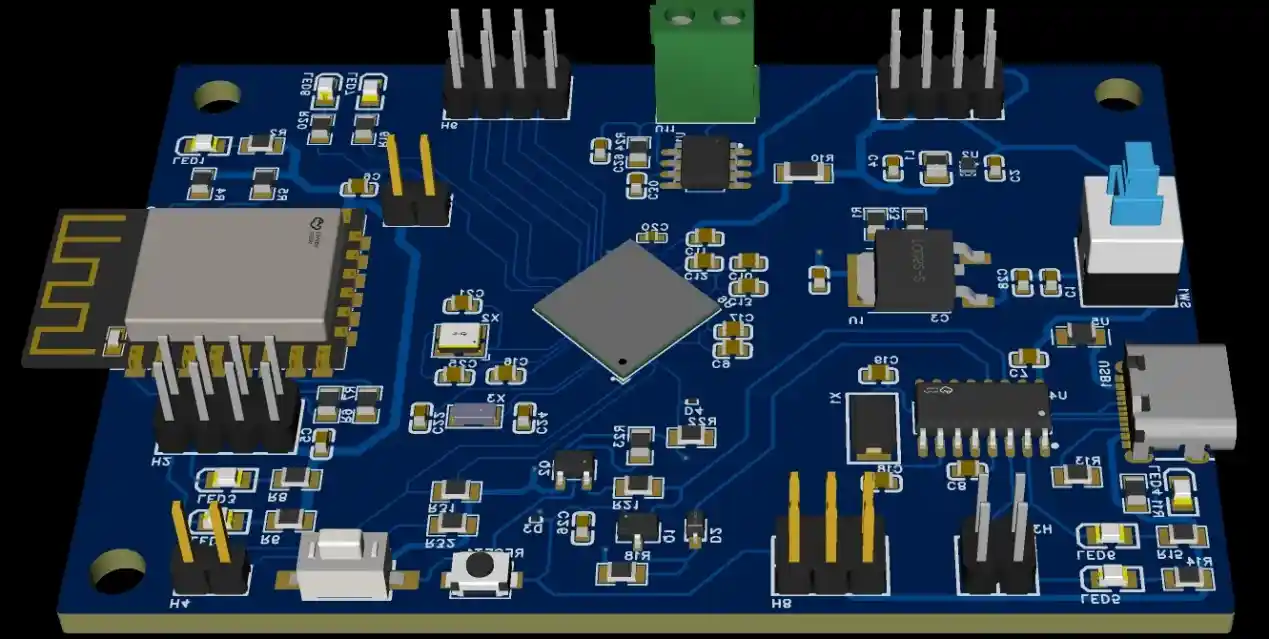
Automation & Zero-Defect Manufacturing Become Non-Negotiable
In 2026, PCBA players are accelerating the transition to fully automated smart factories to tackle mounting pressures around shortened lead times, strict quality control standards, and shrinking profit margins. Gone are the days of manual inspection and reactive quality fixes. Leading manufacturers are adopting IoT-connected production lines that enable real-time data collection, predictive maintenance, and end-to-end process traceability, cutting equipment downtime by up to 35%.
Zero-defect manufacturing is no longer a buzzword but a mandatory standard, especially for aerospace, medical, and automotive electronics sectors, where even minor PCBA flaws can lead to catastrophic consequences. Deploying advanced inspection tools like AOI (Automated Optical Inspection) and X-ray testing allows teams to catch defects during early production stages, reducing rework rates by over 60% in top-tier facilities. This shift not only improves product reliability but also cuts operational waste by optimizing material usage and streamlining workflows.
Supply Chain Resilience Takes Center Stage
Persistent post-pandemic supply chain disruptions have forced PCBA manufacturers to rethink their sourcing strategies in 2026. More businesses are shifting away from over-reliance on single-region component suppliers and building dual-source or localized supply networks to mitigate risks of delays and price volatility.
For instance, leading PCBA providers are expanding partnerships with domestic copper foil and fiberglass fabric producers to reduce dependence on Japanese and South Korean suppliers for critical high-performance materials. Additionally, many are investing in regional warehouses and just-in-case inventory buffers to ensure on-demand material access without overstocking, balancing cost efficiency with supply stability. Localized manufacturing hubs, such as Thailand-based facilities for Southeast Asian markets, are growing in popularity as companies leverage favorable trade policies and lower logistics costs while avoiding tariff barriers.
Sustainability Gains Traction Across the Value Chain
As global regulations around carbon emissions tighten, 2026 has seen PCBA manufacturers prioritizing eco-friendly production practices to meet client demands and regulatory requirements. This includes widespread adoption of lead-free soldering materials, optimizing energy consumption in SMT lines with smart temperature controls, and implementing circular economy principles by recycling excess copper and electronic waste from production processes, diverting over 70% of manufacturing scrap from landfills in top-performing facilities.
Many enterprise clients now actively seek PCBA partners with ISO 14001 environmental certifications, making sustainability a key differentiator in winning high-value long-term contracts. Forward-thinking firms are also developing low-power PCBA designs to support energy-efficient IoT and renewable energy applications, aligning their product road map with global net-zero emission goals.
As we wrap up 2026, the PCBA industry stands at an exciting crossroads, driven by AI innovation, operational excellence, and sustainable growth. For manufacturers that adapt quickly to these trends, the next two years will bring unprecedented opportunities to capture market share and build long-term resilience. Whether you are an industry player refining your production strategy or an investor looking to capitalize on tech-driven growth, understanding these shifts will be key to navigating the evolving PCBA landscape successfully.
Please send Email to kspcba@c-alley.com or call us through +86 13828766801 Or submit your inquiry by online form. Please fill out below form and attach your manufacturing files( PCB Gerber files and BOM List) if need quotation. We will contact you shortly.
 +86 13828766801
 kspcba@c-alley.com
 https://www.kingshengpcba.com/
 2/F, Building 6, Tangtou 3rd Industrial Zone, Tangtou Community, Shiyan Town, Baoan District, Shenzhen, China, 518108
We would also like to thank our customers for their trust and support. The company's outstanding achievements are mainly due to the loyalty of our customers, which also encourages and spurs our company to forge ahead.