* On your first PCB Assembly order!
* Up to $300 discount
 C - A L L E Y
 Home | Events | PCB | About Us | News | Contact Us
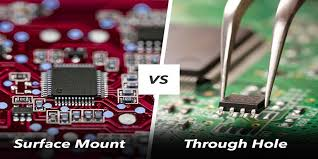
In the world of PCB assembly, selecting the right technology is crucial for meeting product demands efficiently and cost-effectively. Surface Mount Technology (SMT) and Through-Hole Technology (THT) are the two primary methods used in PCB assembly. SMT involves mounting components directly onto the surface of the PCB, while THT requires inserting component leads through holes in the board and soldering them on the opposite side. This guide provides a practical framework for deciding between SMT and THT based on key product requirements, drawing from industry insights to help engineers, designers, and manufacturers make informed choices.
Understanding SMT and THT: The Basics
Surface Mount Technology (SMT) revolutionized electronics manufacturing in the late 20th century by enabling smaller, lighter, and more densely packed circuits. Components like resistors, capacitors, and integrated circuits are placed on pads on the PCB surface and soldered using reflow ovens or wave soldering machines. This method supports automation, making it ideal for high-volume production.
Through-Hole Technology (THT), on the other hand, is an older but still widely used technique where component leads are inserted into drilled holes and soldered, often manually or with selective soldering equipment. THT creates stronger mechanical bonds, which is why it's preferred in applications requiring durability.
The choice between these technologies isn't binary; many modern PCBs use a hybrid approach, combining SMT for compact areas and THT for high-stress components. However, understanding their strengths and weaknesses is essential for aligning with product needs.
Advantages and Disadvantages of SMT
SMT excels in scenarios where size, speed, and cost are priorities. Its key advantages include:
Higher Component Density: SMT allows for components on both sides of the PCB, enabling miniaturization. This is perfect for consumer electronics like smartphones and wearables, where space is at a premium.
Cost Efficiency in Volume: Automated placement reduces labor costs, and smaller boards mean less material usage. For large-scale production, SMT can lower overall expenses significantly.
Improved Performance: Shorter lead lengths reduce parasitic inductance and capacitance, enhancing high-frequency signal integrity.
However, SMT has limitations:
Lower Mechanical Strength: Surface-mounted components can be more susceptible to vibration or thermal stress, making them less ideal for harsh environments.
Repair Challenges: Soldering small components requires specialized tools, increasing repair costs and complexity.
Initial Setup Costs: The need for precise machinery and stencils can be expensive for low-volume runs.
Advantages and Disadvantages of THT
THT remains relevant for applications demanding reliability and ease of maintenance. Its benefits include:
Superior Durability: The through-hole mounting provides robust mechanical anchoring, ideal for high-power components or products exposed to mechanical stress, such as automotive or industrial equipment.
Easier Prototyping and Repair: Components are larger and can be hand-soldered, facilitating quick prototypes and field repairs without advanced equipment.
Better Heat Dissipation: Larger leads and holes allow for improved thermal management, crucial for power electronics.
Drawbacks of THT:
Larger Footprint: It requires more board space due to holes and leads, limiting density and increasing board size.
Higher Labor Costs: Manual insertion and soldering are time-consuming, making it less economical for mass production.
Slower Assembly: The process doesn't lend itself as well to full automation, potentially slowing down throughput.
Key Decision Factors: Aligning with Product Requirements
To choose between SMT and THT, evaluate your product against these practical criteria:
Size and Density Requirements: If your product demands compactness—such as in IoT devices or portable gadgets—SMT is the go-to. For example, a smartwatch PCB might use SMT to fit hundreds of components in a tiny space. Conversely, if space isn't an issue and you need room for larger components, THT suffices.
Production Volume and Cost: For high-volume manufacturing (thousands of units), SMT's automation drives down per-unit costs. Low-volume or custom products, like specialized medical devices, may favor THT to avoid high setup fees.
Reliability and Environmental Factors: In vibration-prone or high-temperature settings, like aerospace or automotive applications, THT's mechanical strength shines. SMT might require additional reinforcements, such as underfill adhesives, to match this durability.
Repairability and Lifecycle: Products expected to be serviced frequently, such as industrial controls, benefit from THT's ease of component replacement. Consumer products with short lifecycles can prioritize SMT's efficiency.
Performance Needs: High-speed digital circuits favor SMT for reduced signal interference. Analog or power circuits might lean toward THT for better heat handling.
Regulatory and Compliance: Certain industries, like military or medical, may mandate THT for its proven reliability in standards compliance.
A hybrid approach often emerges as the best solution. For instance, use SMT for logic circuits and THT for connectors or power transistors on the same board.
Real-World Case Studies
Consider a consumer drone manufacturer: They opted for SMT to achieve a lightweight, compact design with high component density, reducing weight for better flight time and cutting production costs for mass-market appeal.
In contrast, an industrial pump controller in a factory setting used THT for its vibration resistance and easy on-site repairs, ensuring minimal downtime in harsh conditions.
Another example is a medical device like a defibrillator, where a hybrid PCB combines SMT for processing units and THT for high-voltage components to balance size, performance, and safety.
Conclusion
Choosing between SMT and THT boils down to a thorough analysis of your product's specific requirements—balancing factors like size, cost, reliability, and production scale. SMT dominates in modern, high-volume, compact applications, while THT holds ground in durable, repairable designs. By assessing these elements early in the design phase, you can optimize for performance, cost, and longevity. In many cases, a mixed strategy provides the flexibility needed for complex products. Consult with PCB manufacturers and use simulation tools to validate your choice, ensuring your decision drives success in the competitive electronics landscape.
With 16 years of expertise in PCBA design, manufacturing, and service, KingshengPCBA is ready to help turn your ideas into reality. Feel free to contact us anytime to discuss your requirements and get a professional quotation.
Please send Email to kspcba@c-alley.com or call us through +86 13828766801 Or submit your inquiry by online form. Please fill out below form and attach your manufacturing files( PCB Gerber files and BOM List) if need quotation. We will contact you shortly.
 +86 13828766801
 kspcba@c-alley.com
 https://www.kingshengpcba.com/
 2/F, Building 6, Tangtou 3rd Industrial Zone, Tangtou Community, Shiyan Town, Baoan District, Shenzhen, China, 518108
We would also like to thank our customers for their trust and support. The company's outstanding achievements are mainly due to the loyalty of our customers, which also encourages and spurs our company to forge ahead.