* On your first PCB Assembly order!
* Up to $300 discount
 C - A L L E Y
 Home | Events | PCB | About Us | News | Contact Us
In today's PCBA manufacturing environment, electrostatic discharge (ESD) remains one of the most invisible yet destructive risks on the production floor. A single static event—often too small for humans to feel—can reduce the reliability of ICs, sensors, MCUs, and power devices, eventually leading to early-life failures in the field. For industries such as automotive, medical, and industrial electronics, where reliability is non-negotiable, robust ESD management is not optional but essential.

Why ESD Control Is Critical in PCBA Production
1. Direct component damage
Modern electronic components, especially MOS, CMOS, and high-density ICs, are extremely sensitive to static electricity. Even tens of volts can cause the internal structures to break down. This type of damage is immediate, irreversible, and costly.
2. Latent failures—more dangerous than scrap
Not all ESD damage results in instant failure. In many cases, parameters degrade silently, and the defect only appears after the product reaches the customer. These hidden issues are far more expensive, leading to higher warranty costs, brand exposure, and customer audits.
3. Rising failure rates and hidden production costs
ESD-related failures are often mistakenly attributed to “unstable processes,” “poor soldering,” or “bad incoming materials.” The result? Rework, retest, and troubleshooting consume far more resources than a proper ESD program would.
4. Mandatory requirement for audits and key customers
Standards such as IATF 16949, VDA 6.3, and many OEM customer requirements consider ESD control a core evaluation item. Poor ESD management is often a deal-breaker in supply chain qualification.
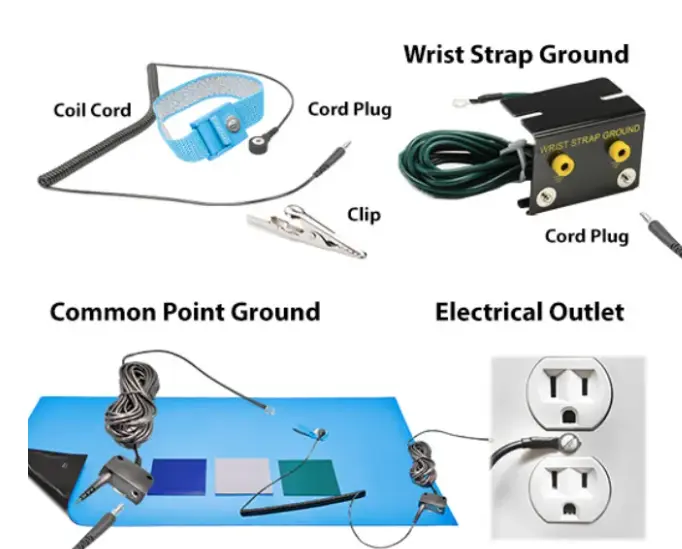
Understanding ESD at Its Core
ESD issues stem from uncontrolled people, materials, and environment:
People generate static through movement and clothing.
Materials like plastic trays and packaging accumulate charge easily.
Low humidity and ungrounded floors make dissipation difficult.
The essence of ESD control is simple: prevent generation, prevent accumulation, and allow safe discharge.
How to Implement Effective ESD Control in a PCBA Workshop
1. Build a clear EPA (Electrostatic Protected Area)
Define boundaries, use proper signage, and restrict access to trained personnel only. Non-ESD materials should not enter the EPA.
2. Treat personnel control as the first line of defense
Require antistatic garments, shoes, and wrist straps. Enforce pre-shift testing and maintain records. Most importantly, training should include real ESD failure cases—not just checklists.
3. Ensure equipment and tools are reliable
Workbenches, mats, and soldering tools must be properly grounded and inspected regularly. Automated machines are not exceptions—they must be part of the ESD control plan.
4. Use proper material handling and packaging
Adopt ESD trays, shielding bags, and standardized packaging for incoming materials, WIP, and finished goods. “Temporary fixes” like ordinary plastic bags should be strictly prohibited.
5. Maintain environmental control
Keep humidity between 40–60% RH, ensure conductive flooring, and verify grounding points routinely. Grounding cannot rely on assumptions—it must be measured.
6. Monitor, record, and continuously improve
Implement regular audits, track resistance measurements, and establish corrective actions for abnormalities. Mature factories treat ESD as a daily routine, not a last-minute audit preparation.
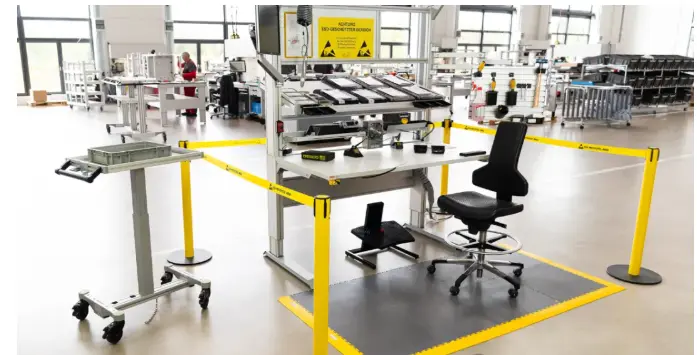
In PCBA manufacturing, ESD is a constant threat. Companies that excel in reliability know that consistent, data-driven ESD management is one of the most cost-effective quality investments. By turning ESD control into a standardized, everyday practice, factories can significantly reduce hidden risks and ensure long-term product performance.
With 16 years of expertise in PCBA design, manufacturing, and service, KingshengPCBA is ready to help turn your ideas into reality. Feel free to contact us anytime to discuss your requirements and get a professional quotation.

Please send Email to kspcba@c-alley.com or call us through +86 13828766801 Or submit your inquiry by online form. Please fill out below form and attach your manufacturing files( PCB Gerber files and BOM List) if need quotation. We will contact you shortly.
 +86 13828766801
 kspcba@c-alley.com
 https://www.kingshengpcba.com/
 2/F, Building 6, Tangtou 3rd Industrial Zone, Tangtou Community, Shiyan Town, Baoan District, Shenzhen, China, 518108
We would also like to thank our customers for their trust and support. The company's outstanding achievements are mainly due to the loyalty of our customers, which also encourages and spurs our company to forge ahead.