* On your first PCB Assembly order!
* Up to $300 discount
 C - A L L E Y
 Home | Events | PCB | About Us | News | Contact Us
In PCBA (Printed Circuit Board Assembly) manufacturing, the integrity of solder joints is crucial for ensuring the reliability of the final product. Two often-overlooked factors that significantly influence solder joint quality are the surface finish of component leads and the choice of solder alloy. Understanding the interplay between these elements is essential for achieving robust, long-lasting connections.
Component Lead Finishes: Beyond Surface Protection
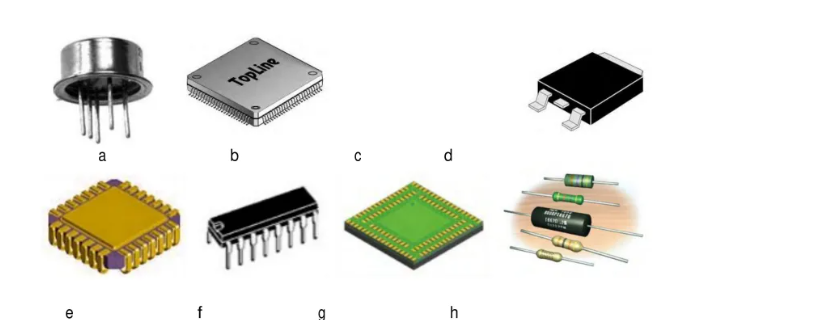
Component leads are typically plated with various finishes to prevent oxidation and enhance solderability. The most common finishes include:
Tin (Sn) or Tin-Lead (SnPb) Plating: This offers excellent solderability and is compatible with both leaded and lead-free processes. However, pure tin finishes are prone to tin whisker growth, which can pose a risk of short circuits in high-reliability applications.
Gold (Au) Plating over Nickel (Ni): Known for superior oxidation resistance, gold plating is commonly used in connectors and high-frequency components. However, if the nickel barrier is too thin or porous, gold may diffuse into the solder joint, forming brittle intermetallic compounds (IMCs), such as AuSn4, which can significantly weaken the joint.
Silver (Ag) Plating: Silver offers good solderability but is susceptible to tarnishing and silver migration under humid conditions.
Organic Solderability Preservative (OSP): A cost-effective and environmentally friendly coating that protects copper until soldering. However, OSP is limited to a single reflow cycle and requires careful handling during assembly.
Solder Alloys: The Binding Agent
The composition of the solder alloy plays a critical role in determining the mechanical, thermal, and electrical properties of the solder joint.
Lead-Free Alloys (e.g., SAC305 - Sn96.5Ag3.0Cu0.5): These are the industry standard and meet RoHS (Restriction of Hazardous Substances) requirements. Lead-free alloys have a higher melting point (~217°C) than traditional SnPb alloys, requiring precise thermal profiling. While silver content improves strength, it can also lead to brittleness under thermal cycling if not carefully managed.
Traditional Tin-Lead (Sn63Pb37): Known for a lower melting point (183°C), excellent wetting properties, and superior thermal fatigue resistance, this alloy is still preferred in military, aerospace, and high-reliability applications where regulations allow.
Specialized Alloys: These include bismuth-containing alloys for low-temperature soldering or alloys with added elements like nickel or antimony to suppress IMC growth and improve drop-shock resistance.
Critical Interactions: Where Finish Meets Solder
The interface between the component lead finish and the solder alloy is crucial to determining the joint's integrity. During the reflow process, metallurgical bonding occurs, and intermetallic compounds (IMCs) are formed. A controlled, thin IMC layer (typically 1-4 µm) is essential for a strong bond, but excessive or brittle IMCs can become failure points.
Gold Embrittlement: Excessive gold dissolution (typically greater than 3-5 wt% in the joint) can lead to brittle fractures, undermining the solder joint's mechanical integrity.
Silver-Leaching in HASL Boards: If a component with a silver finish is soldered onto a Hot Air Solder Leveled (HASL) board with a high lead content, silver can leach into the solder, altering its microstructure and potentially weakening the joint.
Nickel Barrier Role: A robust nickel layer under gold or palladium finishes is essential for preventing copper diffusion and controlling the formation of brittle copper-tin IMCs, such as Cu6Sn5 and Cu3Sn.
Best Practices for Optimal Joint Quality
Compatibility Analysis: Always evaluate the combination of component finish, PCB pad finish, and solder alloy when designing a new assembly.
Process Control: Optimize reflow profiles (peak temperature, time above liquidus) to ensure adequate IMC formation without overgrowth or component damage.
Testing and Inspection: Use cross-sectional analysis to examine IMC layers and joint integrity, especially for critical applications.
Conclusion
In high-quality PCBA assembly, solder joints are not merely connections; they are engineered interfaces that play a crucial role in product reliability. By proactively selecting compatible component finishes and solder alloys and rigorously controlling the soldering process, manufacturers can enhance product performance, reduce field failures, and meet the demanding standards of modern electronics.
KINGSHENGPCBA specializes in the PCBA industry, providing one-stop services from electronic component procurement to custom PCBA solution design, development, and manufacturing. If you have custom PCBA development needs, please feel free to contact us.
Please send Email to kspcba@c-alley.com or call us through +86 13828766801 Or submit your inquiry by online form. Please fill out below form and attach your manufacturing files( PCB Gerber files and BOM List) if need quotation. We will contact you shortly.
 +86 13828766801
 kspcba@c-alley.com
 https://www.kingshengpcba.com/
 2/F, Building 6, Tangtou 3rd Industrial Zone, Tangtou Community, Shiyan Town, Baoan District, Shenzhen, China, 518108
We would also like to thank our customers for their trust and support. The company's outstanding achievements are mainly due to the loyalty of our customers, which also encourages and spurs our company to forge ahead.