Rigid, Flex, or Rigid-Flex? A Beginner's Guide to PCB Types
 C - A L L E Y
Home | Events | PCB | About Us | News | Contact Us
When you think of a PCB, you likely imagine a rigid, green fiberglass board. While that's common, modern electronics often demand more. The three primary PCB substrates—Rigid, Flex, and Rigid-Flex—each offer unique advantages for different applications. Choosing the right one is a fundamental decision in your product's design.
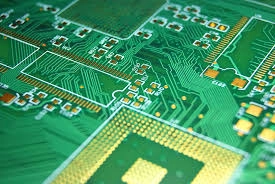
1.Rigid PCBs: The Standard Workhorse
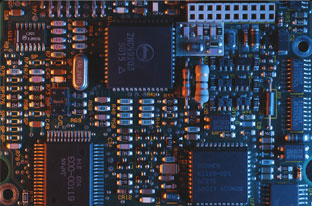
This is the most common type of PCB. Made from a solid substrate like FR-4, they are inflexible and provide strong mechanical support for components.
Advantages: Low cost, high durability, excellent component support, easy to design and manufacture.
Disadvantages: Cannot be bent or folded, limiting design flexibility in compact spaces.
Ideal for: The vast majority of electronic devices where the board sits in a fixed position—motherboards, power supplies, consumer appliances. Kingsheng's
standard PCB fabrication excels in producing high-quality rigid boards.
 2.Flexible PCBs (Flex): The Dynamic Solution
Flex PCBs are made from flexible plastic polymers like polyimide. They can be bent, folded, or twisted repeatedly during use.
Advantages: Extremely lightweight and thin, can fit into tight or irregularly shaped spaces, excellent resistance to vibration and movement, can reduce assembly time by replacing multiple rigid boards and connectors.
Disadvantages: Higher cost per unit area than rigid boards, more complex design and handling requirements.
Ideal for: Wearable devices, medical implants, camera systems, folding smartphones, and connections between moving parts—anywhere flexibility is key.
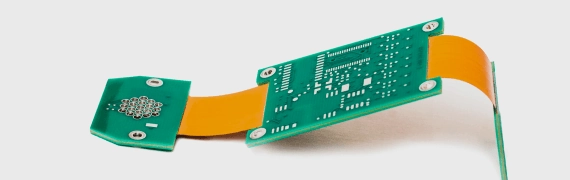
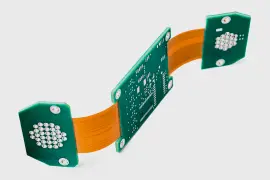
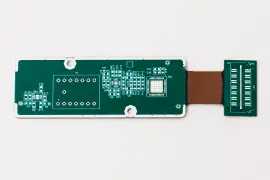 3. Rigid-Flex PCBs: The Best of Both Worlds
A Rigid-Flex PCB is a hybrid that combines rigid boards with flexible circuits laminated together into a single structure. The rigid sections provide stability for components and connectors, while the flexible sections act as dynamic hinges.
Advantages: Highly reliable by eliminating connectors between separate rigid boards, reduced overall system size and weight, improved signal integrity by minimizing connection points.
Disadvantages: The most complex and expensive option, requiring specialized design and manufacturing expertise.
Ideal for: High-reliability applications where space and weight are critical, such as aerospace, military equipment, advanced medical devices, and high-end cameras.
How to Choose? Key Considerations
Ask yourself these questions:
What is the form factor? Does it need to be static, dynamic, or a mix?
What are the environmental conditions? Will it face constant vibration or movement?
What are the weight and space constraints?
What is the budget? For simple, static applications, Rigid PCBs are the most cost-effective.
Partner with Kingsheng for Your PCB Substrate Needs
Kingsheng PCBA has extensive experience manufacturing all three PCB types. We can guide you through the selection process, considering your electrical, mechanical, and budgetary requirements. Our engineering support ensures your design is optimized for the chosen substrate, whether it's a standard
rigid PCB or a complex
rigid-flex assembly.
Unsure which PCB type is best for your innovative product? Consult with the experts at Kingsheng PCBA. We'll help you select the perfect substrate to bring your design to life efficiently and reliably.
With 16 years of expertise in PCBA design, manufacturing, and service, KingshengPCBA is ready to help turn your ideas into reality. Feel free to contact us anytime to discuss your requirements and get a professional quotation.
 +86 13828766801
 kspcba@c-alley.com
 https://www.kingshengpcba.com/
 2/F, Building 6, Tangtou 3rd Industrial Zone, Tangtou Community, Shiyan Town, Baoan District, Shenzhen, China, 518108