* On your first PCB Assembly order!
* Up to $300 discount
 C - A L L E Y
 Home | Events | PCB | About Us | News | Contact Us
When designing a PCB, engineers often add process edges (also called working edges) around the board. But why is this necessary? What benefits do process edges provide during manufacturing?
Today, we'll explain why PCBA requires process edges and how they impact the SMT assembly process.
What Is a PCBA Process Edge?
A PCBA process edge is a strip of unused board area added to one or more sides of the PCB.
Its main purpose is to:
- Provide space for the SMT conveyor rail
- Create room for panel fiducials (Mark points)
- Prevent components from being placed too close to the board edges
Because PCBAs are transported through SMT lines by rails, every board must include edges where no components can be placed. Typically, the two longer sides of the PCB or panel are used as the conveyor edges.
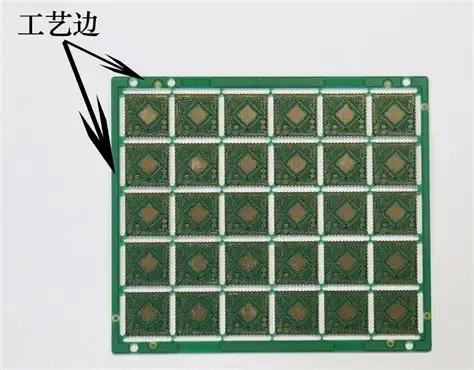
Why Process Edges Are Essential in SMT Assembly
During SMT production, the pick-and-place machine clamps the PCB and moves it through the assembly line.
If components are placed too close to the rail edge:
- The SMT nozzle may hit components
- Components may shift, tilt, or fail during placement
- The machine may be unable to run the board at all
By reserving process edges, these risks are avoided. The same applies to through-hole components during wave soldering—without sufficient edge spacing, components can be damaged or misaligned.
Therefore, process edges are a critical design consideration for stable SMT and DIP assembly.
Are Process Edges Part of the Final PCBA?
No.
Process edges are not part of the final functional PCB.
They are only added to assist with:
SMT placement
DIP insertion
Wave soldering
Conveyor travel
After assembly is complete, the process edges are removed.
How Are PCBA Process Edges Removed?
After SMT assembly, the process edges must be removed cleanly and without causing stress to the components.
There are three common methods:
1. V-Cut Depaneling Machine
Uses a blade to cut along V-grooves
Low cost and fast
Only suitable for straight cuts
2. Routing (Milling) Machine
Uses a router bit to mill along the board outline
Best quality, low stress, protects components
Higher cost and slower speed
3. Manual Removal
Breaking by hand or using pliers
Low cost and convenient
Higher risk of mechanical stress damaging components
From a quality perspective, routing provides the best results and minimizes stress on the PCB and components.
Conclusion
Adding process edges is a small design step that brings major benefits during PCBA manufacturing. It ensures:
- Smooth SMT conveyor transport
- Safe and accurate component placement
- Stable wave soldering
- Reduced risk of damage or misalignment
Although process edges are removed before the final product is delivered, they play an essential role in ensuring high-quality PCBA production.
Thank you for reading. We hope this article provided valuable insights for you.
With 16 years of expertise in PCBA design, manufacturing, and service, KingshengPCBA is ready to help turn your ideas into reality. Feel free to contact us anytime to discuss your requirements and get a professional quotation.
Please send Email to kspcba@c-alley.com or call us through +86 13828766801 Or submit your inquiry by online form. Please fill out below form and attach your manufacturing files( PCB Gerber files and BOM List) if need quotation. We will contact you shortly.
 +86 13828766801
 kspcba@c-alley.com
 https://www.kingshengpcba.com/
 2/F, Building 6, Tangtou 3rd Industrial Zone, Tangtou Community, Shiyan Town, Baoan District, Shenzhen, China, 518108
We would also like to thank our customers for their trust and support. The company's outstanding achievements are mainly due to the loyalty of our customers, which also encourages and spurs our company to forge ahead.