* On your first PCB Assembly order!
* Up to $300 discount
 C - A L L E Y
 Home | Events | PCB | About Us | News | Contact Us
In a fiercely competitive market, product quality serves as the cornerstone of a brand and the lifeline of a business. Even a minor defect can be amplified in the hands of customers, potentially leading to damage to brand reputation and significant economic losses. Therefore, establishing an impenetrable quality defense before products leave the factory is no longer an option but a necessity.
At the heart of this defense lies a well-considered and highly customized testing strategy. It should not be an isolated step at the end of the production line but rather a quality gene embedded within the product design philosophy. Today, we aim to discuss how to ensure that every product delivered to customers is a fully functional masterpiece through a precise testing strategy.
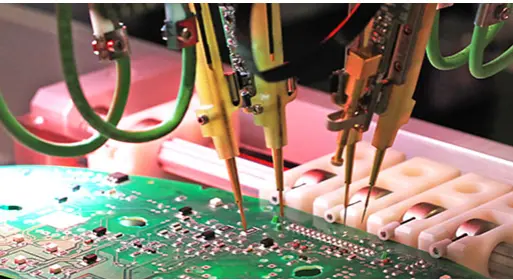
ICT and FCT: Two Pillars in Building the Defense Line
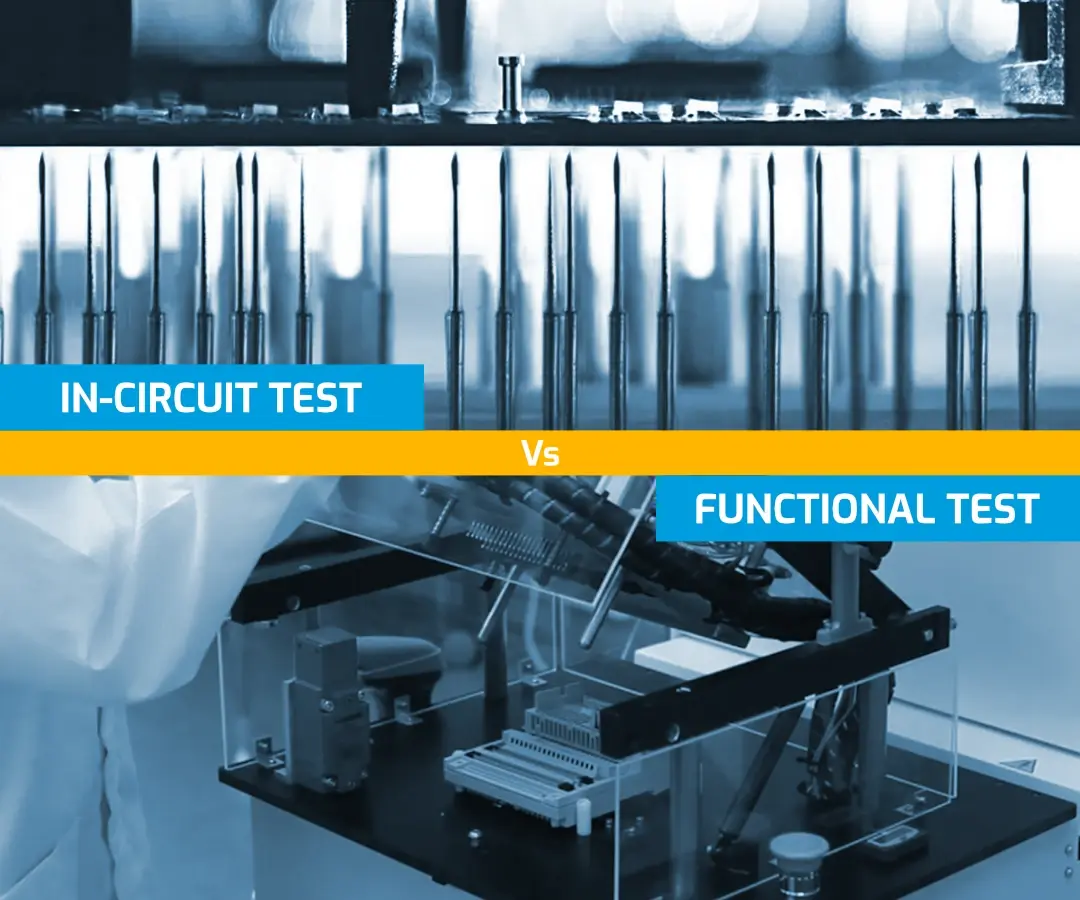
To understand how to build a defense line, it is essential to first grasp two key concepts: In-Circuit Test (ICT) and Functional Circuit Test (FCT). These serve as complementary pillars in modern electronics manufacturing, safeguarding Product Quality from both "microscopic" and "macroscopic" perspectives
*ICT: A “Connectivity Check-up” in the Microscopic World
ICT functions as a meticulous “internal medicine physician.” After product assembly, it employs precise probes to conduct a “check-up” on every component and circuit on the PCB. It can accurately pinpoint manufacturing defects such as insufficient soldering, missing solder, short circuits, and open circuits. Furthermore, it can verify whether the values of resistors and capacitors fall within the Standard range.
At its core, ICT verifies the "correctness of hardware manufacturing," ensuring the physical integrity of the PCB.
*FCT: A "Functional Mock Test" of the Macroscopic World
FCT acts as a rigorous "product manager." It places the PCBA or complete machine in a test fixture that simulates a real-world work environment (e.g., powered on, connected to a load, input signal). Test procedures "use" the product as a real user would—pressing buttons, checking displays, testing communication, and verifying output. The essence of FCT is to verify whether the "product function meets design expectations," ensuring that the "correct" PCBA can perform its "intended functions."
The relationship between the two is complementary and progressive.
ICT ensures the integrity of the hardware foundation, while FCT verifies the overall performance of the integrated hardware and software. A product that passes ICT but fails FCT suggests that while the hardware is sound, there may be software bugs or deeper design flaws. Conversely, skipping ICT and proceeding directly to FCT can lead to extremely inefficient troubleshooting, akin to searching for a needle in a haystack, should functional failures occur.
Customized Coverage: From "Good Enough" to "Perfect"
Having understood the testing methodologies, the next critical question is: what level of test coverage should be established? The answer is that there is no one-size-fits-all standard; it must vary depending on the product.
The testing strategies and coverage requirements for a child's toy and an industrial control module will inevitably differ significantly.
Our core collaboration with clients is based on a deep understanding of product characteristics to jointly design a "just right" test coverage.
*For cost-sensitive consumer products with short life cycles, we might recommend a balanced approach: 100% ICT coverage to eliminate basic manufacturing errors, combined with FCT testing of key functions, to ensure basic quality while controlling testing costs.
*For high-reliability, high-value industrial or medical equipment, we would recommend a nearly stringent testing strategy: not only requiring 100% ICT and 100% full-function FCT, but also potentially introducing burn-in testing, stress testing, boundary condition testing, etc., to ensure stable operation of the product under any extreme conditions.
Our goal is to achieve the ultimate objective of "100% functional products upon delivery" by investing limited testing resources in the most critical areas through scientific test design. This is not only a commitment to our customers but also a reflection of our confidence in our manufacturing capability.
Let us work together to design your quality defense line.
The construction of a quality defense line is not a standardized procurement list but an engineering project that requires in-depth collaboration. We firmly believe that the best testing strategies stem from knowledge sharing and goal alignment between the manufacturer and the brand owner.
Now, we sincerely invite you to:
Let our experienced test engineers engage in an in-depth discussion with your technical team.
Together, we will examine your product design, analyze potential risks, and discuss market positioning to tailor an optimal testing strategy from connectivity to functionality.
This is more than just a technical exchange; it is a collaborative effort to build the final and most robust defense for your product's market success.
With 16 years of expertise in PCBA design, manufacturing, and service, KingshengPCBA is ready to help turn your ideas into reality. Feel free to contact us anytime to discuss your requirements and get a professional quotation.
Please send Email to kspcba@c-alley.com or call us through +86 13828766801 Or submit your inquiry by online form. Please fill out below form and attach your manufacturing files( PCB Gerber files and BOM List) if need quotation. We will contact you shortly.
 +86 13828766801
 kspcba@c-alley.com
 https://www.kingshengpcba.com/
 2/F, Building 6, Tangtou 3rd Industrial Zone, Tangtou Community, Shiyan Town, Baoan District, Shenzhen, China, 518108
We would also like to thank our customers for their trust and support. The company's outstanding achievements are mainly due to the loyalty of our customers, which also encourages and spurs our company to forge ahead.