* On your first PCB Assembly order!
* Up to $300 discount
 C - A L L E Y
 Home | Events | PCB | About Us | News | Contact Us
In the precision-driven world of Surface Mount Technology (SMT), solder ball formation remains one of the most common and persistent defects. These tiny, spherical particles of solder, typically found around component terminations or on the solder mask post-reflow, pose a significant reliability risk. They can cause electrical shorts, leakage currents, and potential failure in today's high-density, fine-pitch PCB assemblies. Understanding their root causes is essential for implementing effective countermeasures.
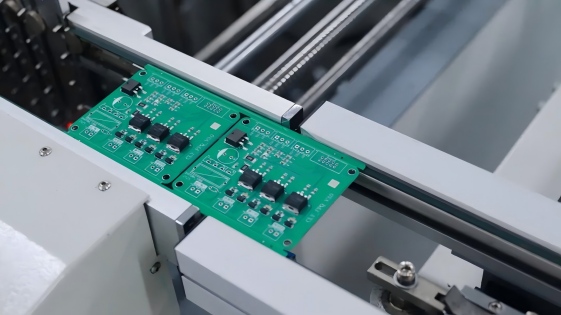
Primary Causes of Solder Balling
The formation of solder balls is typically not due to a single error, but rather an interplay of material, process, and design factors.
Solder Paste Printing Issues:
The printing stage is a critical source of potential defects. Misalignment between the stencil and the PCB pads can cause solder paste to be deposited on the solder mask. Furthermore, if the stencil aperture is clogged or the squeegee pressure is incorrect, it can lead to poor gasketing, resulting in paste smearing underneath the stencil. This residual paste, isolated from the main pad, will form solder balls during reflow.
Suboptimal Reflow Profile:
The reflow soldering thermal profile is a frequent culprit. An excessively rapid temperature ramp in the preheat zone causes the solvents and moisture within the solder paste to vaporize too violently. This "explosive" action spatters the microscopic solder spheres, dispersing them across the board before the flux can fully activate to draw them into the main joint.
Solder Paste Quality and Handling:
The material itself can be a source of problems. Solder paste that has been exposed to air for too long or is used beyond its shelf life can experience oxidation of the solder powder and flux degradation. A paste with poor anti-slumping properties will spread beyond the pad boundaries before reflow, creating ideal conditions for solder ball formation. Similarly, a paste that has absorbed ambient moisture will see the same violent outgassing issue during preheat.
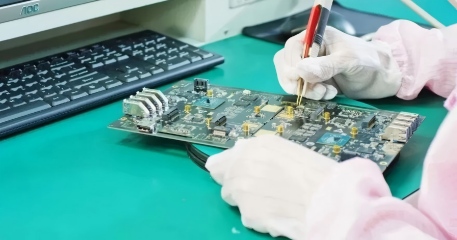
Effective Countermeasures for Prevention
A systematic approach targeting these root causes can effectively eliminate solder ball defects.
Optimize the Printing Process: Regularly clean and inspect stencils to ensure apertures are not clogged. Verify stencil-to-board alignment and optimize squeegee parameters (pressure, speed, and angle) to achieve a clean, sharp print release. Using a laser-cut and electro-polished stencil can significantly improve paste release and prevent smearing.
Refine the Reflow Profile: This is often the most impactful corrective action. Develop a thermal profile with a gentle and controlled ramp-up rate (typically 1.0-2.0°C per second). Ensure a sufficient soak (preheat) time at the appropriate temperature to allow for the gradual evaporation of volatiles and proper flux activation. This controlled process prevents spattering and promotes a cohesive melt of the solder powder.
Implement Strict Solder Paste Management: Adhere to strict handling procedures. Store solder paste in a refrigerated environment, allow it to properly acclimatize before use, and implement a first-in-first-out (FIFO) inventory system. Always keep the paste jar sealed when not in use to prevent moisture absorption and oxide formation.
Conclusion
Solder balling is a defect that indicates an imbalance in the SMT process line. By methodically addressing the variables in stencil printing, reflow profiling, and material handling, manufacturers can move from reactive correction to proactive prevention. A robust process control strategy not only conquers the challenge of solder balls but also paves the way for higher first-pass yields and more reliable electronic assemblies.
Thank you for reading. We hope this article provided valuable insights for you.
With 16 years of expertise in PCBA design, manufacturing, and service, KingshengPCBA is ready to help turn your ideas into reality. Feel free to contact us anytime to discuss your requirements and get a professional quotation.

Please send Email to kspcba@c-alley.com or call us through +86 13828766801 Or submit your inquiry by online form. Please fill out below form and attach your manufacturing files( PCB Gerber files and BOM List) if need quotation. We will contact you shortly.
 +86 13828766801
 kspcba@c-alley.com
 https://www.kingshengpcba.com/
 2/F, Building 6, Tangtou 3rd Industrial Zone, Tangtou Community, Shiyan Town, Baoan District, Shenzhen, China, 518108
We would also like to thank our customers for their trust and support. The company's outstanding achievements are mainly due to the loyalty of our customers, which also encourages and spurs our company to forge ahead.