* On your first PCB Assembly order!
* Up to $300 discount
 C - A L L E Y
 Home | Events | PCB | About Us | News | Contact Us
In the world of PCBA manufacturing, efficiency and cost-effectiveness are paramount. One crucial technique that significantly impacts both is PCB panelization – the process of arranging multiple individual circuit boards into a single panel for manufacturing. Proper panel design isn't just about fitting more boards; it's a sophisticated engineering decision that affects every subsequent manufacturing step.
Why Panelization Matters
Panelization serves multiple critical purposes in modern electronics manufacturing. Firstly, it dramatically improves production efficiency by allowing multiple boards to be processed simultaneously through SMT lines, reducing handling time and increasing throughput. Secondly, it provides necessary structural support for smaller or irregularly shaped boards that might otherwise warp or flex during assembly. Finally, it optimizes material utilization, minimizing waste and reducing overall manufacturing costs.
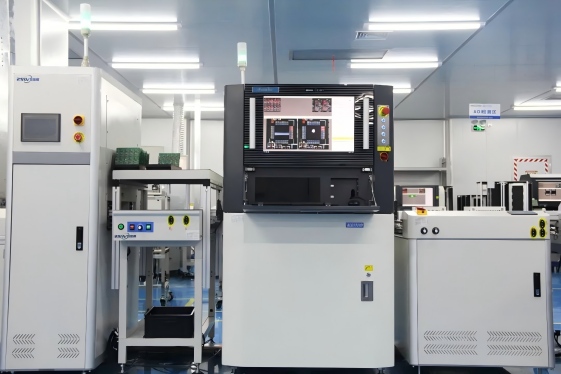
Key Design Considerations for Effective Panelization
1. Panel Size and Configuration
The panel dimensions must align with your manufacturer's equipment specifications. Standard sizes typically range from 200x200mm to 500x500mm, but always confirm with your fabrication partner. The arrangement of individual boards should maximize material usage while considering the panel's structural integrity. A balanced layout prevents warping and ensures smooth processing through assembly lines.
2. Breakaway Methods Selection
Choosing the right separation method is crucial for board quality and yield:
V-Scoring: Creates V-shaped grooves between boards, ideal for rectangular shapes and automated separation. Maintain a minimum 0.5mm clearance from components to the score line.
Tab Routing: Uses small perforated tabs to connect boards, suitable for complex shapes. Include mouse bites (small drilled holes) along the tab for easier breakaway.
Perforated Tabs: Combines routing with small connecting points, offering a balance between strength and easy separation.
3. Tooling and Fiducial Requirements
Include at least three tooling holes (typically 3.0mm diameter) positioned in panel corners for secure fixturing. Global fiducial marks are essential for automated assembly – place them in panel corners with a clear keep-out area. These markers ensure precise component placement across the entire panel.
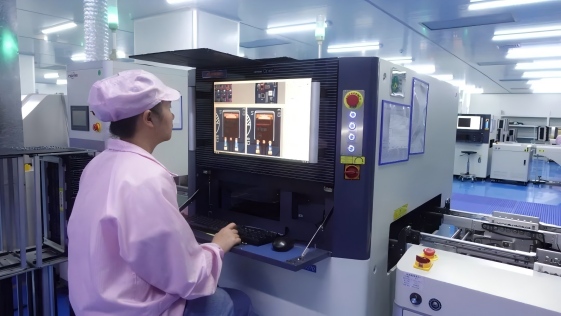
Critical Process Requirements
1. Component Keep-Out Zones
Establish clear boundaries: maintain at least 3-5mm from panel edges and 1-2mm from separation lines. This prevents damage during depanelization and ensures a reliable breakaway. For boards with components near edges, consider using tab routing instead of V-scoring.
2. Copper Balance and Warpage Prevention
Uneven copper distribution causes panel warping, leading to solder paste printing issues and placement inaccuracies. Implement copper thieving in sparse areas and balance copper layers throughout the panel. Aim for symmetric copper distribution across all layers to maintain flatness.
3. Depanelization Strategy
Design panels with the separation method in mind. For V-scored panels, ensure sufficient groove depth (typically 1/3 of board thickness) and straight lines. For tab-routed panels, optimize tab placement to balance strength during assembly with easy breakaway afterward.
Best Practices for Success
Always include test coupons and process control coupons in your panel design. These help monitor manufacturing quality without sacrificing production boards. Consider the assembly process flow – ensure the panel can reliably pass through printers, pick-and-place machines, and reflow ovens without interference. Most importantly, collaborate early with your manufacturing partner to validate your panel design against their specific equipment capabilities and process requirements.
Conclusion
Proper PCB panelization is a strategic engineering decision that directly impacts manufacturing yield, quality, and cost. By implementing these design guidelines and technical requirements, manufacturers can achieve optimal production efficiency while maintaining high-quality standards. Remember that panelization is not just a manufacturing convenience – it's an integral part of successful PCBA design that demands careful planning and execution.
Thank you for reading. We hope this article provided valuable insights for you. With 16 years of expertise in PCBA design, manufacturing, and service, KingshengPCBA is ready to help turn your ideas into reality. Feel free to contact us anytime to discuss your requirements and get a professional quotation.
Please send Email to kspcba@c-alley.com or call us through +86 13828766801 Or submit your inquiry by online form. Please fill out below form and attach your manufacturing files( PCB Gerber files and BOM List) if need quotation. We will contact you shortly.
 +86 13828766801
 kspcba@c-alley.com
 https://www.kingshengpcba.com/
 2/F, Building 6, Tangtou 3rd Industrial Zone, Tangtou Community, Shiyan Town, Baoan District, Shenzhen, China, 518108
We would also like to thank our customers for their trust and support. The company's outstanding achievements are mainly due to the loyalty of our customers, which also encourages and spurs our company to forge ahead.