* On your first PCB Assembly order!
* Up to $300 discount
 C - A L L E Y
 Home | Events | PCB | About Us | News | Contact Us
Is your PCBA truly reliable? Going beyond basic functionality, we reveal 7 critical, often-overlooked metrics that define high-quality PCBA long-term performance and durability. When you receive a batch of PCBA boards, the first test is always the simplest: Does it power on? While a passing moment is encouraging, it’s the bare minimum. A board that works on your bench today could fail in the field in six months due to an "invisible" flaw, a flaw that separates a cheap board from a high-quality PCBA.
True reliability isn't about initial function; it's about sustained performance under stress, over time, and in real-world conditions. It's about what you can't see with the naked eye. As experts in PCB assembly quality standards, we focus on these critical, often-invisible metrics that determine the lifespan of your product.
Let's dive into the seven hidden indicators of exceptional PCBA quality.
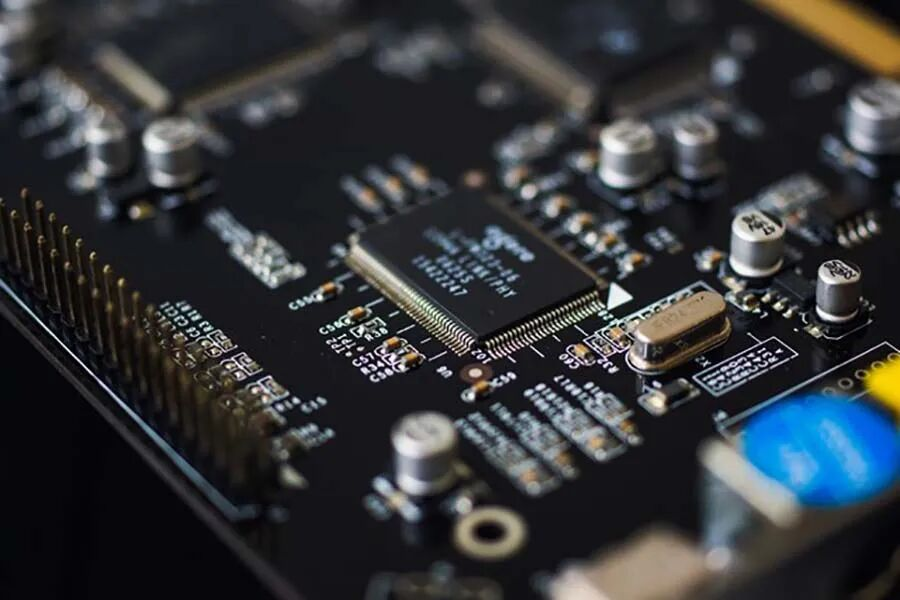
1. Solder Joint Integrity and the IMC Layer
To the unaided eye, a solder joint might look shiny and perfect. But the real story is in the microstructure.
The Invisible Metric: The formation and quality of the Intermetallic Compound (IMC) layer. This is a critical chemical bond formed where the solder alloy meets the copper pad. A strong, well-formed IMC layer is the foundation of a reliable electrical and mechanical connection.
Why It Matters: An IMC that is too thin (due to insufficient heat) results in a weak, brittle joint prone to cracking. An IMC that is too thick or grainy (due to excessive heat or multiple reflow cycles) becomes brittle and can fail under thermal or mechanical stress. We control this through precise PCBA reliability testing, like microsectioning to visually inspect the IMC under a microscope, ensuring every joint is built to last.
2. PCBA Cleanliness and Ionic Contamination
"Looks clean" isn't good enough. Invisible residues from the soldering process can be a silent killer.
The Invisible Metric: Ionic Contamination Level, measured in micrograms of NaCl equivalence per square centimeter (μg NaCl/cm²).
Why It Matters: These ionic residues are hygroscopic (they attract moisture) and can become conductive in humid environments. This leads to electrochemical migration—the formation of tiny "dendrites" that create current leakage, short circuits, and eventual failure. We use an Omega Meter to test for ionic contamination, ensuring levels are well within the stringent limits required for automotive or aerospace applications, a key part of our PCB assembly quality standards.
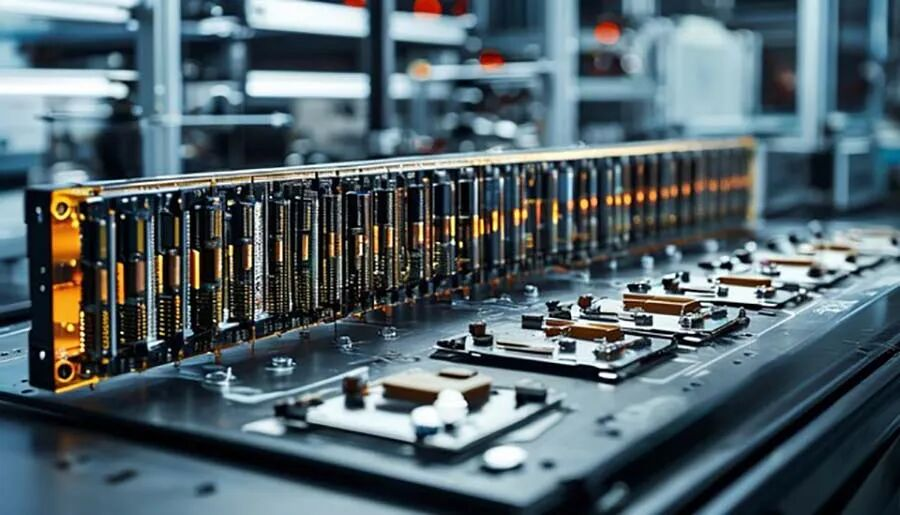
3. Conformal Coating Consistency and Coverage
A conformal coating protects against moisture, dust, and chemicals. But its effectiveness is entirely in its application.
The Invisible Metric: Uniform, void-free, and complete coverage with the correct thickness, especially around component leads and under low-standoff components.
Why It Matters: Thin spots, bubbles, or "de-wetting" create pathways for corrosion and contamination. We utilize automated selective coating systems and verify results with visual inspection under UV light (for some coatings) and thickness gauges. This ensures a perfect, protective skin over your entire assembly.
4. Thermal Management and Z-Axis Stress Analysis
Heat is the enemy of electronics. How a board manages and dissipates heat starts at the assembly stage.
The Invisible Metric: Even thermal distribution during reflow and the management of Z-axis CTE (Coefficient of Thermal Expansion) mismatch.
Why It Matters: Components like BGAs and large ICs can create localized hot spots. Uneven heating can lead to tombstoning, voiding, or warping. Furthermore, different materials (component, solder, PCB) expand at different rates. We use Thermal Profiling to create an ideal reflow curve for each unique board and perform post-assembly X-ray inspection to check for voids in BGA balls that indicate thermal stress, a crucial part of our PCBA reliability testing protocol.
5. Software & Firmware Integrity: Beyond a Simple Flash
Loading software isn't just about copying a file. It's about ensuring the code is correct, complete, and secure.
The Invisible Metric: Checksum/CRC verification and version control integrity for every programmed device.
Why It Matters: A corrupted firmware load can cause intermittent failures that are incredibly difficult to debug later. We use automated programming systems that verify the checksum of the loaded firmware against the source file for every single unit, guaranteeing that the intelligence of your board is flawless.
6. Functional Test Coverage Depth
Many factories do a "power-on" test. But does that test every function, every pin, every interface?
The Invisible Metric: Functional Test Coverage—the percentage of the board's designed functions that are actively verified during testing.
Why It Matters: A high test coverage percentage (e.g., 95%+) means we're exercising communication buses (SPI, I2C, CAN), analog inputs, PWM outputs, and sensor interfaces. This catches faulty components, assembly errors, and subtle design issues that a basic test would miss, delivering a truly high-quality PCBA.
7. Material Traceability and Documentation
This is a meta-metric, but it underpins everything. It's the DNA of your board.
The Invisible Metric: A complete, unbroken digital thread linking every component on your board back to its specific manufacturing lot, date code, and supplier.
Why It Matters: If a field failure occurs, or if a batch of components is found to be faulty, full traceability allows for precise, surgical recalls instead of costly, blanket replacements. This level of documentation is a hallmark of a mature manufacturer adhering to the highest PCB assembly quality standards.
Conclusion: Don't Settle for "Good Enough"
Choosing a PCBA partner who only checks for basic functionality is a significant risk to your product's reputation and your bottom line. The true cost of a board is measured over its entire lifecycle, not just at the initial unit price.
At KingshengPCBA, we engineer reliability from the start. Our process is built around controlling these "invisible" metrics through advanced PCBA reliability testing, stringent process controls, and a commitment to deep-rooted quality.
Ready to look deeper? Contact our engineering team today for a consultation. Ask us about our DFM (Design for Manufacturability) analysis and how we can help you build a product that's not just functional, but fundamentally reliable.

Please send Email to kspcba@c-alley.com or call us through +86 13828766801 Or submit your inquiry by online form. Please fill out below form and attach your manufacturing files( PCB Gerber files and BOM List) if need quotation. We will contact you shortly.
 +86 13828766801
 kspcba@c-alley.com
 https://www.kingshengpcba.com/
 2/F, Building 6, Tangtou 3rd Industrial Zone, Tangtou Community, Shiyan Town, Baoan District, Shenzhen, China, 518108
We would also like to thank our customers for their trust and support. The company's outstanding achievements are mainly due to the loyalty of our customers, which also encourages and spurs our company to forge ahead.