* On your first PCB Assembly order!
* Up to $300 discount
 C - A L L E Y
 Home | Events | PCB | About Us | News | Contact Us
Advancements in artificial intelligence, big data, IoT, and 5G are fundamentally transforming the PCB industry, enhancing design precision, manufacturing efficiency, and supply chain responsiveness. Below, we examine key technological impacts and emerging trends.
1. AI and Big Data in Design and Manufacturing
AI-powered design tools use machine learning to analyze historical layout data, automatically optimizing routing, component placement, and signal integrity. For example, generative AI can propose multiple layout variants that minimize EMI or maximize thermal performance, significantly accelerating development cycles.
During production, big data analytics processes real-time information from equipment sensors, quality checks, and process logs. By identifying correlations between parameters and defects, manufacturers can preemptively adjust conditions, reducing scrap rates and improving yield. AI-driven vision systems also enhance inspection accuracy for solder joints and micro-defects.
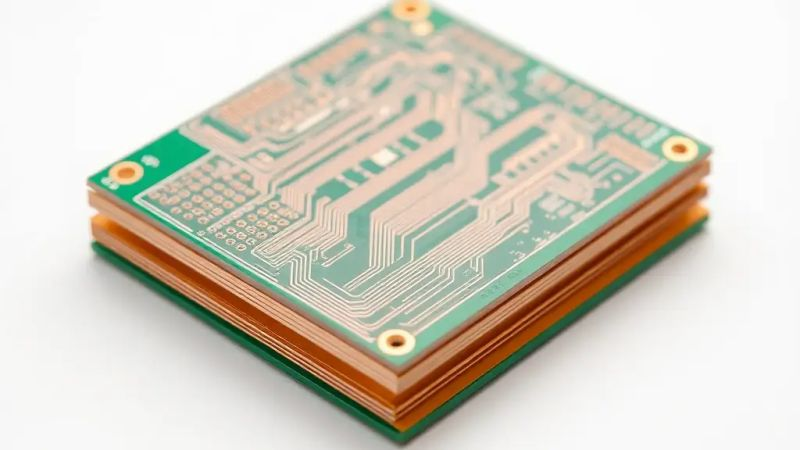
2. IoT-Enabled Smart Production and Supply Chains
IoT-connected PCBs and factory equipment allow end-to-end production monitoring. Sensors track machine status, environmental conditions, and material flow, enabling predictive maintenance and dynamic scheduling. This results in higher asset utilization and reduced downtime.
Beyond the factory, IoT platforms improve supply chain transparency. Real-time tracking of raw materials, inventory levels, and logistics helps prevent disruptions and supports just-in-time manufacturing. PCB designs increasingly incorporate IoT-ready features such as embedded sensors or UWB modules for smarter lifecycle management.
3. 5G and High-Frequency Materials
The rollout of 5G networks demands PCBs with higher signal integrity and thermal resilience. This accelerates the adoption of high-frequency laminates (e.g., PTFE, ceramic-filled substrates) and strict impedance control.
5G also enables real-time collaboration across distributed design and manufacturing teams, supporting faster iteration and high-precision remote equipment control.
4. Additive Manufacturing and Sustainability
Additive techniques like inkjet-printed circuits allow rapid prototyping and flexible geometries, reducing time and waste. Eco-friendly trends push the use of halogen-free materials, lead-free finishes, and water-saving processes, aligned with global green standards.
Conclusion
From AI-optimized designs to IoT-driven smart factories, emerging technologies are making PCB production faster, more precise, and more adaptive.
At KingshengPCBA, we integrate these innovations to deliver higher performance and reliability—whether for high-speed, high-frequency, or sustainable PCB solutions.
Partner with us to leverage cutting-edge technology for your next project.
Please send Email to kspcba@c-alley.com or call us through +86 13828766801 Or submit your inquiry by online form. Please fill out below form and attach your manufacturing files( PCB Gerber files and BOM List) if need quotation. We will contact you shortly.
 +86 13828766801
 kspcba@c-alley.com
 https://www.kingshengpcba.com/
 2/F, Building 6, Tangtou 3rd Industrial Zone, Tangtou Community, Shiyan Town, Baoan District, Shenzhen, China, 518108
We would also like to thank our customers for their trust and support. The company's outstanding achievements are mainly due to the loyalty of our customers, which also encourages and spurs our company to forge ahead.