* On your first PCB Assembly order!
* Up to $300 discount
 C - A L L E Y
 Home | Events | PCB | About Us | News | Contact Us
At Kingsheng PCBA we prioritize efficiency and cost-effectiveness in every step of PCB manufacturing and assembly. A key practice impacting PCB quality and cost is Design for Assembly (DFA). DFA optimizes PCB designs for smooth, error-free assembly, reducing production time and costs. This article explores DFA’s core principles, its role in PCB development, and implementation strategies for streamlined, high-quality products.
What is DFA
Design for Assembly (DFA) is a methodology that optimizes product design to simplify assembly processes. It aims to reduce production complexity, lower manufacturing costs, and improve assembly speed and quality. DFA principles apply to all design stages—from prototyping to mass production—ensuring PCBs are functional, easy to assemble, and maintainable.
For PCB manufacturing, DFA focuses on:
Component placement/orientation.
Automation-friendly assembly.
Simplified rework/repair.
Efficient board space utilization.
By addressing these factors early in the design phase, you can avoid costly errors and inefficiencies common during assembly.
Why DFA is Critical in PCB Design
Incorporating DFA principles during the design phase is essential for five key reasons:
Cost Reduction
Optimizing PCB design for assembly minimizes labor and rework. Efficient layouts, streamlined component placement, and reduced complexity cut assembly time, directly lowering production costs—especially crucial for high-volume manufacturing.
Quality Improvement
DFA reduces assembly errors by ensuring proper component orientation, spacing, and clear assembly guidelines. This prevents common defects caused by poor assembly practices.
Faster Time-to-Market
Simplified assembly accelerates production, giving a competitive edge in industries where speed and innovation are critical.
Enhanced Reliability
Proper component placement reduces connection errors and thermal failures. DFA-friendly designs improve precision in automated assembly, boosting product reliability.
Easier Rework & Repair
DFA-optimized PCBs feature test points, clear labeling, and logical layouts, enabling quicker troubleshooting—vital for industries demanding high maintainability.
DFA Considerations in Mass Production
As production shifts from prototyping to mass manufacturing, DFA becomes critical due to automated assembly lines. Key DFA factors include:
Component Compatibility
Select parts easily handled by automated machines to reduce labor costs.
Spacing for Automation
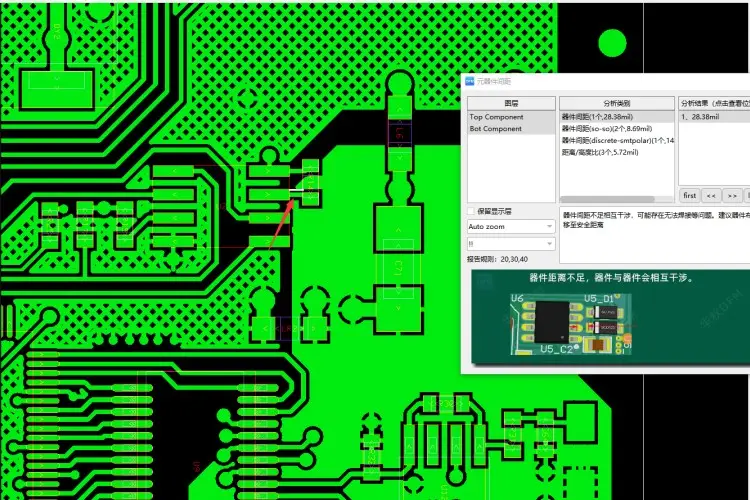
Ensure adequate clearance for pick-and-place machines to avoid interference.
Reflow Soldering Suitability
Verify all components withstand reflow profiles to prevent soldering defects.
Testability
Design for ICT/FCT testing with accessible test points and programming interfaces.
Conclusion:
At Kingsheng PCBA, we prioritize Design for Assembly (DFA) at every stage of PCB manufacturing. By integrating DFA principles, we ensure products are not only functional but also cost-effective and efficient to produce. This focus minimizes assembly errors, reduces costs, accelerates timelines, and enhances reliability—making DFA indispensable in PCB development. Whether prototyping or scaling to mass production, DFA elevates manufacturability and secures your competitive edge in electronics.
Welcome to contact us to discuss more.
Please send Email to kspcba@c-alley.com or call us through +86 13828766801 Or submit your inquiry by online form. Please fill out below form and attach your manufacturing files( PCB Gerber files and BOM List) if need quotation. We will contact you shortly.
 +86 13828766801
 kspcba@c-alley.com
 https://www.kingshengpcba.com/
 2/F, Building 6, Tangtou 3rd Industrial Zone, Tangtou Community, Shiyan Town, Baoan District, Shenzhen, China, 518108
We would also like to thank our customers for their trust and support. The company's outstanding achievements are mainly due to the loyalty of our customers, which also encourages and spurs our company to forge ahead.