* On your first PCB Assembly order!
* Up to $300 discount
 C - A L L E Y
 Home | Events | PCB | About Us | News | Contact Us
In PCB manufacturing, surface finish plays a critical role in ensuring solderability, electrical performance, and long-term reliability. Among the most common finishes are OSP (Organic Solderability Preservative), ENIG (Electroless Nickel Immersion Gold), and Immersion Silver. Each has distinct advantages and limitations, making them suitable for different applications.
This blog provides a detailed comparison of these three surface finishes, helping engineers and procurement teams make informed decisions based on cost, performance, and application requirements.
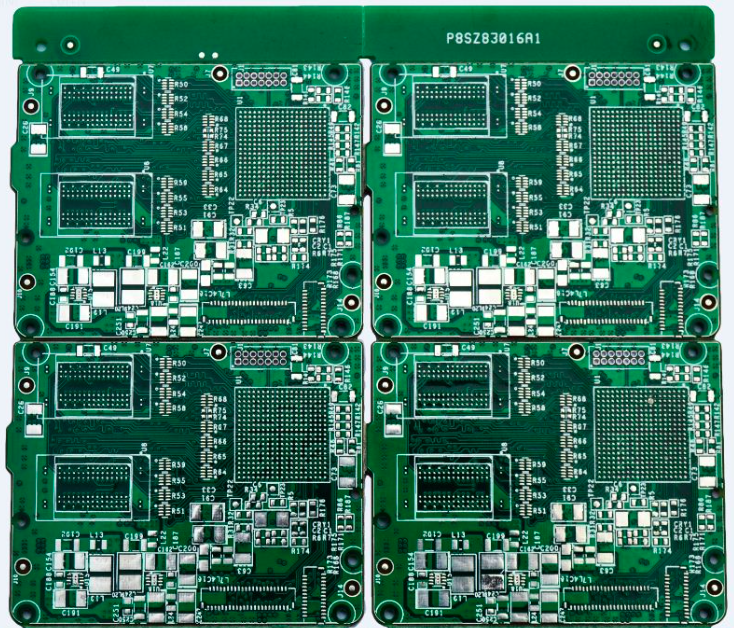
1. OSP (Organic Solderability Preservative)
Overview
OSP is a water-based organic coating applied to copper pads to prevent oxidation before soldering. It is one of the most cost-effective finishes but requires careful handling.
Advantages
Low cost: Ideal for high-volume, budget-sensitive projects.Low-loss materials (e.g., Rogers, Isola FR408HR) reduce signal attenuation.
Flat surface: Excellent for fine-pitch components and high-density designs.
Environmentally friendly: No heavy metals involved.
Disadvantages
Limited shelf life (~6 months): PCBs must be used quickly.
Single reflow cycle: Multiple reflows degrade performance.
No probe testability: Difficult for electrical testing due to non-conductive coating.
Best Applications
Consumer electronics (e.g., smartphones, laptops).
High-volume, cost-driven PCB assemblies.
2. ENIG (Electroless Nickel Immersion Gold)
Overview
ENIG consists of a nickel layer (for barrier protection) and a thin gold layer (for oxidation resistance). It is widely used in high-reliability applications.
Advantages
Excellent solderability and durability: Suitable for multiple reflow cycles.
Flat surface: Ideal for fine-pitch components and BGA packages.
Long shelf life (~12 months).
Good for wire bonding: Used in RF and high-frequency applications.
Disadvantages
Higher cost: More expensive than OSP and immersion silver.
Risk of "Black Pad" defect: Nickel corrosion can weaken solder joints.
Not ideal for press-fit connectors: Harder than other finishes.
Best Applications
Medical devices, aerospace, and automotive electronics.
High-frequency and RF circuits.
3. Immersion Silver
Overview
Immersion silver is a thin metallic coating deposited directly on copper, offering a balance between cost and performance.
Advantages
Good solderability: Comparable to ENIG but at a lower cost.
Flat surface: Suitable for fine-pitch components.
Longer shelf life than OSP (~12 months).
Better for high-speed signals: Lower signal loss than ENIG.
Disadvantages
Susceptible to tarnishing: Requires proper storage.
Not ideal for multiple reflows: Can degrade over time.
Limited thickness control: May cause solderability issues if too thin.
Best Applications
High-speed digital circuits (e.g., networking equipment).
LED lighting and mid-range consumer electronics.
Conclusion
Choosing the right PCB surface finish depends on cost, application, and reliability requirements:
(1) OSP is best for budget projects with short lead times.
(2) ENIG is ideal for high-reliability and complex assemblies.
(3) Immersion Silver offers a balanced solution for high-speed and mid-cost applications.
By understanding these differences, engineers can optimize PCB performance while controlling costs.
Please send Email to kspcba@c-alley.com or call us through +86 13828766801 Or submit your inquiry by online form. Please fill out below form and attach your manufacturing files( PCB Gerber files and BOM List) if need quotation. We will contact you shortly.
 +86 13828766801
 kspcba@c-alley.com
 https://www.kingshengpcba.com/
 2/F, Building 6, Tangtou 3rd Industrial Zone, Tangtou Community, Shiyan Town, Baoan District, Shenzhen, China, 518108
We would also like to thank our customers for their trust and support. The company's outstanding achievements are mainly due to the loyalty of our customers, which also encourages and spurs our company to forge ahead.