NB-IoT Smart Water Meter PCBA: Your Factory Partner
Introduction
Every drop of water that flows through a pipe today carries the potential for real-time data — data that drives revenue security, leak detection, and operational efficiency for water utilities worldwide. As digital transformation sweeps through the water industry, NB-IoT (Narrowband Internet of Things) has emerged as the undisputed communication standard for smart water meters. Behind every intelligent meter lies a critical component: the
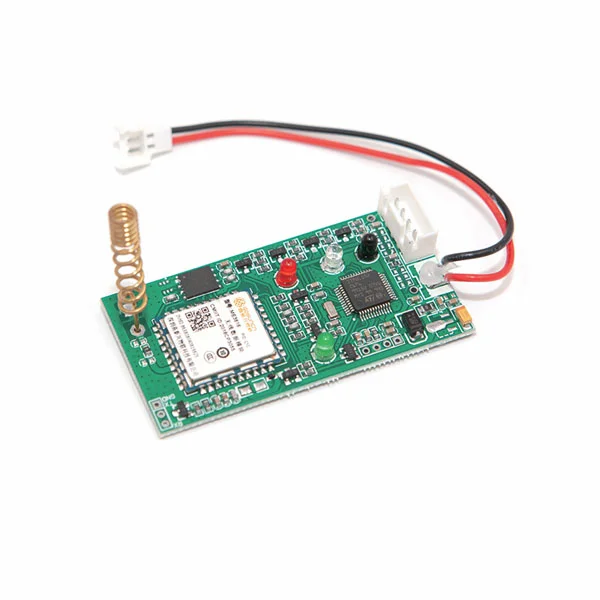
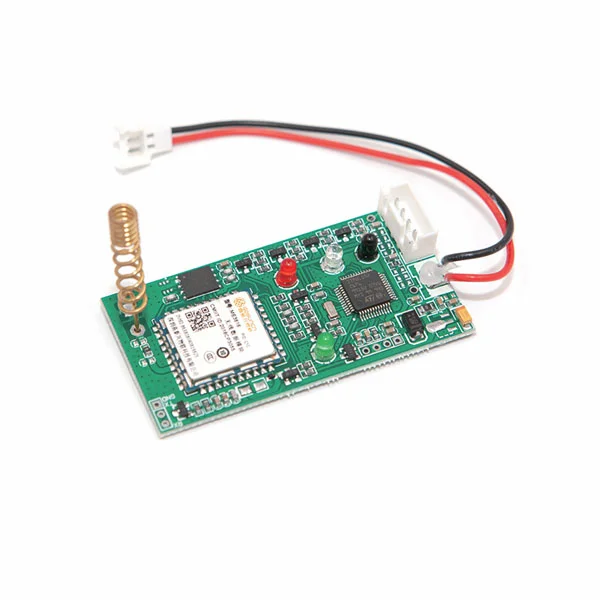
NB-IoT wireless remote transmission PCBA — the heart that senses, computes, and transmits.
This article explores the booming market for NB-IoT water meter modules, the advanced low-power technologies that make them viable for decade-long field deployment, the practical barriers to mass adoption, and how our factory’s precision SMT capabilities ensure that every PCBA delivers uncompromised performance in harsh underground environments.
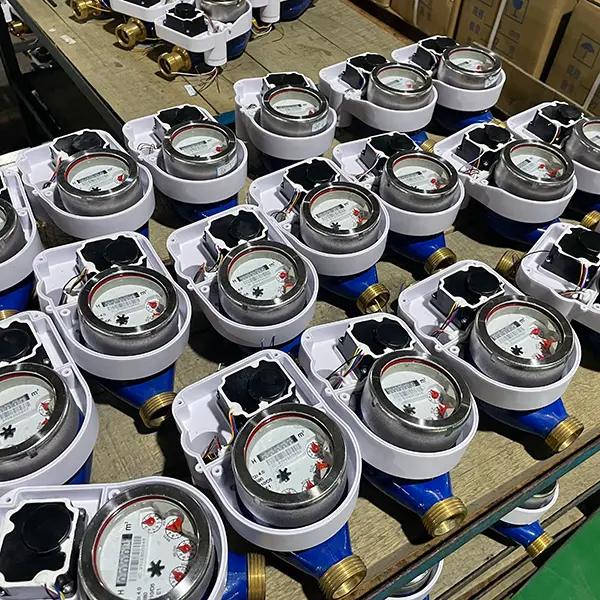 I. Market Outlook: A Multi-Billion Dollar Window of Opportunity
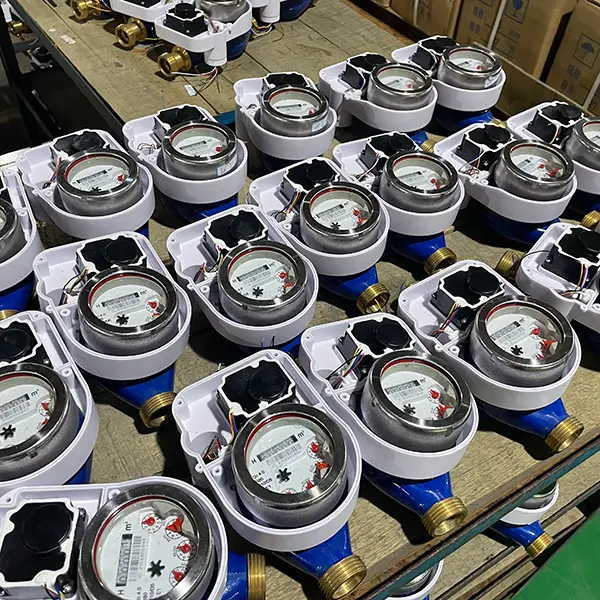
The global NB-IoT wireless remote water meter market is experiencing explosive growth, driven by three powerful forces: government mandates, massive meter replacement programs, and increasing digitization of rural water supply.
Against this backdrop, the NB-IoT wireless module PCBA is transitioning from an optional upgrade to a mandatory core component of every new water meter.
II. Core Technology: A Four-Layer Architecture for Ultra-Low Power and High-Accuracy Measurement
A high-quality NB-IoT water meter PCBA is far more than a collection of components — it is an integrated data acquisition and decision system. Our design follows a four-layer functional architecture:
2.1 Sensing & Measurement Layer
We support multiple sensor interfaces: non-magnetic pulse sampling, optical direct-reading sensors, and high-precision ultrasonic time-of-flight (ToF) chips. Our reference design uses a low-power MCU combined with a high-resolution time-difference measurement unit, achieving drip-level sensitivity and measurement error as low as ±0.01 m³, effectively eliminating magnetic tampering.
2.2 Processing Layer
The main control is based on an ARM Cortex-M3/M0+ low-power MCU (with domestic alternatives such as GD32 available). This processor handles flow calculation, data validation, valve control logic, and communication protocol management.
2.3 Wireless Communication Layer
We integrate industrial-grade NB-IoT modules from leading suppliers (e.g., HiSilicon HiLink, Quectel BC95 series). These modules support low-frequency bands B5 and B8, providing superior penetration into basements and buried meter pits. Direct connection to operator public networks eliminates the need for additional concentrators, drastically reducing deployment costs. The PCBA comes with pre-integrated SDKs for major IoT platforms such as China Mobile OneNET and Tencent Cloud, accelerating time-to-market for meter manufacturers.
2.4 Power Management & Sleep/Wake Strategy
The key to a 10-year battery life lies in our deep-sleep + fast-wake dual-mode mechanism. In static conditions, the total MCU core power consumption drops below 1 µA. NB-IoT modules consume negligible power when not transmitting. Our configurable reporting strategy — for example, reporting only when a threshold volume change occurs plus one scheduled daily report — keeps the average daily power consumption of the entire NB-IoT module below 0.45 mAh. Combined with a high-capacity lithium-thionyl chloride battery, the PCBA enables 8–10 years of maintenance-free operation in the field.
III. Breaking Barriers: Solving Cost, Signal, and Compatibility Challenges
Despite the promising market, meter manufacturers face three major barriers when moving from prototype to mass production. Our PCBA and factory services are designed to overcome each of them.
Barrier 1: Signal penetration in challenging environments.
Many meters are installed in underground pits or metal-lined utility closets. Our RF design includes dedicated antenna matching networks and impedance-controlled microstrip lines on the PCB. We also implement an offline data caching mechanism — if the connection is temporarily lost, the module stores the reading and retransmits it after signal recovery. Field tests show communication success rates above 95% even in deep basement conditions.
Barrier 2: Compatibility with diverse utility platforms.
Unlike the unified electricity industry, water utilities use a wide variety of data interfaces and protocols. Our PCBA outputs standardized serial data and supports MQTT protocol templates, plus Bluetooth or infrared for near-field maintenance. This minimizes integration effort when connecting to different billing systems and cloud platforms.
IV. Factory Strength: High-Precision Manufacturing for Rugged Reliability
A superior PCBA design means nothing without manufacturing excellence. Our factory combines advanced SMT lines, rigorous testing, and environmental protection to deliver PCBA boards that survive years of humidity, vibration, and temperature swings.
4.1 Fully Automated SMT Assembly
We operate high-speed pick-and-place lines with placement accuracy of ±30 µm, capable of mounting 0201 ultra-miniature passive components. For NB-IoT modules, we strictly control impedance matching (e.g., using RO4350B high-frequency laminates) and use 3D automated optical inspection (AOI) plus solder paste inspection (SPI) to catch defects before reflow. Every board is traceable via our MES system — from solder paste printing to reflow soldering to wave soldering.
4.2 Conformal Coating & Environmental Protection
Water meter PCBA are exposed to high humidity and even condensation. We provide selective conformal coating and nano-coating for the entire board, effectively sealing out moisture, salt mist, and sulfur contamination. This ensures stable operation across the -20°C to +85°C temperature range, even in submerged or condensing environments.
4.3 One-Stop Traceability & Testing
Each PCBA receives an electronic passport compliant with IPC-A-610 standards. We perform in-circuit testing (ICT) and functional testing (FCT) that simulates real-world wake-up, measurement, and communication cycles. This reduces field failure rates to single-digit PPM levels — preventing costly on-site service calls after large-scale deployment.
 V. Conclusion
The era of manual meter reading is ending. NB-IoT smart water meters are capturing the market with 5-15% annual growth in both urban and rural areas. Whether you are a meter brand or an ODM solution provider, the quality and reliability of your PCBA directly determine your product's lifespan and customer satisfaction.
Our factory offers precision SMT manufacturing, deep low-power IoT expertise, and robust conformal coating — all tailored to the unique demands of smart water metering.
Contact us today for NB-IoT water meter PCBA samples and volume production plans. Let's build the new benchmark for smart water hardware together.
Shenzhen Kingsheng Technology Co., Ltd. has rich experience and a professional technical team in PCBA.
Contact Kingsheng PCBA today to request a quote or discuss your PCBA project.
 +86 13828766801
 kspcba@c-alley.com
 https://www.kingshengpcba.com/
 2/F, Building 6, Tangtou 3rd Industrial Zone, Tangtou Community, Shiyan Town, Baoan District, Shenzhen, China, 518108