Professional PCBA Manufacturing for Better LoRa Gateways
The LPWAN Gold Rush Is Accelerating
The Internet of Things has moved beyond simple connectivity. Today, success depends on how reliably and intelligently devices communicate – and what value that connectivity unlocks. Among low-power wide-area network (LPWAN) technologies, LoRa stands out for its long range, ultra-low power consumption, low cost, and strong anti-interference capabilities. It has become a pillar of global IoT infrastructure.
At the heart of every LoRa network lies the
LoRa gateway – the central hub that aggregates data from end nodes, bridges them to cloud platforms, and enables remote management and control. As global IoT deployments explode, the demand for LoRa gateways is growing exponentially. For gateway OEMs, choosing a PCBA partner with deep expertise in PCB design optimisation, precision manufacturing, and comprehensive RF testing is no longer an option – it is a competitive necessity.
 I. Market Outlook: Standing on a Trillion-Dollar Opportunity
The LoRa gateway market is experiencing unprecedented growth. In 2024, the global LoRa gateway market was valued at approximately USD 1.46 billion, and by 2034 it is expected to reach USD 24.12 billion, growing at a CAGR of 32.4%. Zooming out, the broader LoRa and LoRaWAN IoT market – valued at USD 8.6 billion in 2024 – is projected to exceed USD 40.3 billion by 2030, with a CAGR of 29.2%.
In China alone, the LoRa gateway module market reached RMB 1.199 billion in 2024, driven by digital infrastructure policies and massive smart city projects. End-use applications span smart metering, industrial automation, smart agriculture, asset tracking, smart buildings, and even home automation. From single-channel micro-gateways to 16-channel high-concurrency industrial gateways, the diversity of form factors demands.
II. Core Technology: The Architecture of a LoRa Gateway PCBA
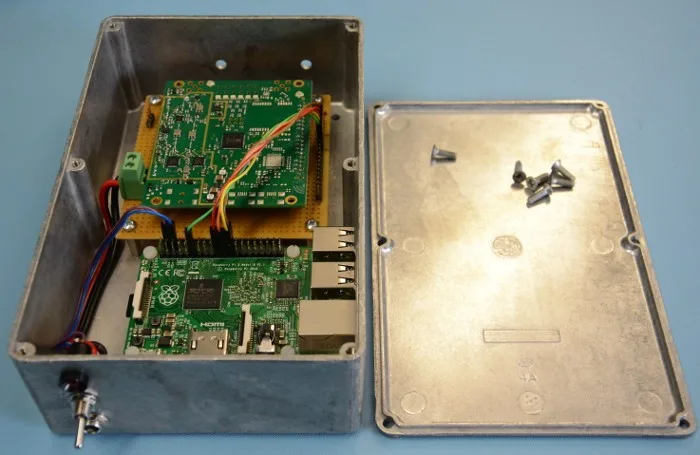
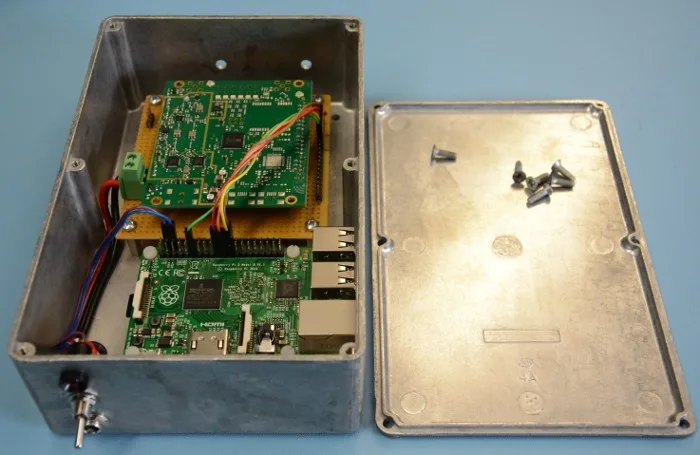
A complete LoRa gateway PCBA comprises two main functional units:
Host control unit (MCU/MPU): Runs the LoRaWAN protocol stack, handles data processing, routing, remote management, and security. Popular solutions include ARM Cortex-A series processors (e.g., RK3568, RK3588). High-end designs integrate dedicated NPUs for edge AI.
RF front-end unit: Responsible for LoRa signal transmission/reception, modulation/demodulation, and multi-channel concurrent processing – the key to gateway performance.
The de facto RF chipset: Semtech's SX1302/SX1303 baseband + SX1250 RF front-end. The SX1303 supports up to eight parallel receive channels, simultaneous demodulation of different spreading factors, and fine timestamping for TDoA-based geolocation. The SX1250 integrates a power amplifier (PA), low-noise amplifier (LNA), and T/R switch, significantly boosting transmit power and receiver sensitivity.
PCB design challenges: RF signal integrity is paramount. Key requirements include:
Impedance-controlled traces (50Ω ±10% tolerance)
Isolation between different wireless protocols (≥2 mm spacing to keep packet loss <0.1%)
Shielded RF cavities with electromagnetic modelling to avoid cavity resonance
Aggressive power noise suppression (switching ripple can directly degrade receiver sensitivity)
III. Production Barriers: From Design to Mass Production
RF consistency in volume: The slightest variation in component placement or soldering can cause performance deviations. Ensuring thousands of PCBAs have identical RF parameters is a major challenge.
High-frequency materials & hybrid lamination: Many gateways use 6–8 layer boards (or >10 layers for high-end designs). RF sections often require low-loss materials (Rogers, Taconic), while digital sections use standard FR-4. The factory must master hybrid lamination to bond different materials seamlessly.
Complex testing requirements: Basic power-on tests are insufficient. A professional test regime includes:
DFM analysis before production
RF parametric tests (transmit power, receiver sensitivity, SNR, spurious emissions) using spectrum analyzers, signal generators, and VNAs
Automated optical inspection (AOI) and 3D solder paste inspection (SPI)
Full functional burn-in under simulated real-world conditions
Regulatory certifications: Gateways must meet FCC/CE (international) or SRRC (China) requirements. The factory should hold ISO9001 as a baseline, plus IATF16949 or ISO13485 for automotive/medical customers, and be proficient in IPC-A-600/610 standards.
 IV. Factory Capabilities: Engineering Quality into Every PCBA
Our factory is purpose-built to overcome these barriers. We offer a complete, end-to-end manufacturing solution for LoRa gateway PCBAs.
Full-process quality control:
DFM analysis – Every design is reviewed for manufacturability, RF trace integrity, and testability before production.
Automated SMT with 3D-SPI & AOI – We inspect solder paste volume, height, and area before placement, and use high-resolution AOI after reflow to catch missing components, polarity errors, and misalignments.
Full material traceability – From PCB laminates (Rogers, Shengyi) to every component batch, we trace every step, enabling rapid root-cause analysis and continuous improvement.
Professional RF testing – our core differentiator:
We maintain a dedicated RF test lab equipped with:
Spectrum analyzers – for real-time observation of transmit spectra, harmonics, and spurious emissions
Signal generators – to evaluate receive response characteristics
Vector network analyzers (VNA) – to verify 50Ω impedance matching at antenna ports
Every LoRa gateway PCBA is tested for key RF metrics: output power, receive sensitivity, SNR, and spurious emissions – ensuring consistent performance across all units.
One-stop service:
Component sourcing (competitive pricing through authorised distributors)
PCB fabrication (up to 10+ layers, hybrid lamination)
SMT assembly (01005 components, BGA packages)
Conformal coating (humidity, salt fog, fungus protection)
Assembly and full system testing
Typical lead time: 7–10 working days for samples, with mass production schedules negotiated per order.
V. Conclusion: Choose the Right PCBA Partner – Win from the Start
The LoRa gateway market is at a historic inflection point: >30% annual growth, expanding use cases, and the AI-edge revolution creating entirely new demand. But opportunity comes with complexity – RF design, manufacturing consistency, and rigorous testing separate winners from the rest.
As a specialised PCBA manufacturer, we combine ISO9001 quality management, proven RF testing expertise, and one-stop convenience to help you bring reliable, high-performance LoRa gateways to market faster. If you are planning your next LoRa gateway product and need a manufacturing partner you can trust, contact us today. Together, let's build the intelligent edge.
Shenzhen Kingsheng Technology Co., Ltd. has rich experience and a professional technical team in PCBA.
Contact Kingsheng PCBA today to request a quote or discuss your PCBA project.
 +86 13828766801
 kspcba@c-alley.com
 https://www.kingshengpcba.com/
 2/F, Building 6, Tangtou 3rd Industrial Zone, Tangtou Community, Shiyan Town, Baoan District, Shenzhen, China, 518108