Hot-Swap Power Management PCBA: The "Power Brain" for AI Servers
As AI training clusters, high-density GPU servers, and hyperscale data centers expand exponentially, the reliability of power delivery systems has become a non-negotiable priority. Hot-swappable redundant power supplies – once considered an optional feature – are now mandatory infrastructure. At the heart of this architecture lies the hot-swap management board PCBA, the intelligence core that enables seamless power module replacement, fault isolation, and digital power telemetry.
The global hot-swap power supply market reached USD 4.127 billion in 2025 and is projected to grow to USD 6.716 billion by 2032 (CAGR 7.2%). Meanwhile, China's redundant power system market alone was valued at approximately RMB 30.8 billion in 2024. Driven by AI servers and high-power-density racks, the demand for reliable, intelligent management boards is skyrocketing. This article explores the market opportunity, core technologies, manufacturing barriers, and how a professional PCBA factory rises to meet these challenges.
 I. Market Outlook: AI Power Demand Fuels a Golden Era
Data center power architectures are undergoing a fundamental shift. Traditional single power supplies for 1U/2U servers are being replaced by modular, platform-based solutions. Common Redundant Power Supply (CRPS) modules – supporting hot-swap maintenance and N+1/N+N redundancy – have become the standard backbone for enterprise, cloud, and high-performance computing.
As the core controller behind this transformation, the hot-swap management board PCBA is poised to capture unprecedented manufacturing demand.
II. Core Technologies of Hot-Swap Management Boards
A redundant power hot-swap management board must enable live insertion/removal of power modules, seamless failover between redundant rails, and digital monitoring via PMBus. Three technology pillars are essential:
2.1 Hot-Swap Control & Inrush Current Limiting
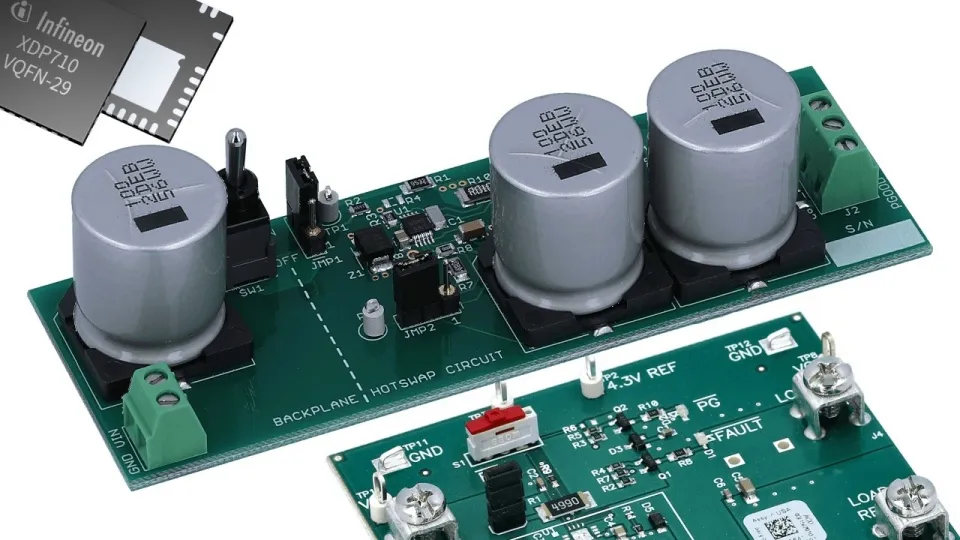
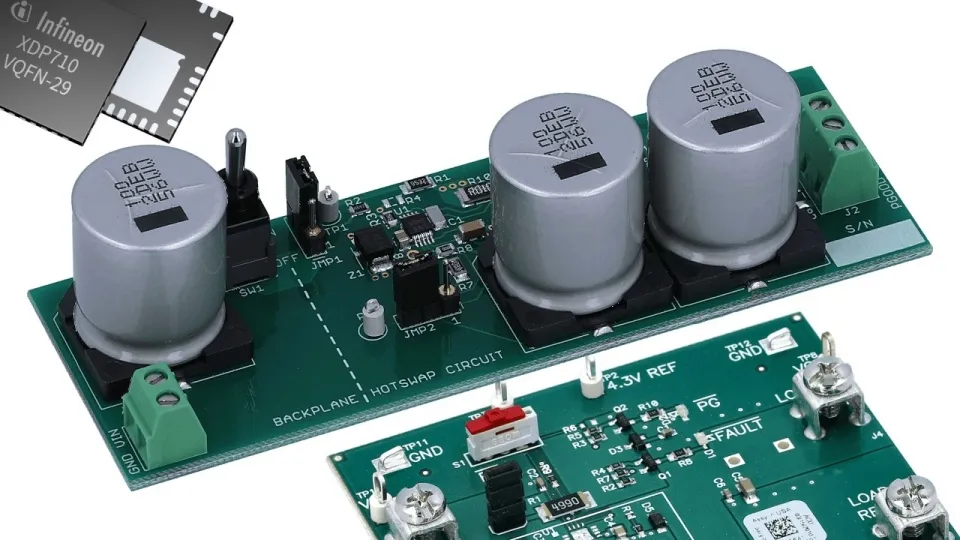
When a power module is inserted into a live backplane, on-board bulk capacitors can draw hundreds of amperes of inrush current – enough to crash the system or damage connectors. The management board uses a hot-swap controller paired with a power MOSFET to perform a controlled soft-start. The controller (often with PMBus interface) ramps the MOSFET's gate voltage, charging the output capacitance with a constant current, limiting inrush to a safe level.
For redundant switching, ORing MOSFETs provide active reverse-current protection, ensuring seamless switchover and fault isolation. In typical 12V or 48V server backplanes, each power module connects through an ORing MOSFET and a parallel hot-swap controller.
2.2 Digital Power Management – PMBus Telemetry
Modern CRPS modules widely adopt the PMBus (Power Management Bus) digital protocol, an open-standard serial interface for power management. PMBus enables real-time voltage, current, temperature telemetry, fault logging, and power budgeting. Integrating a power system manager on the board requires mixed-signal layout – high-power analog circuits alongside high-precision digital control signals – demanding excellent signal integrity on the PCB.
2.3 High-Reliability PCB Design
Servers must operate 7×24 with MTBF ≥100,000 hours. For the management board, three design dimensions are critical:
Redundant power routing – dual independent power paths, each backing up the other, with switchover <10ms.
Noise immunity – common-mode chokes and X/Y capacitors keep power ripple ≤10 mV; differential high-speed signals use shielding for >95% interference rejection.
III. Manufacturing Barriers to Overcome
Producing high-reliability hot-swap management boards requires overcoming several technical and process barriers:
Barrier 1 – Precision SMT Assembly. The board integrates hot-swap controllers, PMBus ICs, power MOSFETs, and numerous precision passives. BGA and QFN packages demand placement accuracy of ±0.03 mm and reflow profiles tightly controlled to achieve BGA soldering yield >99.7%.
Barrier 2 – DIP & Through-Hole Component Soldering. High-power MOSFETs, large inductors, and connectors require robust wave soldering. For harsh environments, conformal coating (≥50 μm thickness) is needed to provide moisture, dust, and corrosion protection.
Barrier 3 – Full-Process Testing & Burn-In. Every board must pass AOI, X-ray (for hidden BGA/QFN joints), functional testing, and burn-in screening. A single server outage can cost millions, so outgoing quality must be zero-defect.
Barrier 4 – International Certifications. Management boards must comply with IPC-A-610 Class 2/3, IEC 61000-4-5 (surge immunity), and IEC 60068 environmental standards. ISO9001, UL, and RoHS certifications are mandatory for entry into server supply chains.
IV. Our PCBA Factory Capabilities: Meeting the Demand
As a specialized PCBA manufacturer, we understand that reliability is the lifeline of data center power systems. To serve the growing market for hot-swap management boards, we have built three core competencies:
4.1 High-Precision SMT Assembly
Our intelligent SMT lines feature automatic solder paste printers and 10-zone nitrogen reflow ovens. Real-time monitoring of paste thickness, placement accuracy, and reflow profiles ensures stable, repeatable quality. With placement accuracy of ±0.03 mm, we support 0201 ultra-miniature components and 0.3 mm-pitch BGAs. 3D SPI inspection keeps solder defects exceptionally low.
4.2 DIP & High-Current Component Soldering
For through-hole components, we operate dual-wave soldering systems with daily capacity of 500,000 solder joints. Process engineers customize soldering fixtures and precisely control wave parameters to achieve full barrel fill and reliable joints. Conformal coating services provide complete protection for all component leads and solder points.
4.3 Full-Traceability Quality & Testing
We maintain end-to-end quality traceability from incoming material inspection to final shipment, adhering to IPC-A-610 Class 2/3. Our test regimen includes:
SPI – real-time solder paste height and offset monitoring (auto-stop on anomalies)
AOI – covers solder joint integrity and component placement at 0.3 sec/point
X-ray – inspects hidden BGA/QFN voids and cracks
Functional & burn-in tests – simulate actual operating conditions to weed out early failures
This multi-level testing ensures industry-leading first-pass yield.
 V. Conclusion
With the global hot-swap power supply market reaching USD 4.13 billion in 2025 and the relentless growth of AI computing and new infrastructure, the demand for redundant power hot-swap management board PCBA is at an all-time high.
Our factory is fully prepared: high-precision SMT, full-process DIP wave soldering, rigorous quality control, and end-to-end traceability. If you are seeking a manufacturing partner capable of producing server-grade power management boards that meet the highest reliability standards, contact us today. Let's seize the manufacturing opportunity in the AI computing era together.
Shenzhen Kingsheng Technology Co., Ltd. has rich experience and a professional technical team in PCBA.
Contact Kingsheng PCBA today to request a quote or discuss your PCBA project.
 +86 13828766801
 kspcba@c-alley.com
 https://www.kingshengpcba.com/
 2/F, Building 6, Tangtou 3rd Industrial Zone, Tangtou Community, Shiyan Town, Baoan District, Shenzhen, China, 518108